Large Language Models (LLMs) have enabled multi-agent systems to perform autonomous code generation for complex tasks. Despite the recent growth in research and industrial applications in this area, there is little work on synthesizing evidence from both academic and industrial sources to capture the current state of research on LLM-based multi-agent systems for code generation. To this end, we conducted a Multi-Vocal Literature Review (MLR), combining insights from both academia and industry, including peer-reviewed studies and grey literature. The aim of this study is to systematically synthesize and analyze existing knowledge on LLM-based multi-agent systems for code generation. Specifically, the review examines the motivations for their use, employed benchmarks and models, key challenges, proposed solutions, and potential directions for future research. We selected and reviewed 114 studies, and the key findings are: 1) the identified reasons for adopting multi-agent systems for code generation were classified into nine categories; 2) the models and evaluation benchmarks utilized across the studies were systematically analyzed to provide a structured overview of commonly adopted LLM configurations and assessment practices; 3) the reported challenges and corresponding solutions were synthesized into six main categories and 26 subcategories; and 4) future research directions were identified and organized into six main categories and 18 subcategories. The results of this MLR will assist researchers and practitioners in pursuing further studies and supporting the real-world adoption of multi-agent systems in industrial settings.
Z. Rasheed, Muhammad Waseem, Kai-Kristian Kemell et al.· arXiv.org· 2 citations
Recent advances in agentic frameworks have enabled AI agents to perform complex reasoning and decision-making. However, evidence comparing their reasoning performance, efficiency, and practical suitability remains limited. To address this gap, we empirically evaluate 22 widely used agentic frameworks across three reasoning benchmarks: BBH, GSM8K, and ARC. The frameworks were selected from 1,200 GitHub repositories collected between January 2023 and July 2025 and organized into a taxonomy based on architectural design. We evaluated them under a unified setting, measuring reasoning accuracy, execution time, computational cost, and cross-benchmark consistency. Our results show that 19 of the 22 frameworks completed all three benchmarks. Among these, 12 showed stable performance, with mean accuracy of 74.6-75.9%, execution time of 4-6 seconds per task, and cost of 0.14-0.18 cents per task. Poorer results were mainly caused by orchestration problems rather than reasoning limits. For example, Camel failed to complete BBH after 11 days because of uncontrolled context growth, while Upsonic consumed USD 1,434 in one day because repeated extraction failures triggered costly retries. AutoGen and Mastra also exhausted API quotas through iterative interactions that increased prompt length without improving results. We also found a sharp drop in mathematical reasoning. Mean accuracy on GSM8K was 44.35%, compared with 89.80% on BBH and 89.56% on ARC. Overall, this study provides the first large-scale empirical comparison of agentic frameworks for reasoning-intensive software engineering tasks and shows that framework selection should prioritize orchestration quality, especially memory control, failure handling, and cost management.
Z. Rasheed, Malik Abdul Sami, Muhammad Waseem et al.· arXiv.org· 1 citation
Large Language Models (LLM) and Generative Pre-trained Transformers (GPT), are reshaping the field of Software Engineering (SE). They enable innovative methods for executing many software engineering tasks, including automated code generation, debugging, maintenance, etc. However, only a limited number of existing works have thoroughly explored the potential of GPT agents in SE. This vision paper inquires about the role of GPT-based agents in SE. Our vision is to leverage the capabilities of multiple GPT agents to contribute to SE tasks and to propose an initial road map for future work. We argue that multiple GPT agents can perform creative and demanding tasks far beyond coding and debugging. GPT agents can also do project planning, requirements engineering, and software design. These can be done through high-level descriptions given by the human developer. We have shown in our initial experimental analysis for simple software (e.g., Snake Game, Tic-Tac-Toe, Notepad) that multiple GPT agents can produce high-quality code and document it carefully. We argue that it shows a promise of unforeseen efficiency and will dramatically reduce lead-times. To this end, we intend to expand our efforts to understand how we can scale these autonomous capabilities further.
Z. Rasheed, Muhammad Waseem, Kai-Kristian Kemell et al.· XP Workshops· 35 citations· ⚡2
The growing domain of liquidity in computing extends its boundaries to include advancements like liquid artificial intelligence (AI). Liquid AI leverages liquid software using isomorphic Internet of Things (IoT) architecture to enhance computation at the edge. This innovation unveils vast opportunities yet also introduces significant challenges, particularly around privacy and trust. We explore the vulnerabilities that might hinder the progression of this technological fusion toward achieving trustworthy AI. Through an intensive examination of the literature, this research highlights the heightened threats to data integrity and stakeholder trust in these evolving ecosystems. Four main challenges: Data collection, Data storage and Access, Data utilization and sharing, and Surveillance and profiling were identified and examined under privacy, and two, Algorithms and decision-making and Security of IoT infrastructure under trust. The concerns are further categorized to highlight their impact on the development of trustworthy AI. The study acknowledges the early state of the field. Consequently, this research navigates through the limited available literature, initiating a pioneering discourse emphasizing fostering a foundation for developing secure and trustworthy Liquid AI environments.
M. Agbese, Niko Mäkitalo, Muhammad Waseem et al.· IoT· 6 citations· ⚡1
Reach audiences
Advertise in front of researchers, engineers, and readers.
The rapid adoption of Generative AI (GenAI) in the software development life cycle (SDLC) increases computational demand, which can raise the carbon footprint of development activities. At the same time, organizations are increasingly embedding governance mechanisms into GenAI-assisted development to support trust, transparency, and accountability. However, these governance mechanisms introduce additional computational workloads, including repeated inference, regeneration cycles, and expanded validation pipelines, increasing energy use and the carbon footprint of GenAI-assisted development. This paper proposes Carbon-Aware Governance Gates (CAGG), an architectural extension that embeds carbon budgets, energy provenance, and sustainability-aware validation orchestration into human-AI governance layers. CAGG comprises three components: (i) an Energy and Carbon Provenance Ledger, (ii) a Carbon Budget Manager, and (iii) a Green Validation Orchestrator, operationalized through governance policies and reusable design patterns.
M. Abbasi, T. Mikkonen, Petri Ihantola et al.· 2026 IEEE 23rd International...· 0 citations
The Discrete Fourier Transform (DFT), the Discrete Cosine Transform (DCT), and their block-wise variants underpin most deployed image and video codecs. Their effectiveness rests on three properties: their runtime is near-linear (up to a polylogarithmic factor) in the image size, they are exactly invertible, and they carry few to no parameters. In this work, we generalize these bases to isometric multilinear bases, allowing a small number of extra parameters (polylogarithmic in the image size), while preserving all three properties. We develop a scheme to train a better transformation for a given image dataset: we use isometric tensor networks, inspired by quantum many-body theory, to parameterize the basis, and train it with Riemannian optimization. We show that training consistently improves performance, as our parameterized bases can represent the traditional DFT and DCT-IV (a variant of the DCT). Evidence is shown across natural photographs and line drawings. On Quick Draw line-drawing compression, for example, the best trained basis outperforms the block cosine transform used in the JPEG format by $20\%$ in terms of compressed data size.
Shiwen An, Zhongyi Ni, Huanhai Zhou et al.· 0 citations
Graph neural networks (GNNs) are a powerful framework for learning representations from graph-structured data, but their direct implementation on near-term quantum hardware remains challenging due to circuit depth, multi-qubit interactions, and qubit scalability constraints. In this work, we introduce a hybrid quantum graph learning architecture designed explicitly for unsupervised learning in the noisy intermediate-scale quantum (NISQ) regime. Our approach combines a variational quantum feature extraction layer with an edge-local and qubit-efficient quantum message-passing mechanism inspired by the Quantum Alternating Operator Ansatz (QAOA) framework. The message-passing operation is decomposed into pairwise interactions along graph edges using standard single- and two-qubit gates. For a graph with $N$ nodes and $n$-qubit feature registers, this reduces the number of qubits required at one time from $Nn$ to at most $2n$. We train the model using the Deep Graph Infomax objective to perform unsupervised node representation learning. The external class labels are not used during graph construction or training and are used only to evaluate the learned embeddings. Experiments on the Cora citation network and the Phase 3 release of the 1000 Genomes Project show that the quantum edge interaction contributes to the quality of the learned node representations.
This paper develops a simulation-based framework for evaluating the energy implications of quantum and classical computing firms competing in a market with limited energy resources. We model providers as differentiated Cournot competitors whose feasible service capacity is induced by technology-specific energy scaling laws: polylogarithmic for quantum algorithms that achieve an equivalent computational target and polynomial for classical emulation. For symmetric groups of quantum and classical firms, the equilibrium reduces to a tractable two-equation system that supports large scenario sweeps over market size, technology mix, and hardware coefficients. We characterize the capacity-constrained Nash equilibrium, prove the existence of a demand scale beyond which quantum service becomes more energy efficient, and report numerical experiments calibrated to trapped-ion and Rydberg platforms. The results identify when quantum energy advantage is only asymptotic and when it becomes operationally relevant.
Junyu Liu, Hansheng Jiang, Zuo-Jun Max Shen· 0 citations
Generative models have become central across science and industry, from image and text synthesis to the design of molecules and materials. Quantum generative models are considered one of the most promising applications for quantum computers, since a quantum circuit naturally produces samples from the distribution it encodes, and for suitable circuits that distribution is believed to be hard for any classical computer to reproduce. A leading strategy trains these models on a classical computer and reserves the quantum device for generating samples at deployment. This is possible when the training loss can be evaluated on a classical computer. A prime example is the maximum mean discrepancy (MMD$^2$), a moment-matching loss that compares the model and the data through their Pauli-$Z$ correlations. Research so far has asked whether such models can be trained and whether their sampling is hard; whether minimizing such an objective yields a model that generalizes, rather than one that merely reproduces the training statistics, remains poorly understood. We benchmark a broad set of quantum and classical generative models by direct sampling and show that models trained with a moment-matching loss generally show worse generalization than the likelihood-trained models. We show this on two application-inspired datasets: first a cardinality-constrained dataset at up to $30$ qubits and second a dataset of genomic single-nucleotide variants, whose valid set is the observed data. These results indicate that a converged moment-matching loss is not a reliable measure of generalization, and that train-classical, deploy-quantum workflows will need approaches that target generalization directly, leaving open whether better training objectives suffice or whether the model architectures themselves must change.
Representation learning begins when training changes the features that define similarity between data. A frozen-kernel model only reweights a fixed geometry. We establish quantum signal processing (QSP) as a solvable quantum model of the representation-learning regime. At arbitrary depth, we compute the exact mean and variance of its quantum neural tangent kernel, revealing an input-dependent angular geometry whose diagonal remains non-self-averaging even when the underlying unitary approaches Haar randomness. We also prove a sparse-data guarantee for the full nonlinear gradient flow without freezing or ensemble-averaging the kernel: the realized dynamics converges to an integrable scalar flow with a time-dependent kernel closure and explicit convergence times. A finite-depth speed limit holds for every data set and trajectory. At higher data density, numerical results show coupled evolution beyond both the scalar and frozen-kernel descriptions. These results give a controlled theory of learned quantum data geometry with provable training dynamics beyond the frozen limit.
Open quantum systems lose energy and phase coherence through different dissipative processes, but these processes can produce overlapping dynamical signatures. The Liouvillian spectrum summarizes how such a system relaxes, yet it is not obvious how much of that spectrum is needed to distinguish the underlying dissipation rates. We study this question for amplitude damping and dephasing in a six-qubit Lindblad model whose spectrum can be derived analytically. We retain only the slowest non-steady spectral modes and ask how many are required before each dissipative rate becomes recoverable. We show that population modes contain no dephasing information, which creates a lower bound of D = 2^n retained modes for uniform dephasing identifiability in the relevant rate regime. The measured recovery threshold reaches this bound at n = 4,5,6, while n = 3 remains above it. At n = 6, least squares achieves a mean joint absolute error of order 10^-9, compared with 4.355 x 10^-4 for four tabular learning methods. Robustness tests show that this advantage weakens when the spectra are perturbed and when a transverse field breaks the commuting structure. These results show that the amount and structure of retained spectral information can determine whether dissipative parameters are recoverable, independently of the estimator used. The present conclusions apply to noise-free simulator spectra rather than measurement-derived spectra.
Literature and practice has established that the lack of management commitment has been one of the top reasons for a failed SPI (software process improvement) initiative. The paper reports results from an ongoing study aimed at clarifying the role and the meaning of management commitment in SPI initiatives. Results from five focused interviews with SPI professionals are reported together with results from 12 SPI initiatives where the level of management commitment (in terms of concrete signs) was measured in order to test whether it would correlate with the level of success of an SPI initiative. In contrast with the evidence from the literature, the results show that none of the signs of management commitment correlated significantly with the success of the SPI initiatives. It is suggested that the concept of champion may have explained the SPI project success better than management commitment. The paper concludes that many of the SPI initiatives do not require management commitment beyond obtaining the resources needed.
P. Abrahamsson· Proceedings of the 26th Euro...· 27 citations· ⚡2
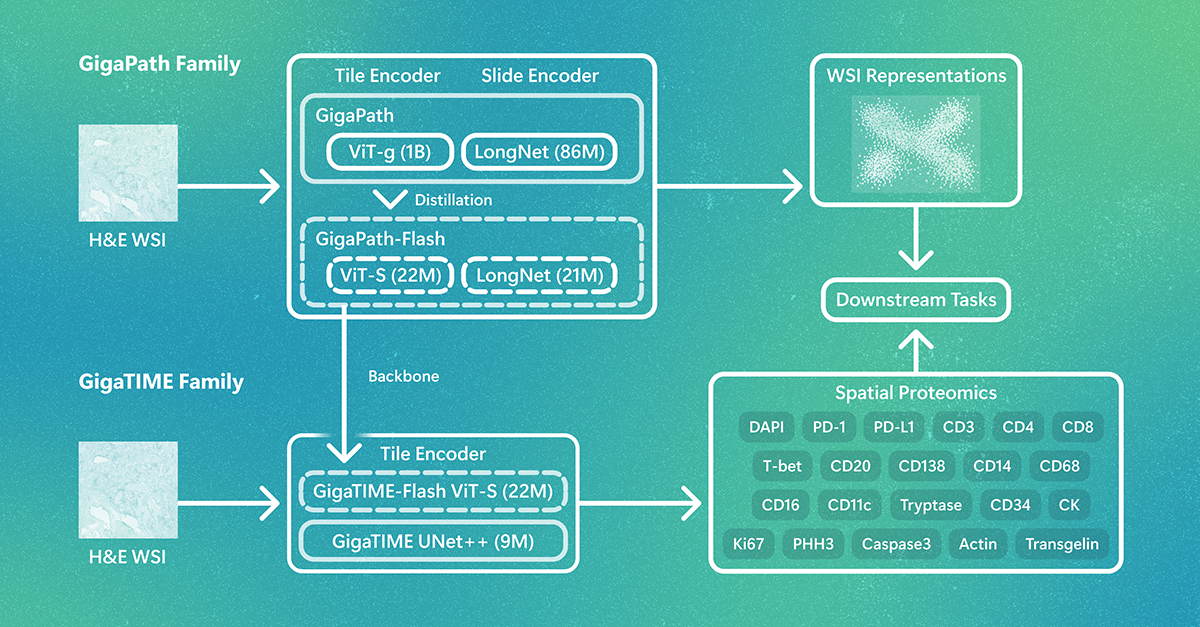
What if pathology foundation models could do more with less? GigaPath-Flash and GigaTIME-Flash cut computational demands while maintaining strong performance, opening the door to larger studies and broader exploration. The post GigaPath-Flash and GigaTIME-Flash: Toward population-scale discovery with efficient pathology foundation models appeared first on Microsoft Research.
MIT News · Artificial Intelligence· news.mit.eduAug 27, 2026
A new machine-learning framework aims to improve the success rate of computational protein design while moving away from results that reproduce sequences found in nature.