A Node-by-Node White-Box Walkthrough of a Quantized Hybrid Gated DeltaNet Language Model: Instrument Calibration and the Information Trajectory from Embedding to Output
Wenlong Li
· Research Square · 0 citations
Category
3,468 papers
The capacity of a line follows from the capacities of its stages. What this paper shows is that it follows as a minimum rather than a sum or a mean, and that widening the minimum helps in a step from 1 to 0. No new theorem or law is claimed. Scope of this paper (scope note): No new theorem or law is claimed──that a ser...
Drying wood makes it shrink and grow stronger. Yet it does not shrink in proportion to the water removed. Which water changes what is counted through shrinkage and strength at each moisture content. No new theorem or law is claimed. Scope of this paper (scope note): No new theorem or law is claimed──the fibre saturatio...
When a crystal is dissolved to dig a pit, one readily supposes that longer immersion digs deeper. But when the dissolution rate differs between crystal planes, the planes decide the shape. Whether time or crystal planes set the depth is counted, divided by the ratio of plane rates. No new theorem or law is claimed. Sco...
Reach audiences
Advertise in front of researchers, engineers, and readers.
The smoke in a fire is taken to be what burned. Counted by mass, most of it never burned at all. What burned and what became smoke are set side by side in the same units. No new theorem or law is claimed. Scope of this paper (scope note): No new theorem or law is claimed──plume entrainment, smoke layer descent and the...
The small stone in a fish's ear (the otolith) carries rings, like the rings of a tree. In young fish one ring a day (daily rings) can be counted, and in grown fish one ring a year (annual rings), and age is read from them. But the slower the growth, the thinner the rings, until the microscope can no longer tell them ap...
Abstract This record contains the comprehensive monograph, "Topological and Geometric Native Coding for Higher Dimensional Programming" by Elias Oulad Brahim (September 2026). The research introduces ToposLang and the novel paradigm of Geometric Native Coding (GNC), which challenges the structural limitations of the cl...
GPTQ-style quantization damps the calibration Hessian by a fixed fraction of its mean diagonal (one percent in the GPTQ authors' code, five percent in a maintained implementation), a choice that ignores how many calibration rows there are. Small tabular, time-series and text-embedding foundation models can be calibrate...
Background and Objectives: Penile prosthesis infection usually ends in device removal, whereas unnecessarily broad or prolonged prophylaxis causes toxicity and promotes resistance. We assessed whether the systemic perioperative antibacterial or antifungal strategy, dose or duration is associated with infection, infecti...
c as the Ball of Velocity Space — second edition: this was a result about c, not about four pi. In special relativity the set of admissible velocities is a ball of radius c, and under the metric induced by the velocity-addition law it is hyperbolic space of curvature minus one over c squared (Varicak 1910). Here the re...
Reusable protocol and artifact measuring the cost of guaranteeing verifiable structured output from locally-run Small Language Models across native, few-shot, and grammar-constrained decoding, over a contract-complexity gradient and two sovereign high-risk domains.
Automated marking systems built on large language models are increasingly proposed as a way toreduce teacher workload and to provide fast, formative feedback on examination-style questions.Before such systems can be trusted for either formative or summative use, however, their markingaccuracy needs to be quantified aga...
A Blog post by IBM Granite on Hugging Face
We’re on a journey to advance and democratize artificial intelligence through open source and open science.
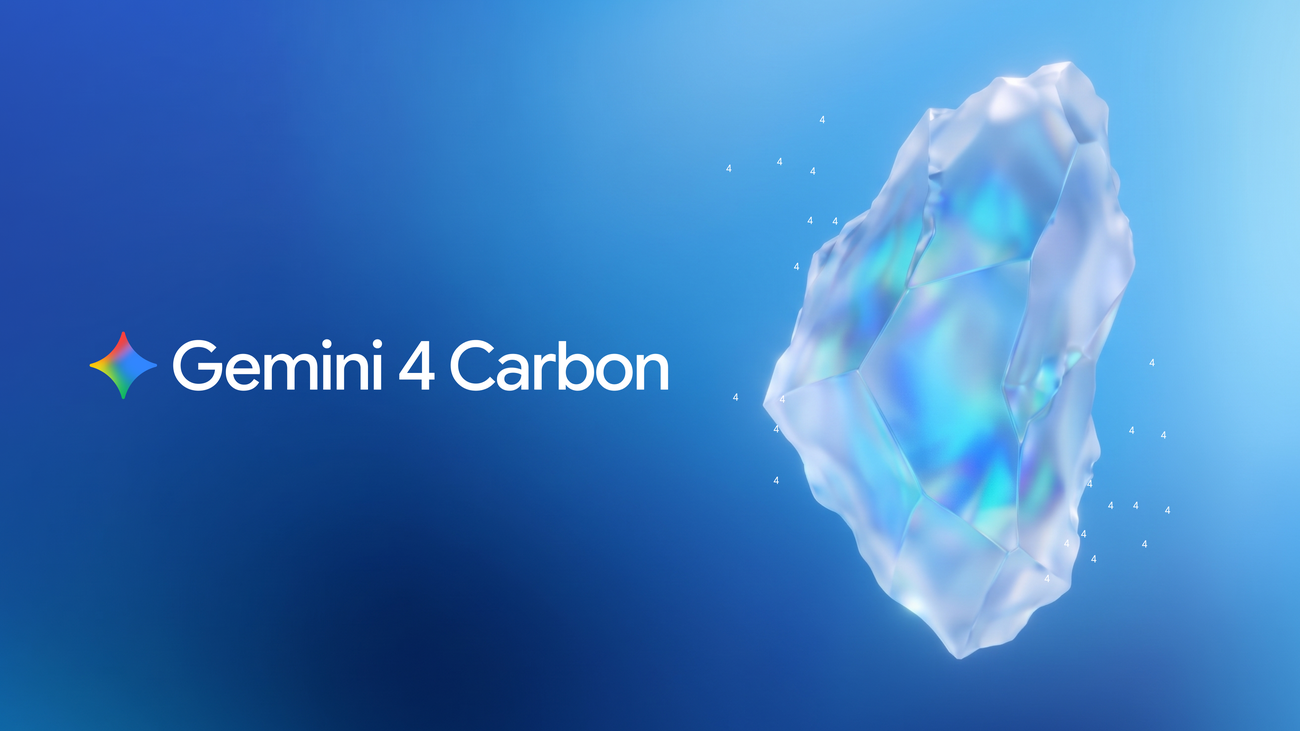
Gemini 4 Carbon is our strongest model with state-of-the-art cybersecurity and long horizon capabilities.
A Blog post by Liquid AI on Hugging Face
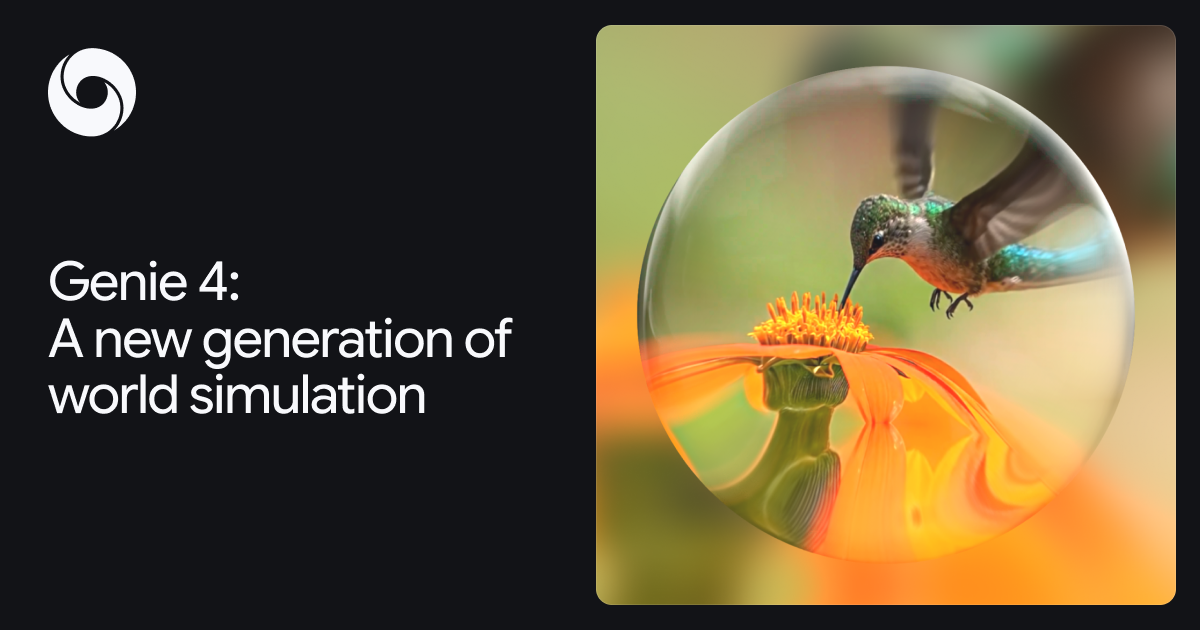
Genie 4: our new world model unlocking unprecedented realism in real-time simulation.
Generative AI
We use cookies to run the site and, with your consent, for analytics and to show ads. See our Cookie Policy.