This article is a contribution towards an understanding of open access (OA) publishing. It proposes an analysis framework of 18 core attributes, divided into the areas of bibliographic information, activity metrics, economics, accessibility, and predatory issues. The framework has been employed in a systematic analysis of 30 OA journals in software engineering (SE) and information systems (IS), which were selected from among 386 OA journals in Computer Science from the Directory of OA Journals. An analysis was performed on the sample of the journals, to provide an overview of the current situation of OA journals in the fields of SE and IS. The journals were then compared between-group, according to the presence of article processing charges. A within-group analysis was performed on the journals requesting article processing charges from authors, in order to understand what is the value added according to different price ranges. This article offers several contributions. It presents an overview of OA definitions and models. It provides an analysis framework born from the observation of data and the existing literature. It raises the need to study OA in the fields of SE and IS while offering a first analysis. Finally, it provides recommendations to readers of OA journals. This paper highlights several concerns still threatening the adoption of OA publishing in the fields of SE and IS. Among them, it is shown that high article processing charges are not sufficiently justified by the publishers, which often lack transparency and may prevent authors from adopting OA.
D. Graziotin, Xiaofeng Wang, P. Abrahamsson· Scientometrics· 21 citations· ⚡1
The results of this study show that the Ball ecosystem has the potential to improve the productivity of software development, however, it should produce smaller and more reasonable software systems, leading to a better reusability and a shorter learning phase for new developers.
Michael Gurschler, Henry Edison, Kalle Launiala et al.· 1 citation
The results show that the proposed conceptual model can capture innovation generation activities and the non-linear evolution of engineering activities in software startups, which is not presentable in current software life cycle models.
Anh Nguyen-Duc, P. Seppänen, P. Abrahamsson· International Conference on...· 53 citations
Instead of relying on huge and expensive data centers for rolling out cloudbased services to rural and remote areas, we propose a hardware platform based on small single-board computers. The role of these micro-data centers is twofold. On the one hand, they act as intermediaries between cloud services and clients, improving availability in the case of network or power outages. On the other hand, they run community-based services on local infrastructure. We illustrate how to build such a system without incurring high costs, high power consumption, or single points of failure. Additionally, we opt for a system that is extendable and scalable as well as easy to deploy, relying on an open design.
P. Abrahamsson, S. Helmer, Tosin Daniel Oyetoyan et al.· arXiv.org· 2 citations
Reach audiences
Advertise in front of researchers, engineers, and readers.
Context: The increasing popularity of JavaScript (JS) has lead to a variety of frameworks that aim to help developers to address programming tasks. However, the number of JS Frameworks (JSF) has risen rapidly to thousands and more. It is difficult for practitioners to identify the frameworks that best fit to their needs and to develop new frameworks that fit such needs. Existing research has focused in proposing software metrics for the frameworks, which do not carry a high value to practitioners. While benchmarks, technical reports, and experts' opinions are available, they suffer the same issue that they do not carry much value. In particular, there is a lack of knowledge regarding the processes and reasons that drive developers towards the choice. Objective: This paper explores the human aspects of software development behind the decision-making process that leads to a choice of a JSF. Method: We conducted a qualitative interpretive study, following the grounded theory data analysis methodology. We interviewed 18 participants who are decision makers in their companies or entrepreneurs, or are able to motivate the JSF decision-making process. Results: We offer a model of factors that are desirable to be found in a JSF and a representation of the decision makers involved in the frameworks selection. The factors are usability (attractiveness, learnability, understandability), cost, efficiency (performance, size), and functionality (automatisation, extensibility, flexibility, isolation, modularity, suitability, updated). These factors are evaluated by a combination of four possible decision makers, which are customer, developer, team, and team leader. Conclusion: Our model contributes to the body of knowledge related to the decision-making process when selecting a JSF. As a practical implication, we believe that our model is useful for (1) Web developers and (2) JSF developers.
Amantia Pano, D. Graziotin, P. Abrahamsson· arXiv.org· 7 citations· ⚡1
[Context] Advancement in technologies, popularity of small-batch manufacturing and the recent trend of investing in hardware startups are among the factors leading to the rise of hardware startups nowadays. It is essential for hardware startups, companies that involve both software and hardware development, to be not only agile to develop their business but also efficient to develop the right products. [Objective] We investigate how hardware startups achieve agility when developing their products in early stages. [Methods] A qualitative research is conducted with data from 20 hardware startups. [Result] Preliminary results show that agile development is known to hardware entrepreneurs, however it is limitedly adopted. We also found four categories of tactics: (1) strategy, (2) personnel, (3) artifact and (4) resource that enable hardware startups agile in their early stage business and product development. [Conclusions] Agile methodologies should be adopted with the consideration of specific features of hardware development, such as up-front design and vendor dependencies.
Anh Nguyen-Duc, Xiaofang Weng, P. Abrahamsson· International Symposium on E...· 13 citations
A conceptual model to explain for coop competition among software firms in OSS projects is proposed and shows two aspects of coopetition can be managed at the same time based on firm gatekeepers.
Anh Nguyen-Duc, D. Cruzes, Terje Snarby et al.· e-Informatica Software Engin...· 15 citations· ⚡2
Solutions in artificial intelligence (AI) are becoming increasingly widespread in system development endeavors. As the AI systems affect various stakeholders due to their unique nature, the growing influence of these systems calls for eth-ical considerations. Academic discussion and practical examples of autonomous system failures have highlighted the need for implementing ethics in software development. However, research on methods and tools for implementing ethics into AI system design and development in practice is still lacking. This paper be-gins to address this focal problem by providing a baseline for ethics in AI based software development. This is achieved by reporting results from an industrial multiple case study on AI systems development in the health care sector. In the context of this study, ethics were perceived as interplay of transparency, re-sponsibility and accountability, upon which research model is outlined. Through these cases, we explore the current state of practice out on the field in the ab-sence of formal methods and tools for ethically aligned design. Based on our data, we discuss the current state of practice and outline existing good practic-es, as well as suggest future research directions in the area.
Ville Vakkuri, Kai-Kristian Kemell, P. Abrahamsson· arXiv.org· 2 citations
Moving from experiments to industrial level AI software development requires a shift from understanding AI/ ML model attributes as a standalone experiment to know-how integrating and operating AI models in a large-scale software system. It is a growing demand for adopting state-of-the-art software engineering paradigms into AI development, so that the development efforts can be aligned with business strategies in a lean and fast-paced manner. We describe AI development as an “unknown unknown” problem where both business needs and AI models evolve over time. We describe a holistic view of an iterative, continuous approach to develop industrial AI software basing on business goals, requirements and Minimum Viable Products. From this, five areas of challenges are presented with the focus on experimentation. In the end, we propose a research agenda with seven questions for future studies.
Anh Nguyen-Duc, P. Abrahamsson· ESEC/SIGSOFT FSE· 9 citations
There appears to be a common agreement that ethical concerns are of high importance when it comes to systems equipped with some sort of Artificial Intelligence (AI). Demands for ethical AI are declared from all directions. As a response, in recent years, public bodies, governments, and universities have rushed in to provide a set of principles to be considered when AI based systems are designed and used. We have learned, however, that high-level principles do not turn easily into actionable advice for practitioners. Hence, also companies are publishing their own ethical guidelines to guide their AI development. This paper argues that AI software is still software and needs to be approached from the software development perspective. The software engineering paradigm has introduced maturity model thinking, which provides a roadmap for companies to improve their performance from the selected viewpoints known as the key capabilities. We want to voice out a call for action for the development of a maturity model for AI software. We wish to discuss whether the focus should be on AI ethics or, more broadly, the quality of an AI system, called a maturity model for the development of AI systems.
Ville Vakkuri, Marianna Jantunen, Erika Halme et al.· SafeAI@AAAI· 17 citations· ⚡1
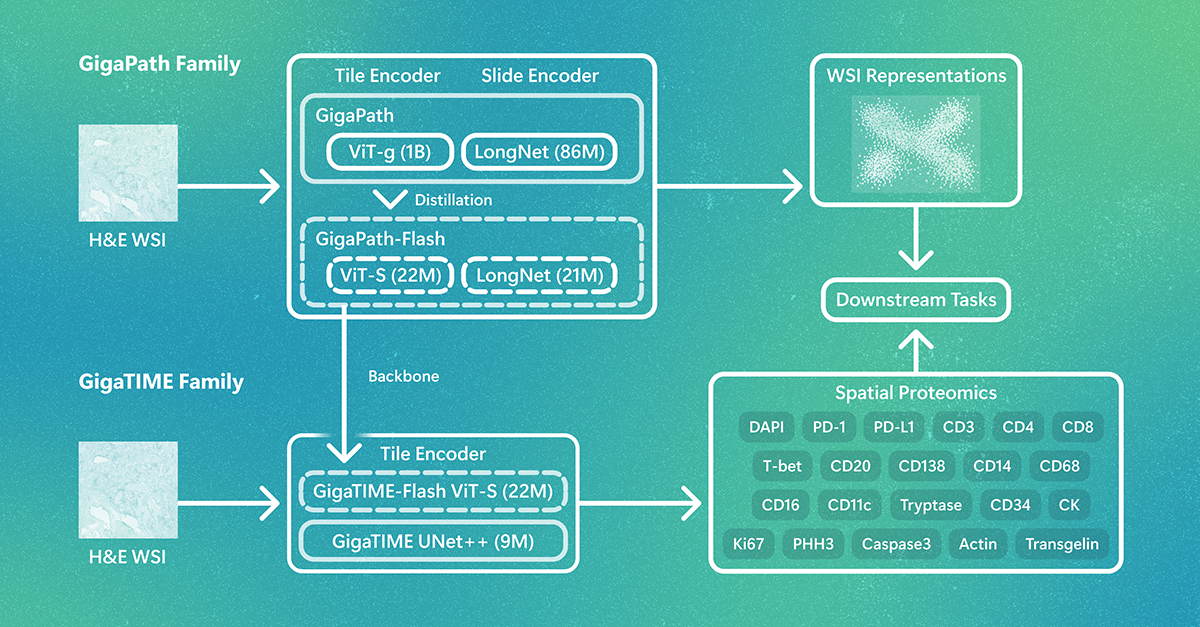
What if pathology foundation models could do more with less? GigaPath-Flash and GigaTIME-Flash cut computational demands while maintaining strong performance, opening the door to larger studies and broader exploration. The post GigaPath-Flash and GigaTIME-Flash: Toward population-scale discovery with efficient pathology foundation models appeared first on Microsoft Research.
We use cookies to run the site and, with your consent, for analytics and to show ads.
See our Cookie Policy.