In the context of cloud computing, risks associated with underlying technologies, risks involving service models and outsourcing, and enterprise readiness have been recognized as potential barriers for the adoption. To accelerate cloud adoption, the concrete barriers negatively influencing the adoption decision need to be identified. Our study aims at understanding the impact of technical and security-related barriers on the organizational decision to adopt the cloud. We analyzed data collected through a web survey of 352 individuals working for enterprises consisting of decision makers as well as employees from other levels within an organization. The comparison of adopter and non-adopter sample reveals three potential adoption inhibitor, security, data privacy, and portability. The result from our logistic regression analysis confirms the criticality of the security concern, which results in an up to 26-fold increase in the non-adoption likelihood. Our study underlines the importance of the technical and security perspectives for research investigating the adoption of technology.
Nattakarn Phaphoom, Xiaofeng Wang, S. Samuel et al.· Journal of Systems and Softw...· 111 citations· ⚡8
Software startup companies develop innovative, software-intensive products within limited timeframes and with few resources, searching for sustainable and scalable business models.
M. Unterkalmsteiner, P. Abrahamsson, Xiaofeng Wang et al.· e-Informatica Software Engin...· 157 citations· ⚡17
A case study of a large software company was conducted to examine how a new product was developed through the internal startup effort and struggled to achieve the desired outcomes set by the management, and the conceptual framework was developed into a Lean startup-enabled new product development model for large software companies.
Henry Edison, Xiaofeng Wang, P. Abrahamsson· EUROMICRO Conference on Soft...· 11 citations· ⚡1
This study conducts a case survey study based on the secondary data of the major pivots happened in 49 software startups, and demonstrates that customer need pivot is the most common among all pivot types.
Sohaib Shahid Bajwa, Xiaofeng Wang, Anh Nguyen-Duc et al.· Empirical Software Engineeri...· 127 citations· ⚡15
Reach audiences
Advertise in front of researchers, engineers, and readers.
Software startups are newly created companies with no operating history and oriented towards producing cutting-edge products. However, despite the increasing importance of startups in the economy, few scientific studies attempt to address software engineering issues, especially for early-stage startups. If anything, startups need engineering practices of the same level or better than those of larger companies, as their time and resources are more scarce, and one failed project can put them out of business. In this study we aim to improve understanding of the software development strategies employed by startups. We performed this state-of-practice investigation using a grounded theory approach. We packaged the results in the Greenfield Startup Model (GSM), which explains the priority of startups to release the product as quickly as possible. This strategy allows startups to verify product and market fit, and to adjust the product trajectory according to early collected user feedback. The need to shorten time-to-market, by speeding up the development through low-precision engineering activities, is counterbalanced by the need to restructure the product before targeting further growth. The resulting implications of the GSM outline challenges and gaps, pointing out opportunities for future research to develop and validate engineering practices in the startup context.
Carmine Giardino, Nicolò Paternoster, M. Unterkalmsteiner et al.· IEEE Transactions on Softwar...· 179 citations· ⚡14
This paper will focus on how to build and set up a test harness to gather empirical data from Companies and how to store these data together with demographical and financial data from the PROFF-portal in the Entrepreneurial Data Warehouse (from now called the EDW).
Yngve Dahle, M. Steinert, Anh Nguyen-Duc et al.· International Conference on...· 4 citations
The relationship between agile methods and Software Engineering Institute's CMM approach is often debated. Some authors argue that the approaches are compatible, while others have criticized the application of agile methods from the CMM perspective. Only few CMM based assessments have been performed on projects using agile approaches. This paper explores an empirical case where a project using Extreme Programming (XP) based approach was assessed using the CMMI framework. The results provide empirical evidence pointing out that it is possible to achieve maturity level 2 with approach based on XP. Yet, the results confirm that XP, as it is defined, is not sufficient. This study demonstrates that it is possible to use the CMMI for assessing and improving agile processes. However, the analysis reveals that assessing an agile organization requires more interpretations than normally would be the case. It is further concluded that the CMMI model does not always support interpretations in an agile context.
Tuomo Kähkönen, P. Abrahamsson· International Conference on...· 44 citations· ⚡4
This study conducts a multiple case study on twenty European software startups and proposes a prototype-centric learning model in early stage software startups, and identifies factors that occur as barriers but also facilitators for prototyping in earlystage software startups.
Anh Nguyen-Duc, Xiaofeng Wang, P. Abrahamsson· International Conference on...· 44 citations· ⚡5
This study explores how software firms interact with others in OSS ecosystems from a coopetition perspective, and finds that software firms emphasize the co-creation of common value and partly react to the potential competitiveness on O SS ecosystems.
Anh Nguyen-Duc, D. Cruzes, G. Hanssen et al.· International Conference on...· 17 citations· ⚡2
To compete in this age of disruption, large companies cannot rely on cost efficiency, lead time reduction and quality improvement. They are now looking for ways to innovate like startups. Meanwhile, the awareness and use of the Lean startup approach have grown rapidly amongst the software startup community in recent years. This study investigates how Lean internal startup facilitates software product innovation in large companies and identifies its enablers and inhibitors. A multiple case study approach is followed in the investigation. Two software product innovation projects from two large companies are examined, using a conceptual framework that is based on the method-in-action framework and extended with the previously developed Lean-Internal Corporate Venture model. Seven face-to-face in-depth interviews of the employees with different roles are conducted. Within-case analysis and cross-case comparison are applied to draw the findings from the cases. A generic process flow summarises the common key processes of Lean internal startups. The findings suggest that an internal startup that is initiated management or employees faces different challenges. A list of enablers of applying Lean startup in large companies are identified, including top management support and cross-functional team. Both cases face different inhibitors due to the different process of inception, objective of the team and type of the product. Our contributions are threefold. First, this study is one of the first attempt to investigate the use of Lean startup approach in large companies empirically. Second, the study shows the potential of the method-in-action framework to investigate the Lean startup approach in non-startup context. The third is a general process of Lean internal startup and the evidence of the enablers and inhibitors of implementing it, which are both theory-informed and empirically grounded.
Henry Edison, Nina M. Smørsgård, Xiaofeng Wang et al.· Journal of Systems and Softw...· 78 citations· ⚡6
Startups seek to create highly scalable business models. For startups, growth is thus vital. Growth hacking is a marketing strategy advocated by various startup practitioner experts. It focuses on using low cost practices while utilizing existing platforms in creative ways to gain more users for the service. Though topics related to growth hacking such as marketing on a general level have been extensively studied in the past, growth hacking as a practitioner-born topic has not seen much interest among the academia. To both spark interest in growth hacking, and to facilitate teaching growth hacking in the academia, we present two board games intended to serve as an engaging introduction to growth hacking for students.
Kai-Kristian Kemell, P. Feshchenko, Joonas Himmanen et al.· IWSiB@ESEC/SIGSOFT FSE· 9 citations· ⚡1
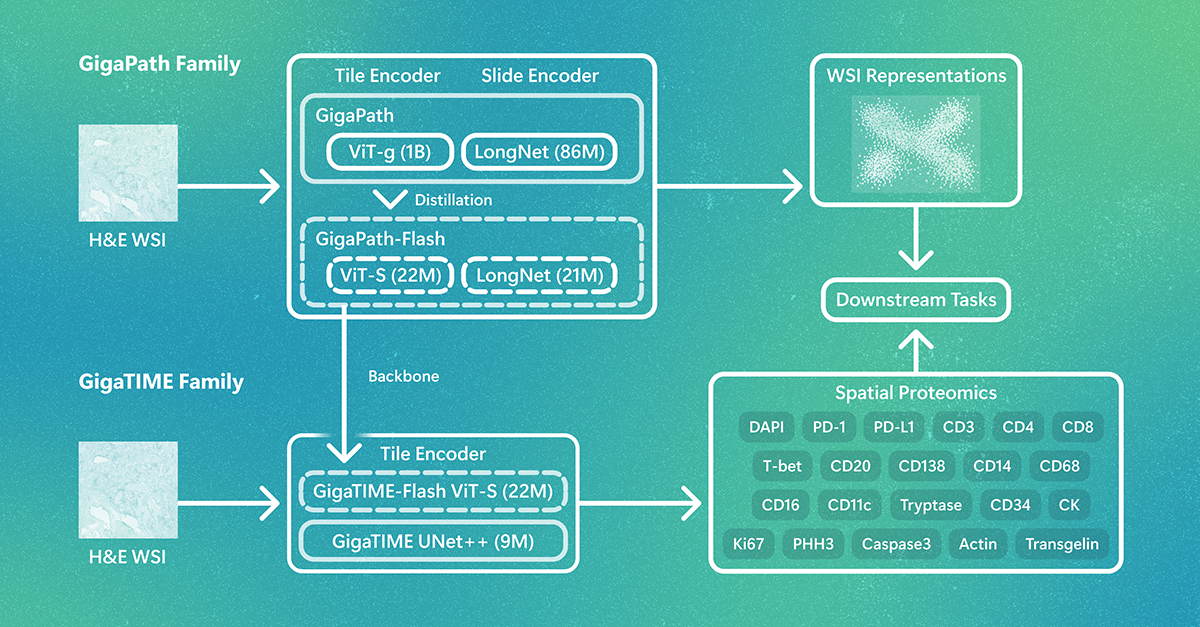
What if pathology foundation models could do more with less? GigaPath-Flash and GigaTIME-Flash cut computational demands while maintaining strong performance, opening the door to larger studies and broader exploration. The post GigaPath-Flash and GigaTIME-Flash: Toward population-scale discovery with efficient pathology foundation models appeared first on Microsoft Research.
We use cookies to run the site and, with your consent, for analytics and to show ads.
See our Cookie Policy.