This paper study software development in startups from the point of view of practices to better understand how startups develop software, and devise a list of practices which are categorized using the Essence Theory of Software Engineering (Essence).
Kai-Kristian Kemell, Ville Ravaska, Anh Nguyen-Duc et al.· International Conference on...· 5 citations
Software startups are an essential source of innovation and software-intensive products. The need to understand product development in startups and to provide relevant support are highlighted in software research. While state-of-the-art literature reveals how startups develop their software, the reasons why they adopt these activities are underexplored. This study investigates the tactics behind software engineering (SE) activities by analyzing key engineering events during startup journeys. We explore how entrepreneurial mindsets may be associated with SE knowledge areas and with each startup case. Our theoretical foundation is based on causation and effectuation models. We conducted semi-structured interviews with 40 software startups. We used two-round open coding and thematic analysis to describe and identify entrepreneurial software development patterns. Additionally, we calculated an effectuation index for each startup case. We identified 621 events merged into 32 codes of entrepreneurial logic in SE from the sample. We found a systemic occurrence of the logic in all areas of SE activities. Minimum Viable Product (MVP), Technical Debt (TD), and Customer Involvement (CI) tend to be associated with effectual logic, while testing activities at different levels are associated with causal logic. The effectuation index revealed that startups are either effectuation-driven or mixed-logics-driven. Software startups fall into two types that differentiate between how traditional SE approaches may apply to them. Effectuation seems the most relevant and essential model for explaining and developing suitable SE practices for software startups.
Anh Nguyen-Duc, Kai-Kristian Kemell, P. Abrahamsson· Empirical Software Engineeri...· 23 citations· ⚡1
Digital Identity has become a topic that attracts the attention of researchers due to the enormous number of services that have been provided online recently. Researchers face many obstacles regarding the security, privacy
Maha Sroor, Nicky Hickman, Taija Kolehmainen et al.· Procedia Computer Science· 5 citations
In this paper, we present a novel approach to improving software quality and efficiency through a Large Language Model (LLM)-based model designed to review code and identify potential issues. Our proposed LLM-based AI agent model is trained on large code repositories. This training includes code reviews, bug reports, and documentation of best practices. It aims to detect code smells, identify potential bugs, provide suggestions for improvement, and optimize the code. Unlike traditional static code analysis tools, our LLM-based AI agent has the ability to predict future potential risks in the code. This supports a dual goal of improving code quality and enhancing developer education by encouraging a deeper understanding of best practices and efficient coding techniques. Furthermore, we explore the model's effectiveness in suggesting improvements that significantly reduce post-release bugs and enhance code review processes, as evidenced by an analysis of developer sentiment toward LLM feedback. For future work, we aim to assess the accuracy and efficiency of LLM-generated documentation updates in comparison to manual methods. This will involve an empirical study focusing on manually conducted code reviews to identify code smells and bugs, alongside an evaluation of best practice documentation, augmented by insights from developer discussions and code reviews. Our goal is to not only refine the accuracy of our LLM-based tool but also to underscore its potential in streamlining the software development lifecycle through proactive code improvement and education.
Z. Rasheed, Malik Abdul Sami, Muhammad Waseem et al.· arXiv.org· 62 citations· ⚡3
Reach audiences
Advertise in front of researchers, engineers, and readers.
A unified platform that utilizes multiple artificial intelligence agents to automate the process of transforming user requirements into well-organized deliverables, including user stories, prioritization, and UML sequence diagrams, along with the modular approach to APIs, unit tests, and end-to-end tests.
Malik Abdul Sami, Muhammad Waseem, Z. Rasheed et al.· arXiv.org· 14 citations· ⚡1
A web-based software tool is introduced that employs an LLM-based agent and prompt engineering to automate the generation of test case scenarios against user requirements and crafting test case scenarios based on these stories.
Malik Abdul Sami, Z. Rasheed, Muhammad Waseem et al.· arXiv.org· 13 citations
A web-based software tool utilizing AI agents and prompt engineering to automate task prioritization and apply diverse prioritization techniques, aimed at enhancing project management within the agile framework is introduced.
Malik Abdul Sami, Z. Rasheed, Muhammad Waseem et al.· arXiv.org· 15 citations
Systematic literature review (SLR) is foundational to evidence-based research, enabling scholars to identify, classify, and synthesize existing studies to address specific research questions. Conducting an SLR is, however, largely a manual process. In recent years, researchers have made significant progress in automating portions of the SLR pipeline to reduce the effort and time required for high-quality reviews; nevertheless, there remains a lack of AI-agent-based systems that automate the entire SLR workflow. To this end, we introduce a novel multi-AI-agent system designed to fully automate SLRs. Leveraging large language models (LLMs), our system streamlines the review process to enhance efficiency and accuracy. Through a user-friendly interface, researchers specify a topic; the system then generates a search string to retrieve relevant academic papers. Next, an inclusion/exclusion filtering step is applied to titles relevant to the research area. The system subsequently summarizes paper abstracts and retains only those directly related to the field of study. In the final phase, it conducts a thorough analysis of the selected papers with respect to predefined research questions. This paper presents the system, describes its operational framework, and demonstrates how it substantially reduces the time and effort traditionally required for SLRs while maintaining comprehensiveness and precision. The code for this project is available at: https://github.com/GPT-Laboratory/SLR-automation .
Malik Abdul Sami, Z. Rasheed, Kai-Kristian Kemell et al.· arXiv.org· 43 citations· ⚡2
Results corroborate the effectiveness of LLMs in improving and streamlining RE phases by analyzing the semantic similarity and API performance of different models, as well as their effectiveness and efficiency in requirements analysis.
Malik Abdul Sami, Muhammad Waseem, Zheying Zhang et al.· arXiv.org· 17 citations· ⚡2
A novel multi-agent AI model is introduced that aims to assess and compare the performance of various LLMs, and initial results indicate that the GPT-3.5 Turbo model's performance is comparatively better than the other models.
Z. Rasheed, Muhammad Waseem, Kari Systä et al.· arXiv.org· 23 citations
It is shown in the paper that CodePori is able to generate running code for large-scale projects, completing the entire software development process in minutes rather than hours, and at a cost of a few dollars.
Z. Rasheed, Muhammad Waseem, Mika Saari et al.· arXiv.org· 20 citations· ⚡1
The results indicate that if the OpenAPI specification is kept small and focused, LLM-based multi-agent systems are capable of generating complete functional code with business logic that aligns to the specification.
Saurabh Chauhan, Z. Rasheed, Malik Abdul Sami et al.· arXiv.org· 1 citation
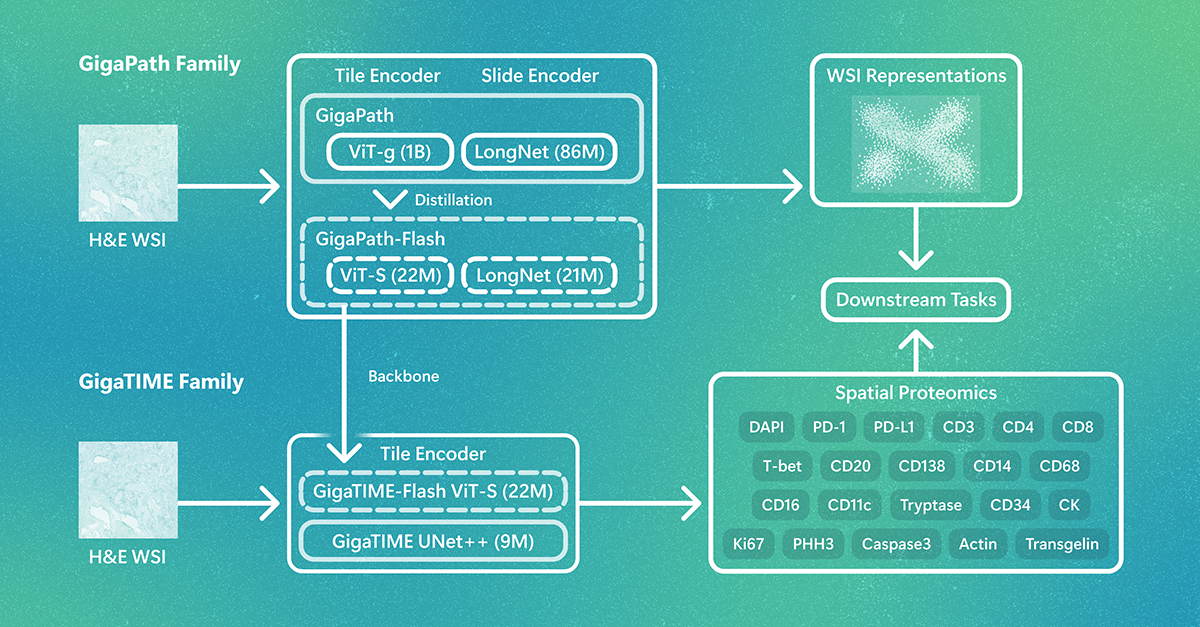
What if pathology foundation models could do more with less? GigaPath-Flash and GigaTIME-Flash cut computational demands while maintaining strong performance, opening the door to larger studies and broader exploration. The post GigaPath-Flash and GigaTIME-Flash: Toward population-scale discovery with efficient pathology foundation models appeared first on Microsoft Research.
We use cookies to run the site and, with your consent, for analytics and to show ads.
See our Cookie Policy.