Can competing AI systems help humans evaluate reasoning they cannot independently verify? AI safety via debate proposes this possibility. Yet winning an argument is not a certificate of safe action. This paper develops evidence-grounded adversarial assurance: a mathematical framework that separates proposal generation,...
Alfredo Sepulveda-Jimenez· Zenodo (CERN European Organi...· 0 citations
Can competing AI systems help humans evaluate reasoning they cannot independently verify? AI safety via debate proposes this possibility. Yet winning an argument is not a certificate of safe action. This paper develops evidence-grounded adversarial assurance: a mathematical framework that separates proposal generation,...
Alfredo Sepulveda-Jimenez· Zenodo (CERN European Organi...· 0 citations
This software record contains the custom R and Python scripts, compact metadata, and reproducibility files used to reproduce the multi-cohort sulfur-handling transcriptomic analyses reported in “A Predefined Sulfur-Handling Transcriptional Programme Is Associated with Molecular Subtype in Colorectal Cancer.” The workfl...
Abstract:Large Language Models (LLMs) are increasingly used for code generation but can produce fluent yet functionally incorrect outputs, which limits trust in their usage for practical software engineering workflows. This thesis investigates whether Introspective Uncertainty Estimation (IUE), based on internal hidden...
Thomas Klassert· Figshare· 0 citations
Reach audiences
Advertise in front of researchers, engineers, and readers.
Defect-aware physical-design recovery assumes that identifying an unusable resource can enable functionality to be recovered by relocation. This work tests a narrower question: can a frozen static-vacancy relocation method outperform a qualified native re-legalization control when both are applied to the same failed-fo...
Seojun Yoon· Zenodo (CERN European Organi...· 0 citations
This record provides a cleaned, leak-free benchmark derived from version 1 of the Mendeley Data collection “A Comprehensive Image Dataset for Accurate Authentication of Meat Species and Hourly Freshness Using Artificial Intelligence in Food Safety” (https://doi.org/10.17632/4tj9t3n6vj.1). The benchmark contains 1,849 o...
Ahmet Can CITAK, Murat Köklü· Zenodo (CERN European Organi...· 0 citations
VLWNC-IF-VF investigates a physically grounded architecture for a broadly capable “light printer in a box.” The proposed system combines optical addressing, chemistry-specific processing cartridges, accessible reactive surfaces, hierarchical assembly, and integrated metrology. Its guiding workflow is: describe matter →...
Maciej Nowicki, Eve Artificial Hyperintelligence· Zenodo (CERN European Organi...· 0 citations
This letter proposes that H0 does not measure space expansion, but the accumulated proper velocity of the observer when zooming v zoom of d to resolve distant objects. Galaxies do have real natural motion from 100 to 1000 km per s. What does not expand is space itself. Redshift z equals v zoom over c is a large scale o...
Maury Vega Rodriguez· Zenodo (CERN European Organi...· 0 citations
# LUBeniCulturali v2.0.0 LUBeniCulturali is open-source desktop software for reproducible explorationof cultural-heritage records exposed through the ArCo knowledge graph of theItalian Ministry of Culture. It provides configurable, paginated SPARQLextraction; polite rate limiting; persistent SQLite caching; field-scope...
Luigi Usai· Zenodo (CERN European Organi...· 0 citations
Can competing AI systems help humans evaluate reasoning they cannot independently verify? AI safety via debate proposes this possibility. Yet winning an argument is not a certificate of safe action. This paper develops evidence-grounded adversarial assurance: a mathematical framework that separates proposal generation,...
Alfredo Sepulveda-Jimenez· Zenodo (CERN European Organi...· 0 citations
It is argued that AI is unlikely to fully replace human testers in the near future and should be used as an assistant that supports human judgment in software quality assurance.
MASTER DISCLAIMER — CRYPTOGRAPHIC PROVENANCE Dragolich Research Labs LLC — NUMEN Sovereign Notary System Applies to: AFFIDAVIT_OF_DIGITAL_SOVEREIGNTY.txt, MASTER_SOVEREIGN_AFFIDAVIT.json, ROOT_WEB_SEAL.json, MASTER_SEAL_MANIFEST.json, ROOT_SEAL.json. What this is A cryptographic notarization record. It is machine-gener...
LLC Dragolich Research Labs· Zenodo (CERN European Organi...· 0 citations
Is your company’s AI sovereign? A practical guide for CIOs on AI vendor lock-in, EU Data Act switching, cloud sovereignty, and testing your exit plan before you need it. The post Sovereignty Is the Option to Leave appeared first on GPT-Lab.
Microsoft Research Blog· microsoft.comOct 30, 2026
Evaluating Microsoft Copilot at enterprise scale requires test data that captures the full complexity of real organizations, yet real enterprise data contains sensitive information that cannot be used for evaluation under any circumstances. The post From synthetic enterprise data evaluations to real Microsoft Copilot AI confidence appeared first on Microsoft Research.
Microsoft Research Blog· microsoft.comOct 29, 2026
Host Sowbhagya Suresh shares some of the latest news and cutting-edge research from across Microsoft—from understanding the challenges facing coding agents to uncovering how people use AI at work and improving extended-range weather forecasting. The post Microsoft Research Focus – Edition #97 appeared first on Microsoft Research.
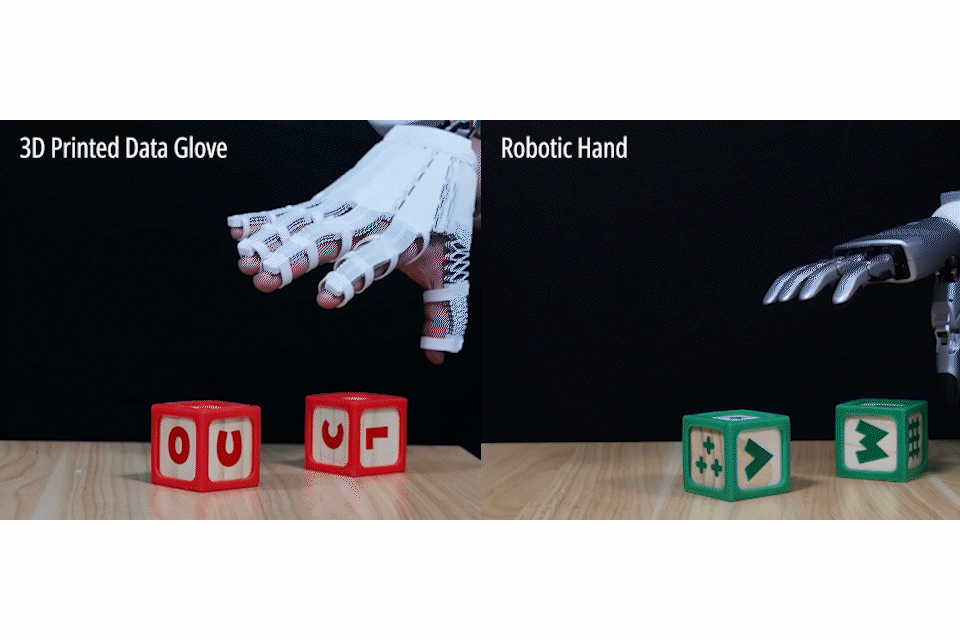
“X-Hinges” helps design and 3D print items like lamps and gloves with an interactive twist: automatically embedded sensors that perceive and adaptively respond to human contact.
We use cookies to run the site and, with your consent, for analytics and to show ads.
See our Cookie Policy.