View the results in the interactive transcriptomic atlas. This record is an independent secondary analysis and derived research object. It is not the original Schmidt experimental dataset or the original Hoffrichter/Schmidt analysis. Original experiment and data generation: Schmidt et al. generated the human iPSC-deriv...
Christopher B. Germann· Zenodo (CERN European Organi...· 0 citations
Objective: Evaluate the diagnostic ability of various serum biomarkers for early oral squamous cell carcinoma (OSCC) diagnosis compared to histopathological investigation Method: Review was performed in accordance to Preferred Reporting Items for Systematic Reviews and Meta-Analysis – Diagnostic Test Accuracy (PRISMA-D...
A. Rajbhoj, P. Rathod, N. Anasane et al.· International Journal of Dru...· 0 citations
By assigning each of the 240 E8 root vectors to a phi‑scaled phase of a 132 Hz oscillation, a cron‑job's execution trace acquires a unique geometric signature that amplifies any timing or SSL fault as a deviation from the ideal lattice path. Such deviations produce measurable violations of Bell‑type inequalities, provi...
Andrew Stewart Caldin· Zenodo (CERN European Organi...· 0 citations
Background: Lettuce production in Saïoua is constrained by pest pressure and frequent dependence on synthetic inputs.
Aims: This study evaluated the effect of Artemisia annua L. extracts on the growth and yield of lettuce (Lactuca sativa L.) in Saïoua, with the aim of proposing a sustainable agroecological alternative...
N'gonian Kouadio Serge, Aka Borel Junior Kévin, Yobouet Konan Elie et al.· Asian Journal of Biology· 0 citations
Reach audiences
Advertise in front of researchers, engineers, and readers.
This repository contains the preprint of the paper "From Form to Program" and the full source code for the autonomous audit of conditional codon syntax (pipeline v10). Building upon the "Form/Substance" lens introduced by J.-C. Perez, this study mathematically separates the static macroscopic invariants of the genome (...
Victor Logvinovich, Jean claude Perez· Zenodo (CERN European Organi...· 0 citations
Coding agents now repair broken release workflows in GitHub Actions, the software supply-chain configuration that decides which runs may publish a package to PyPI or npm, push a container, or sign a release. The usual acceptance criterion is that the release job runs again. We show that this criterion passes repairs th...
Md Imran Hossen· Zenodo (CERN European Organi...· 0 citations
Software and experiment records supporting the study 6G Adaptive Graph Temporal Networks for Robust Traffic Speed Forecasting under Communication Impairments. The deposit contains causal preprocessing and model code, forecast-time input checks, eight implementation tests, predeclared configurations, validation-only sel...
Shishir Singh Chauhan, Bali Devi· Zenodo (CERN European Organi...· 0 citations
Replication package v1.0.0 for "The CCP Recapitalization Void: Pre-Funding Systemic Risk in India's Equity & Equity Derivatives Market". Contents: Data: quarterly Core SGF and open-interest regression data (SAS and Excel), monthly CM, FO, OI and India VIX series, and annual NSE/NCL financials (FY2007-FY2026), all compi...
golakanath· Zenodo (CERN European Organi...· 0 citations
Native Windows build of the Geant4 11.4.3 simulation toolkit, packaged as a single installer. It contains Geant4, all 15 data sets, the Qt 6 GUI with 3D visualization, and a complete C++ toolchain (gcc 16.2, CMake, Ninja), so Geant4 applications can be run and built without Visual Studio, MSYS2 or Cygwin and without fu...
David Sarrià· Zenodo (CERN European Organi...· 0 citations
Input products and results for the paper Reconstructed acquisition geometry for Copernicus openEO Sentinel-1 interferograms and its effect on MintPy time series (Burak Can Kara, submitted to Advances in Space Research). They allow the openEO2Mintpy software to be tested on the same data and the reported MintPy results...
Burak Can Kara· Zenodo (CERN European Organi...· 0 citations
Overview ESA-FT1-REPRO-v1.0.2 is a script and provenance package supporting the study “When Early-Warning Alarms Become Unreachable: Structural Feasibility and Exploratory Mutual-Information Diagnostics on ESA Satellite Telemetry.” The study investigates a structural failure mode in information-theoretic early-warning...
Karimov Hikmat, Alekberli Rahid· Zenodo (CERN European Organi...· 0 citations
This software archive contains analysis and figure-generation code for signal-specific fine-mapping of the APH1B locus in Alzheimer disease. Version 2026.10.10 synchronizes the publication display with the revised manuscript: Figure 1 names the specified multiple-testing correction, Figure 3 identifies its highest-PIP...
Qianqian Huang, Xiaohui Bi, Ran Chen· Zenodo (CERN European Organi...· 0 citations
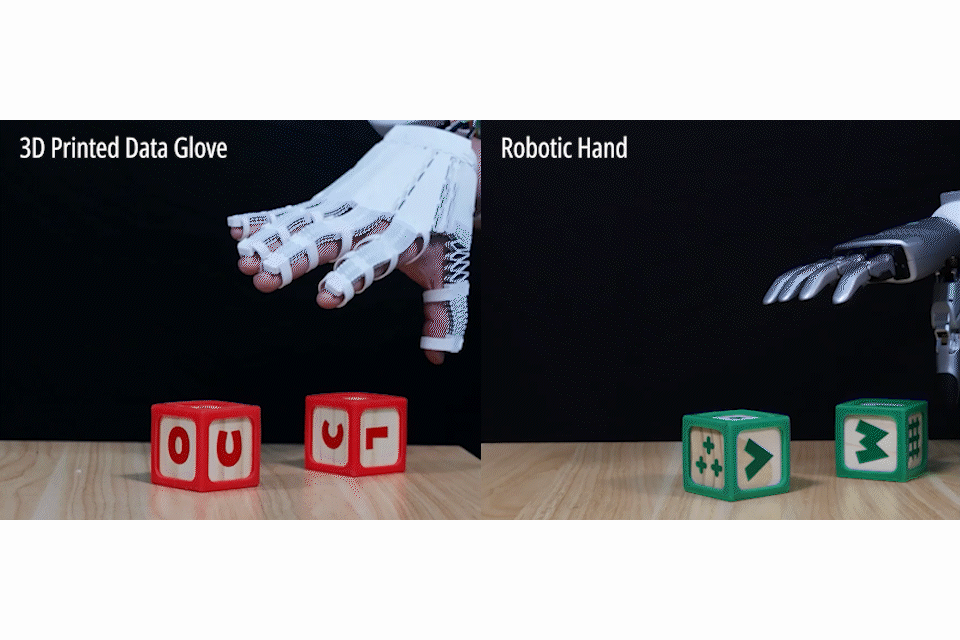
“X-Hinges” helps design and 3D print items like lamps and gloves with an interactive twist: automatically embedded sensors that perceive and adaptively respond to human contact.
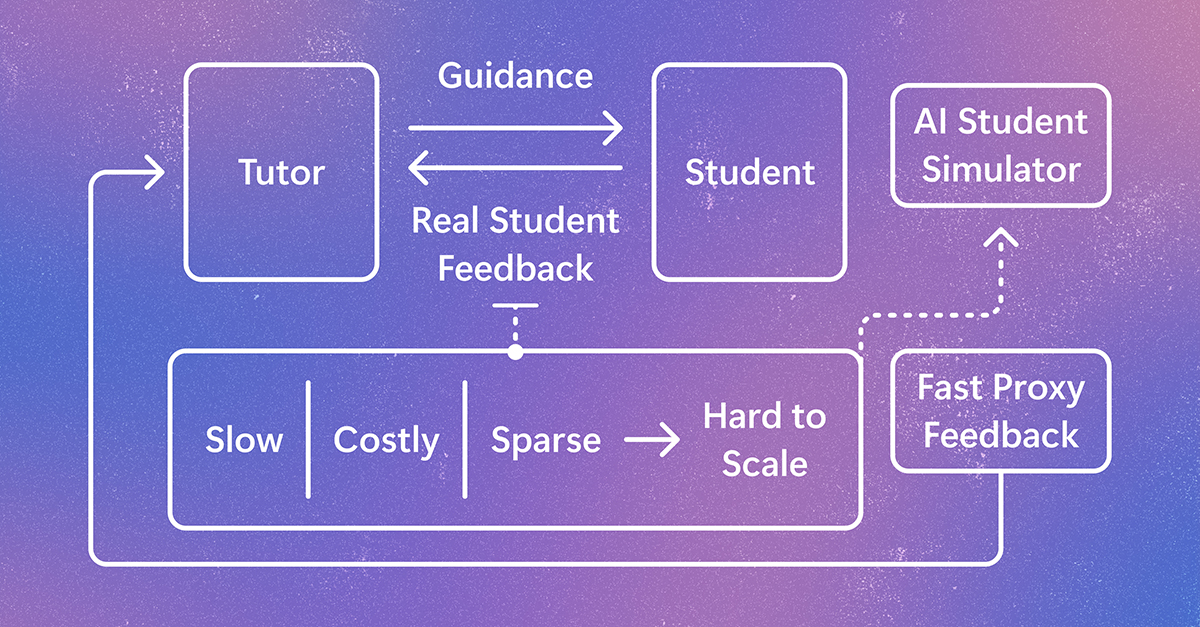
StudentSim is a research system for evaluating and improving AI tutoring tools before they are tested with learners. It models how individuals may engage with tutors, giving feedback to improve tutor performance across subjects like chess, writing, and mathematics. The post Simulating student learning for better AI tutoring appeared first on Microsoft Research.
MIT News · Artificial Intelligence· news.mit.eduOct 6, 2026
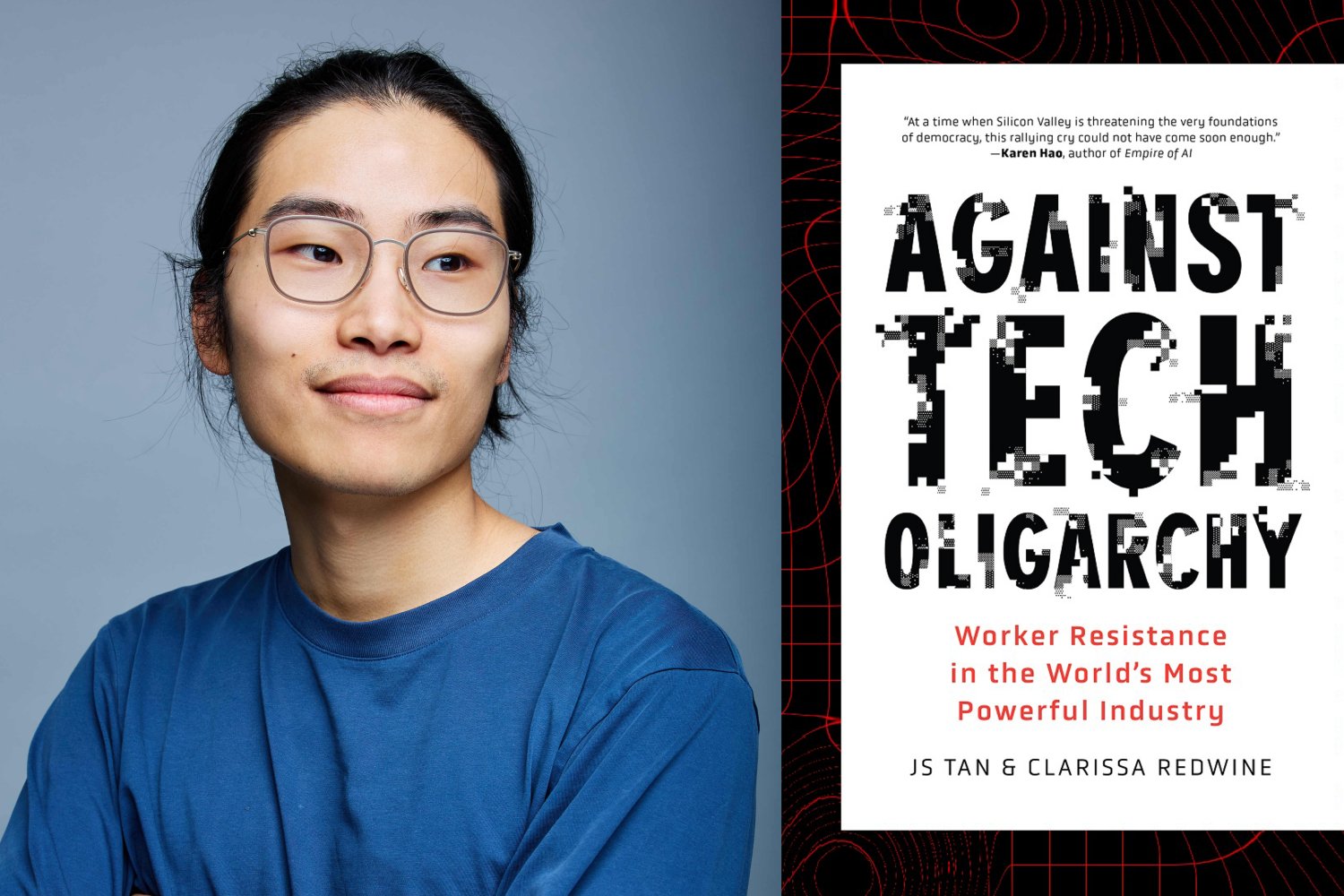
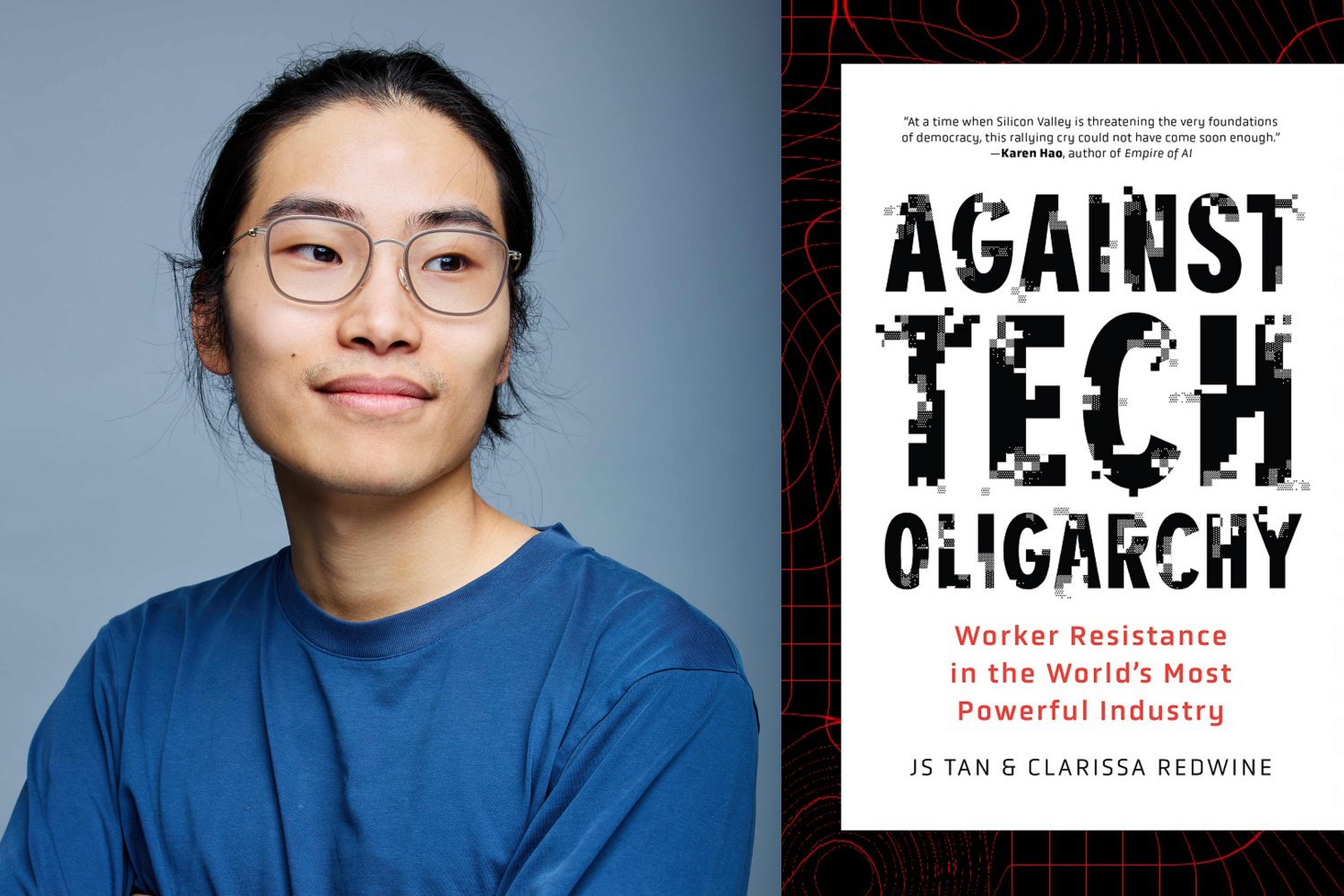
Writing as a participant and researcher, PhD student JS Tan SM ’22 has co-authored a new book about the rise of tech worker protests and the employer backlash that followed.
MIT News · Artificial Intelligence· news.mit.eduOct 2, 2026
Writing as a participant and researcher, PhD student JS Tan SM ’22 has co-authored a new book about the rise of tech worker protests and the employer backlash that followed.
We use cookies to run the site and, with your consent, for analytics and to show ads.
See our Cookie Policy.