An LLM-driven testing framework that reformulates accessibility evaluation into an automated reachability problem and effectively uncovers four types of dynamic accessibility defects: non-interactive control, navigation trap, improper focus ordering, and navigation dead zone is presented.
A systematic evaluation of the capability of large language models (LLMs) in new feature implementation, with a task setup strictly aligned with real-world software development practices, shows that new feature implementation of LLMs adhering to real-world world software development practices remains challenges.
J. Li, Ting-Xuan Huang, Tian Zhao et al.· Proceedings of the 41st IEEE...· 0 citations
The results show that CoCoS supports the conservative bounding of regression scopes while preserving compliance-oriented reasoning and providing practical evidence for test planning in safety-critical environments.
Francesco Basciani, Daniele Masti, Patrizio Pelliccione et al.· Proceedings of the 41st IEEE...· 0 citations
The design enables continuous execution of large certification test suites while preserving reproducibility, traceability, and result analysis and features a multi-runner model that enables efficient on-commit execution of hundreds of certification test sequences.
Jacopo Maltagliati, Salvatore De Simone, G. Denaro· 0 citations
Reach audiences
Advertise in front of researchers, engineers, and readers.
This work presents the first formalisation of testability for quantum programs, adapting classical concepts to quantum computation by introducing Quantum Squeeziness, an information-theoretic metric inspired by classical squeeziness to quantify how faults are masked and prevented from propagating to observable outcomes...
Avner Bensoussan, H. Menéndez, Mohammad Reza Mousavi· 1 citation
It is found that LLM-based approaches can generate incorrect, overspecified, or incomplete test suites in all configurations, and that the configuration has less of an effect on the generated tests than expected.
Sarah Dagger· Proceedings of the 41st IEEE...· 0 citations
Results show that FPSieve can reduce false positives, reduce manual effort, and improve OS migration validation throughput, on a large scale OS migration differential testing dataset collected from industrial practice.
This experience paper introduces a property-based testing approach for WHRs, finding 21 previously unknown bugs, including axis limit violations, entanglement issues, and missing interlock checks, and distilled a number of practical lessons learned.
Rui-Yang Xu, Jing-Jing Liang, Guo-Yue Zheng et al.· 0 citations
SIBS is the first semantics-aware scheduling framework for incremental builds across configurations, addressing both inaccurate cost estimation and the limitations of greedy scheduling, and demonstrates that semantics-aware cost modeling and global scheduling provide substantial and robust efficiency gains across diver...
Xiao-Long Dai, Shan-Shan Li, Jun Lyu et al.· Proceedings of the 41st IEEE...· 0 citations
Agentic software-development systems increasingly wrap language models in workflows —repair loops, best-of-N samplers, multi-agent pipelines. We argue for a specific lens on why such structure helps and on how to design it automatically. Our position is that the value of an agentic workflow is the quality it converts a...
A. Spiridonov· Proceedings of the 1st Inter...· 0 citations
This work presents QGenome, a semantic foundation for quantum software genomics that establishes a falsifiable framework and a concrete research agenda for gene mining, lineage recovery, cross-layer regression testing and repair, and evidence-grounded quantum software agents.
Jiongchi Yu, Yue Duan, Zi-Ming Zhao et al.· 0 citations
“X-Hinges” helps design and 3D print items like lamps and gloves with an interactive twist: automatically embedded sensors that perceive and adaptively respond to human contact.
StudentSim is a research system for evaluating and improving AI tutoring tools before they are tested with learners. It models how individuals may engage with tutors, giving feedback to improve tutor performance across subjects like chess, writing, and mathematics. The post Simulating student learning for better AI tutoring appeared first on Microsoft Research.
MIT News · Artificial Intelligence· news.mit.eduOct 6, 2026
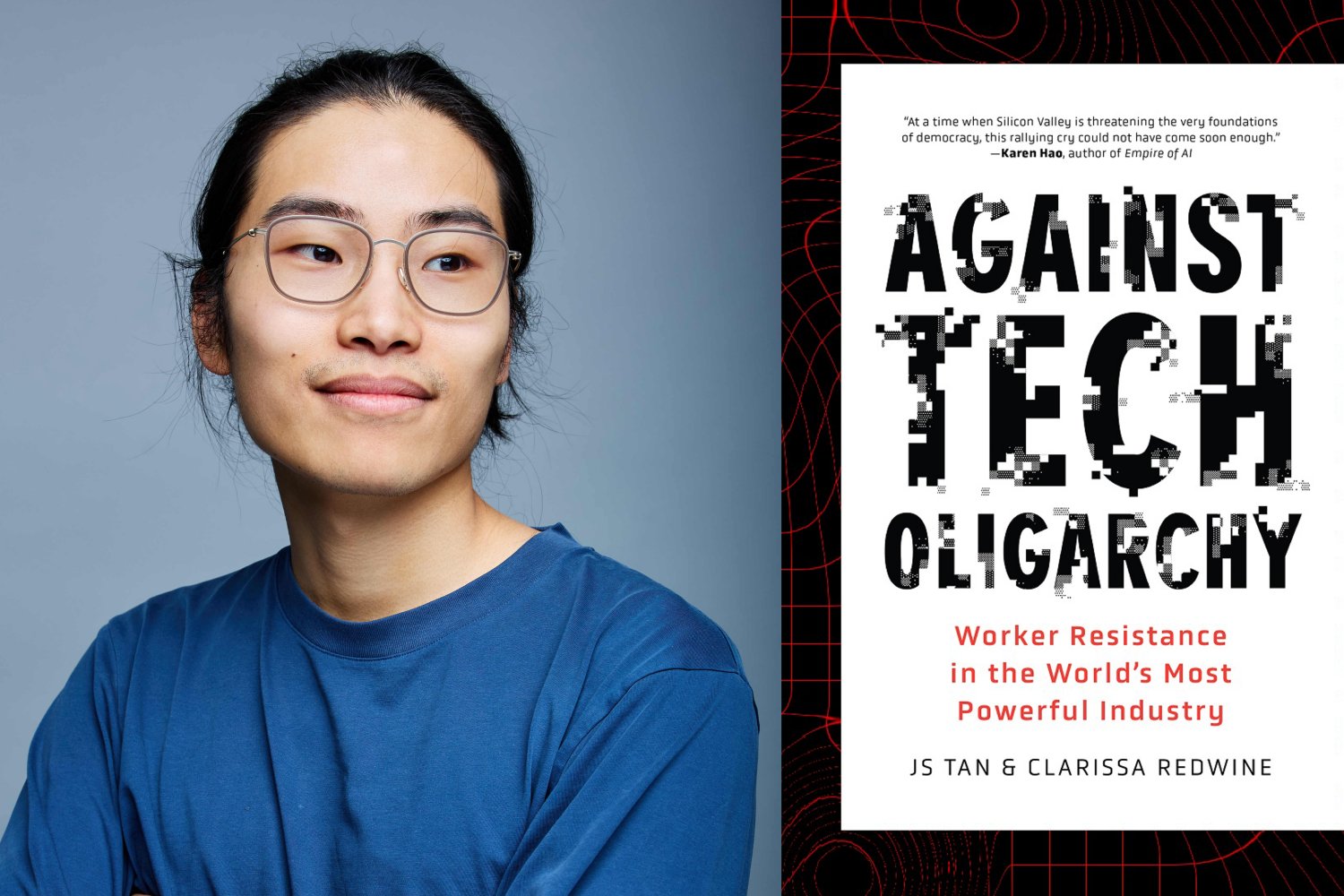
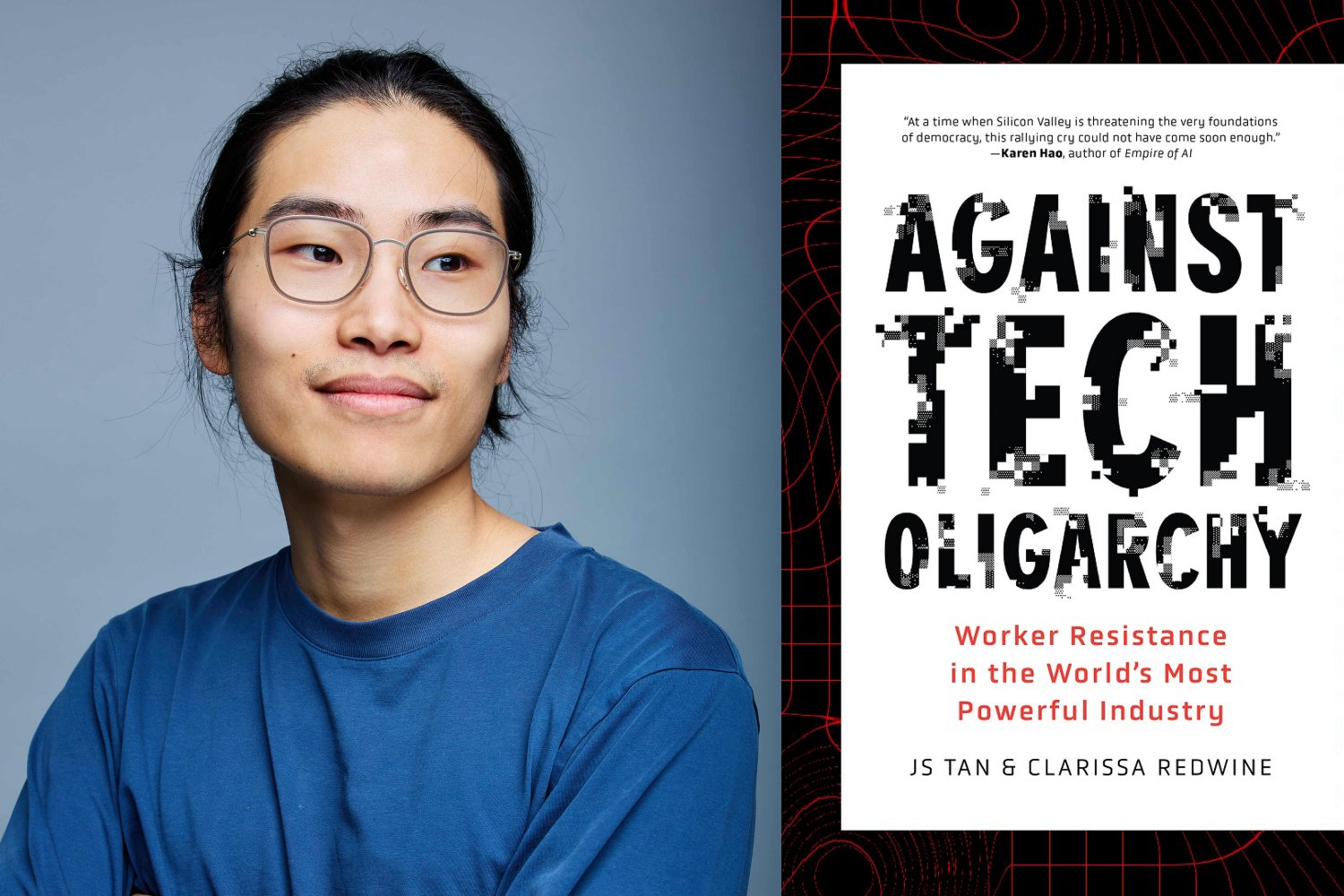
Writing as a participant and researcher, PhD student JS Tan SM ’22 has co-authored a new book about the rise of tech worker protests and the employer backlash that followed.
MIT News · Artificial Intelligence· news.mit.eduOct 2, 2026
Writing as a participant and researcher, PhD student JS Tan SM ’22 has co-authored a new book about the rise of tech worker protests and the employer backlash that followed.
We use cookies to run the site and, with your consent, for analytics and to show ads.
See our Cookie Policy.