QERRA-v2 Classical is an open-source, experimental three-layer execution guard and research middleware for autonomous robots and AI systems. Built upon the SEMEV-12 framework, the QERRA-HSR physical safety companion, and the QERRA-THRIVE value-ranking architecture, it investigates explainable, deterministic alternative...
MAROUSO METOCHARAKI· Zenodo (CERN European Organi...· 0 citations
Modern software supply chains face increasing risks from vulnerable and anomalous dependencies, necessitating automated and interpretable detection methods integrated within Continuous Integration and Continuous Deployment (CI/CD) workflows. Open-source software (OSS) ecosystems are increasingly targeted by sophist...
A. Alzahrani, Muhammad Zubair Asghar· Scientific Reports· 0 citations
Abstract (English) Background: Kosmyna et al. (2025) reported differences in directed EEG functional connectivity during essay writing with an LLM, a search engine, or no external tool. These measurements are not alpha/beta power or a general measure of cognitive decline. Objective: This ongoing narrative research exam...
Lukas Geiger· Zenodo (CERN European Organi...· 0 citations
Abstract Background Augmented reality (AR) glasses with waveguide optics and facial recognition may enhance patient identification and clinical workflows. However, their usability among physicians has not yet been evaluated. Objective The objective of this study was to assess the usability and acceptability of prototyp...
R. A. Ogasawara, Soichiro Yoshida, Kentaro Okamoto et al.· JMIR Human Factors· 0 citations
Reach audiences
Advertise in front of researchers, engineers, and readers.
This software archive contains the Python implementations used for the principal numerical analyses in the associated study on stress-dependent supercritical CO₂–water transport in sandstone under continuous true-triaxial loading. The archive contains two computational components: (1) three-dimensional constrained inve...
Wensong Jia, Xing Li· Zenodo (CERN European Organi...· 0 citations
This record contains Online Resource 1 (version 1.3), the reproducibility supplement accompanying the manuscript Data-compatible quantum-resource claims: tomography, calibration, and temporal access by Matthias Jakob. The supplement provides synthetic analytical benchmarks illustrating how quantum-resource and dynamica...
Matthias Jakob· Zenodo (CERN European Organi...· 0 citations
This paper proposes an operational software architecture grounded in the conceptual framework B+F=Nf, where B denotes functional processing (biological or algorithmic), F denotes the sovereign human witness, and Nf denotes the narrative trace produced when B passes through F. The paper introduces the F-Request Protocol...
Fatiha Nesrine Bouzid· Zenodo (CERN European Organi...· 0 citations
Scrapie, a prion disease, is usually considered a protein-only infection. However, the repetitive nature of the protein-containing fibrils of prion disease and other neurodegenerations, including Alzheimer’s and Parkinson’s diseases, has led to the hypothesis that RNA, specifically a repetitive RNA, may be present [1–3...
An AI agent can retain a correction across sessions and still repeat the corrected action. A record may be missing, remain unretrieved, arrive after the decision point, or be read without changing the action. This paper defines a functional scar as a failure-derived runtime control that links a documented error to an a...
Victor Del Puerto· Zenodo (CERN European Organi...· 0 citations
Replication package for "When Convenience Meets Risk: Evaluating Usability, Security, and AI Reliability Across Modern Operating Systems" (Alhawarat and Nijem), submitted to Empirical Software Engineering. Contents 01_AI_Reliability: Windows Copilot test set (80 prompts) with both raters' scores and reconciliation note...
Mohammad O. Alhawarat, Qasem Nijem· Zenodo (CERN European Organi...· 0 citations
Scientific code, licensed processed observational inputs, finite model banks and saved model-conditional recovery results. Real passive observations are distinct from computed demand-response events; no field intervention was tested. All 17 primary events in 10 installations fail the declared 2 K full-width engineering...
Junjie Zhang· Zenodo (CERN European Organi...· 0 citations
Zsigmondy–Palmer dental notation, still used in dentistry and dental education, has a two-dimensional, quadrant-based structure that is difficult to reproduce consistently in modern digital documents. Earlier digital approaches enabled symbol entry or rendering through specialized fonts, keyboard approximations, and ch...
“X-Hinges” helps design and 3D print items like lamps and gloves with an interactive twist: automatically embedded sensors that perceive and adaptively respond to human contact.
StudentSim is a research system for evaluating and improving AI tutoring tools before they are tested with learners. It models how individuals may engage with tutors, giving feedback to improve tutor performance across subjects like chess, writing, and mathematics. The post Simulating student learning for better AI tutoring appeared first on Microsoft Research.
MIT News · Artificial Intelligence· news.mit.eduOct 6, 2026
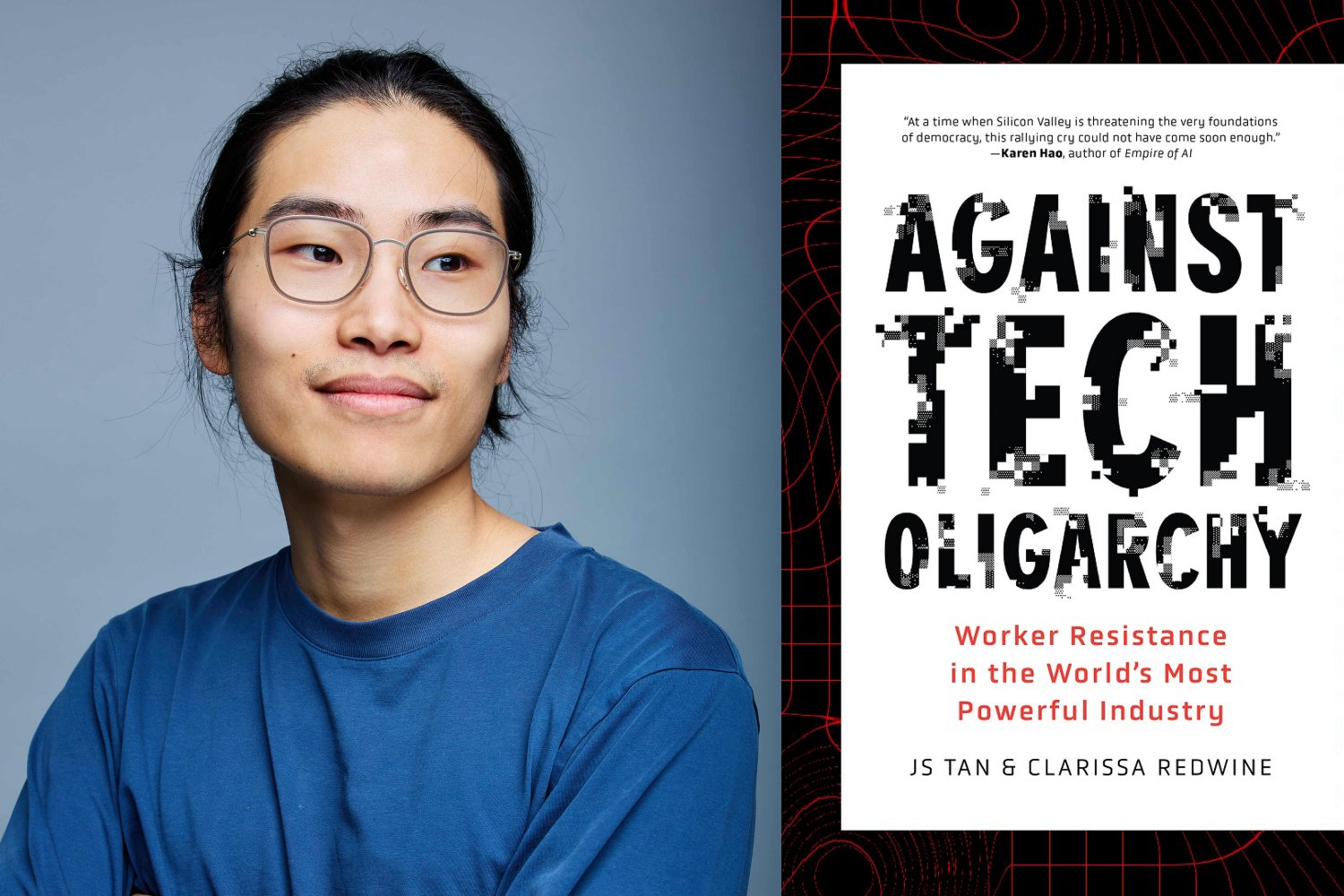
Writing as a participant and researcher, PhD student JS Tan SM ’22 has co-authored a new book about the rise of tech worker protests and the employer backlash that followed.
We use cookies to run the site and, with your consent, for analytics and to show ads.
See our Cookie Policy.