LiveProBench is introduced, which evaluates models at one-second stream intervals without an explicit response cue, revealing a substantial gap in the temporal decision-making required for human-like interaction.
Abstract
Streaming video understanding requires models to process continuous multimodal input while maintaining temporal context. Existing evaluations are predominantly reactive: they query a model at a selected timestamp and therefore do not assess when it should respond. Proactive interaction instead requires monitoring a standing request, responding within an appropriate interval after the target event, and otherwise remaining silent. We introduce LiveProBench, which evaluates models at one-second stream intervals without an explicit response cue. Its six subtasks vary trigger ambiguity and timing tolerance. Event Sensitivity geometrically combines response and silence rates on the same recording; four window-based subtasks distinguish early, in-window, and missed responses; and Duplicate Counting penalizes omissions and repetitions. Premature responses outnumber missed responses for half of the evaluated models, revealing a substantial gap in the temporal decision-making required for human-like interaction.
StreamMind is introduced, a two-tier architecture that assigns latency-critical interaction and proactive monitoring to independently scheduled frontend workers, while backend workers asynchronously construct persistent multimodal memory and perform historical recall and external search.
Xichen Zhang, Guankai Li, Yinghao Zhu et al.· 1 citation
Seeing frames in order does not mean representing time. Modern VideoLMs receive ordered video streams, yet their main supervision acts on generated text rather than video-token representations where event dynamics should first emerge. This mismatch allows models to learn temporal answers from shortcuts such as objects,...
Yu-Meng Shi, Quanyu Long, Yin Wu et al.· 0 citations
Large language models have made text the default medium for human--AI interaction, buttext alone cannot express the full range of responses required by multimodal assistants,avatars, and embodied agents. While recent audio-video generative models can synthesizehigh-fidelity synchronized content, existing supervision is...
Chi Zhang, Hao-Yan Shi, Yueyi Liu et al.· 2 citations
MotionBlind, a contrastive benchmark of self-recorded video for physically grounded motion, the variables a world model must predict, is introduced, a pair of near-identical clips that differ only in motion.
Dhairya Bhatia, Bishoy M. Galoaa, Oliver Fritsche et al.· 0 citations
Temporal reasoning benchmarks for Video-LLMs are often mediated by language, leaving room for linguistic shortcuts from option wording, answer correlations, or language priors, so TempCloze is introduced, a video cloze benchmark for evaluating visual temporal reasoning in Video-LLMs.
Wenqi Pei, Henry Hengyuan Zhao, Yi-Lai Liu et al.· 0 citations
Streaming video understanding requires answering questions that arrive at arbitrary moments over an unbounded video stream. Existing systems primarily focus on what to retain in a bounded memory, yet access that memory using the same fixed-cost procedure for every query, despite substantial variation in the evidence re...
Ce Zhang, Jing Bi, Jinxi He et al.· 2 citations
Related blog posts
MIT News · Artificial Intelligence· news.mit.eduOct 2, 2026
Martin Trust Center Managing Director Bill Aulet introduces Dear Dreamer, a free platform for middle and high school students who want to learn about entrepreneurship.
Microsoft Research Blog· microsoft.comSep 30, 2026
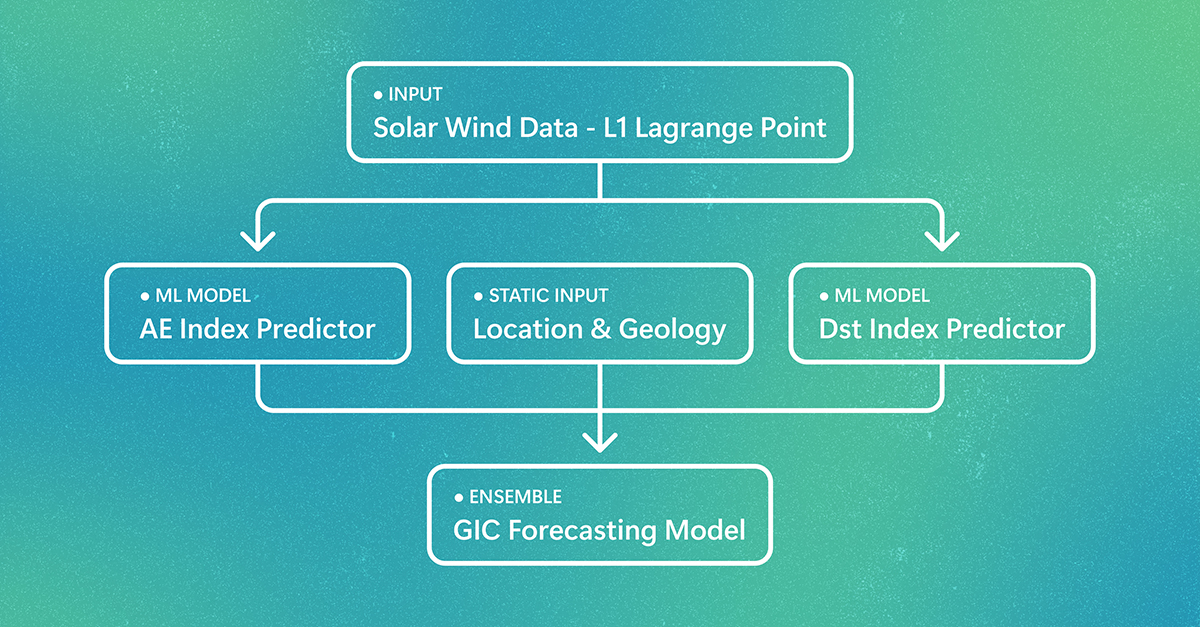
Extreme space-weather events can damage power systems on Earth and degrade GPS accuracy and satellite operations. A new machine learning system can predict where damage is likely to occur 30-60 minutes before a storm arrives. The post Forecasting space weather risks on power grids appeared first on Microsoft Research.
We use cookies to run the site and, with your consent, for analytics and to show ads.
See our Cookie Policy.