Skip to content

HoliBench: A Cross-Platform Benchmarking and Deployment Toolkit for Foundation Models in CPS-IoT Applications

Sep 2026 · 0 citations · 66 references
Computer Science

TL;DR

HoliBench is presented, a modular benchmarking and deployment toolkit that jointly characterizes accuracy, latency, and energy across platforms from single-board computers to GPU servers and is released as open-source infrastructure for deployment-aware evaluation of foundation models.

Abstract

Foundation models, including large language models, vision-language models, and time-series foundation models, are increasingly deployed on embedded and edge platforms for CPS and IoT applications, where energy, latency, and memory are as critical as task accuracy. Existing benchmarking tools evaluate model capability in isolation, reporting accuracy assuming sufficient compute, while hardware profiling tools remain platform-specific and mutually incompatible. As a result, users lack a unified workflow for making deployment decisions across heterogeneous devices. We present HoliBench, a modular benchmarking and deployment toolkit that jointly characterizes accuracy, latency, and energy across platforms from single-board computers to GPU servers. Its platform abstraction layer calibrates cross-device measurement, and the toolkit supports multiple model modalities, inference engines, concurrencies, and existing evaluation harnesses. An interactive interface exposes constraint-aware configuration selection over a design space that is profiled once and reused across studies. Using HoliBench, we characterize 20 models across 7 device types, 3 quantization levels, 8 inference backends, and over 30 tasks, surfacing tradeoffs that existing tools miss: quantization reduces latency only on hardware with low-precision support, accuracy gains show diminishing returns relative to energy, and for autoregressive workloads, average inference power is approximately constant across output lengths. We further find that single-model profiles compose under sequential co-resident execution. In a multi-model CPS deployment, standalone profiles predict combined-pipeline latency and power within 1.2% and 2.5%, enabling deployment exploration without exhaustively profiling every pipeline configuration. We release HoliBench as open-source infrastructure for deployment-aware evaluation of foundation models.

View source

Similar papers

#software testing Preprint Aug 2026

A Fully Automated, Deployment-Aware Testing Pipeline for IoT-Based Automotive Applications

This work presents an end-to-end, deployment-aware testing pipeline for IoT-based automotive applications that combines requirement-driven test and code generation with large language model (LLM) and vision-language model (VLM) assistance, and human-in-the-loop curation to reduce manual effort and improve consistency.

Denesa Zyberaj, Roman Vintonyak, Pascal Hirmer et al. · 0 citations
Preprint Sep 2026

Toward System-of-Systems Integration for Composable Cloud-HPC-Edge AI Platforms

Modern AI platforms increasingly combine infrastructure stacks and operating models designed around different assumptions, including cloud-style service platforms, HPC workload-management systems, cloud-native orchestration, data and artifact systems, managed connectivity, observability, and edge or cyber-physical envi...

S. Rakesh, Rajkumar Saini · 0 citations
Review Open access Sep 2026

LLMOps: A Foundation Model–Driven Framework for Autonomous Cloud Reliability Engineering

This research introduces Large Language Model Operations (LLMOps), an innovative Foundation Model–Driven Autonomous Cloud Reliability Engineering Framework that incorporates Large Language Models (LLMs) throughout the entire cloud operations lifecycle, thereby providing a scalable foundation for next-generation autonom...

M. Dhanekula · 0 citations
Open access 2026

End-to-End Latency Decomposition in AI-Driven Web Applications: Rethinking Infrastructure in LLM Based Systems

An end-to-end latency decomposition framework for analyzing performance in AI-powered web applications and provides a practical methodology for identifying performance bottlenecks and offers actionable insights for optimizing AI-driven web systems is introduced.

J. Hamzabegović, Amel Džanić, Kenan Duraković · 0 citations
Open access Sep 2026

Unified Namespace (UNS) Architecture for High-Throughput Factory Data Ingestion and Analytics

The Factory Integration Layer is introduced, a scalable, event-driven platform designed to bridge the gap between Information Technology (IT) and Operational Technology (OT) systems across globally distributed manufacturing sites, enabling seamless data integration and AI-driven innovation.

Farhan Siddiqui, C. Krishna, Nirav Goradia et al. · 0 citations

Related blog posts

MIT News · Artificial Intelligence Aug 27, 2026

Looking beyond natural sequences

A new machine-learning framework aims to improve the success rate of computational protein design while moving away from results that reproduce sequences found in nature.

Microsoft Research Blog Aug 20, 2026

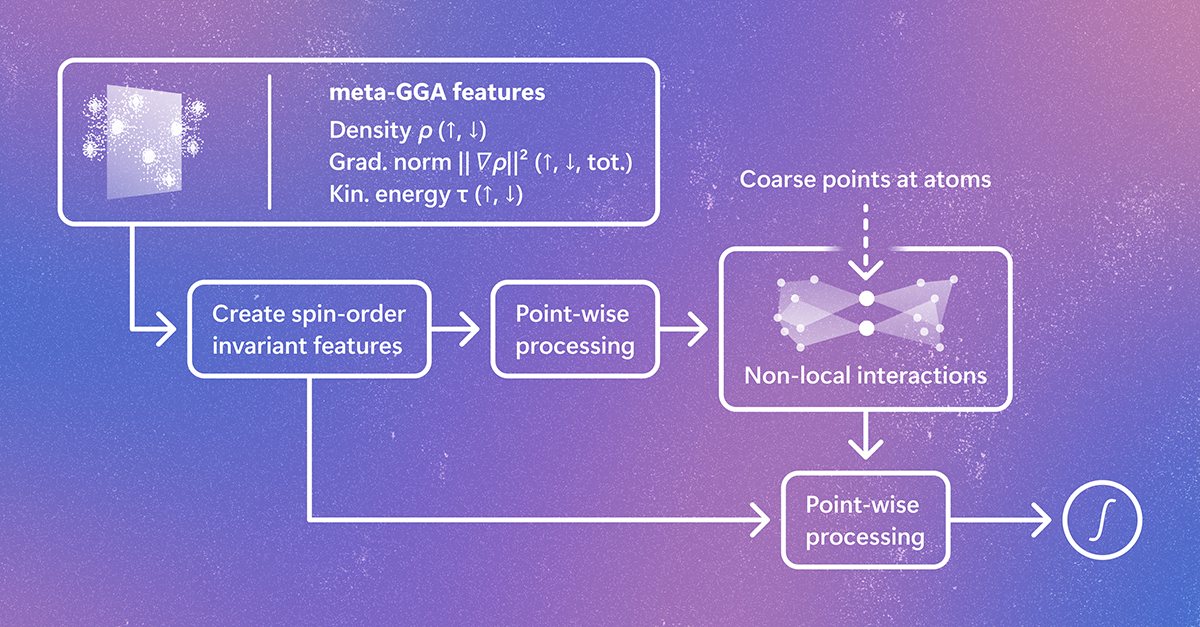
Broadening access to Skala creates a faster path to predictive DFT 

Skala 1.1, the updated deep-learning exchange-correlation functional from Microsoft Research, provides greater accuracy, expanded accessibility across the computational chemistry ecosystem, and a living benchmark to track computational performance. The post Broadening access to Skala creates a faster path to predictive DFT  appeared first on Microsoft Research.

We use cookies to run the site and, with your consent, for analytics and to show ads. See our Cookie Policy.