Sep 2026· International Journal of Public Health· Vol 71· 0 citations· 93 references
Medicine
TL;DR
Machine Learning techniques were the most commonly applied AI methods in pharmacovigilance, followed by natural language processing, deep learning, neural networks, and symbolic and explainable AI.
Abstract
Objective To examine the application of artificial intelligence (AI) in pharmacovigilance across the Asia-Pacific and identify reported methodological implementation challenges. Methods MEDLINE, Scopus, and Google Scholar were searched using terms related to artificial intelligence, computational signal detection, pharmacovigilance, and Asia-Pacific countries. Peer-reviewed original studies published in English were included. PRISMA 2020 guideline was followed. Results We included 64 studies in 14 countries primarily focused on 1) Adverse Drug Reaction (ADR) identification, 2) ADR prediction and risk factor modelling, 3) Drug safety, monitoring, and evaluation, 4) Predictive modelling, and 5) Data information management. Machine Learning (ML) techniques were the most commonly applied AI methods in pharmacovigilance, followed by natural language processing, deep learning, neural networks, and symbolic and explainable AI. Disproportionality analysis methods were also commonly used across studies. Some challenges reported were relevant to data quality issues, generalizability, clinical workflow integration, implementation technicalities, and cultural barriers. Conclusion To overcome the challenges of AI application in the Asia-Pacific, a tiered implementation strategy can be employed through establishing a regional collaboration framework and taking into account disparities in technological maturity across countries.

The method, ECCOLA, is presented, which aims at making the high-level AI ethics principles more practical, making it possible for developers to more easily implement them in practice.
Ville Vakkuri, Kai-Kristian Kemell, P. Abrahamsson· EUROMICRO Conference on Soft...· 64 citations· ⚡6
The goal is to not only refine the accuracy of the LLM-based tool but also to underscore its potential in streamlining the software development lifecycle through proactive code improvement and education.
Z. Rasheed, Malik Abdul Sami, Muhammad Waseem et al.· arXiv.org· 62 citations· ⚡3
The use of large language models to automatically improve the user story quality in Austrian Post Group IT agile teams is explored, with a reference model for an Autonomous LLM-based Agent System developed and implemented at the company.
Zheying Zhang, M. Rayhan, Tomas Herda et al.· International Conference on...· 48 citations· ⚡4
This paper introduces a novel multi-AI-agent system designed to fully automate SLRs, and demonstrates how it substantially reduces the time and effort traditionally required for SLRs while maintaining comprehensiveness and precision.
Abdul Malik Sami, Z. Rasheed, Kai-Kristian Kemell et al.· arXiv.org· 44 citations· ⚡2
The proposed LLM-based multi-agent system automates qualitative data analysis process, creating opportunities for researchers and practitioners, and future improvements focus on enhancing multilingual performance and integrating continuous expert feedback.
Z. Rasheed, Muhammad Waseem, Aakash Ahmad et al.· arXiv.org· 41 citations
Enforcing physics-based constraints prevents AI models from generating unreliable predictions for complex nonlinear systems in weather, climate, and turbulent flows.
MIT News · Artificial Intelligence· news.mit.eduNov 20, 2026
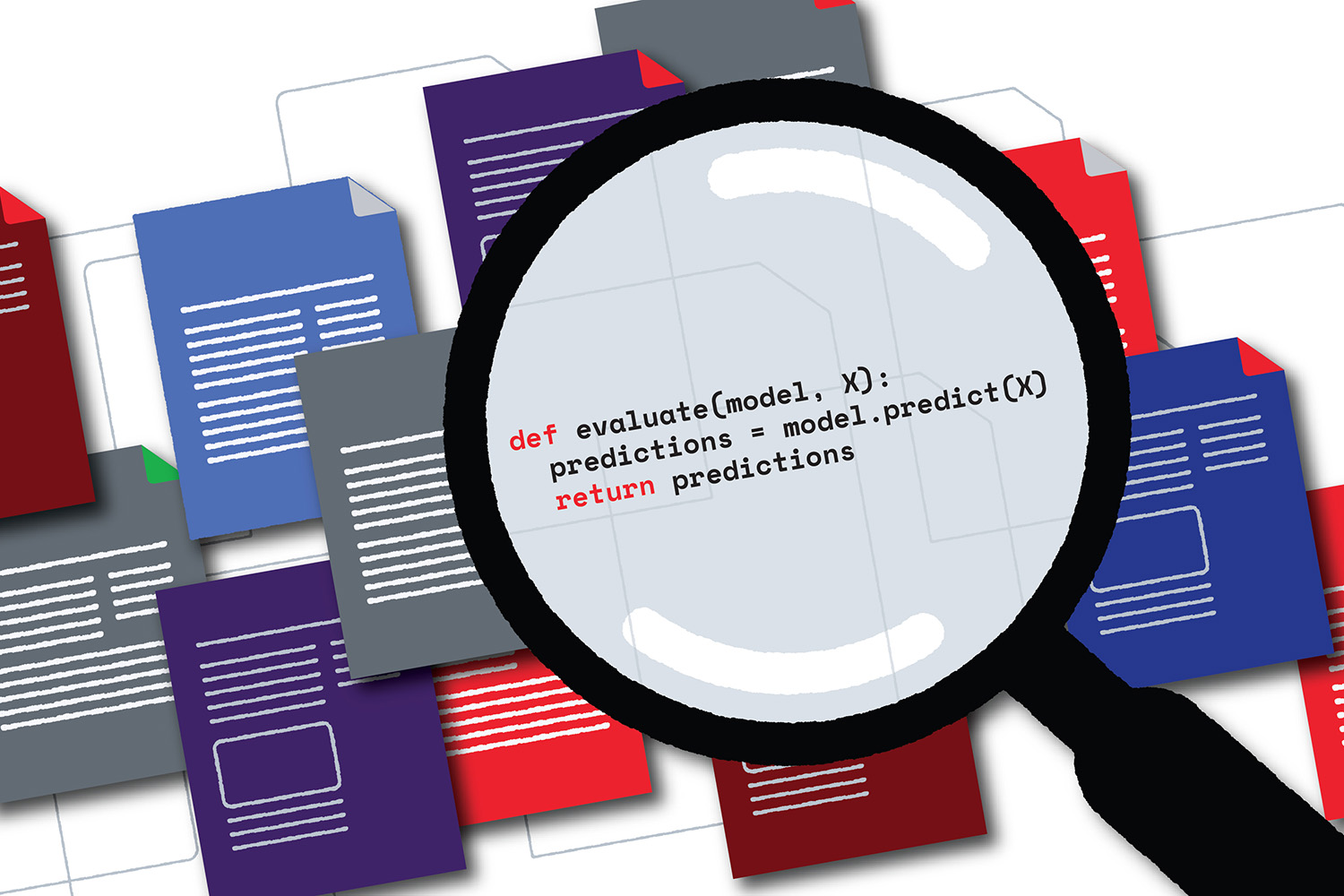
An MIT and Dana-Farber Institute-led team used large language models to examine nearly 4,000 studies and hundreds of code repositories, revealing gaps in the information needed to scrutinize and reuse published research.
We use cookies to run the site and, with your consent, for analytics and to show ads.
See our Cookie Policy.