Nov 2026· IEEE Transactions on Parallel and Distributed Systems· Vol 37, pp. 2312-2326· 0 citations· 45 references
Abstract
With the development of UAV communications and aerial edge intelligence, Uncrewed Aerial Vehicles (UAVs) are increasingly used for inspection in high-risk environments. However, limited onboard energy and data-privacy constraints make efficient collaborative learning challenging. Hierarchical Federated Learning (HFL) provides a privacy-preserving paradigm, yet existing energy-optimization studies often treat computing, communication, and client selection separately, lacking a unified system perspective. Inspired by biological neural systems, where neurons compute in an event-driven manner, synapses transmit information sparsely, and organisms make reward-modulated decisions, we propose a Bio-Inspired Hierarchical Federated Learning (BIO-HFL) framework that takes UAV energy consumption as the central driving objective. In the computation module, BIO-HFL employs Spiking Neural Networks (SNNs) to realize neuron-like event-driven computing and reduce onboard energy; in the communication module, it integrates a Critical Tensor mechanism into Deep Gradient Compression (DGC-CT) to mimic synapse-like sparse but selective transmission and maintain stability under high compression ratios; and in the control module, it uses a Distributed Multi-Armed Bandit (DMAB) strategy as an organism-level decision module to select clients with minimal expected energy consumption. These three components are mutually coupled, SNN and DGC-CT energy statistics serve as inputs to DMAB, DMAB determines the optimization targets of SNN and DGC-CT through energy-aware scheduling, and CT selection in DGC-CT further depends on SNN-driven spike distributions. Experiments demonstrate that DGC-CT ensures stable training even at a 10% compression ratio, and DMAB reduces inefficient client participation. Across both CIFAR-10 and DAGM2007, BIO-HFL consistently improves energy efficiency while maintaining competitive macro-average F1, achieving up to 81.1% lower total energy consumption compared with a conventional SNN-HFL baseline.
This publication proposes a definition and a classification of agile software development approaches and analyses ten software development methods that can be characterized as being "agile" against the defined criterion.
P. Abrahamsson, O. Salo, Jussi Ronkainen et al.· arXiv.org· 727 citations· ⚡54
The study shows that agile practices improve both informal and formal communication, but indicates that, in larger development situations involving multiple external stakeholders, a mismatch of adequate communication mechanisms can sometimes even hinder the communication.
M. Pikkarainen, Jukka Haikara, O. Salo et al.· Empirical Software Engineeri...· 401 citations· ⚡48
The results indicate that software engineering work practices are chosen opportunistically, adapted and configured to provide value under the constrains imposed by the startup context.
Nicolò Paternoster, Carmine Giardino, M. Unterkalmsteiner et al.· Information and Software Tec...· 394 citations· ⚡54
The perception of the impact of agile methods is predominantly positive, and several challenge areas were discovered, but based on this study, agile methods are here to stay.
M. Laanti, O. Salo, P. Abrahamsson· Information and Software Tec...· 260 citations· ⚡20
Related blog posts
MIT News · Artificial Intelligence· news.mit.eduOct 2, 2026
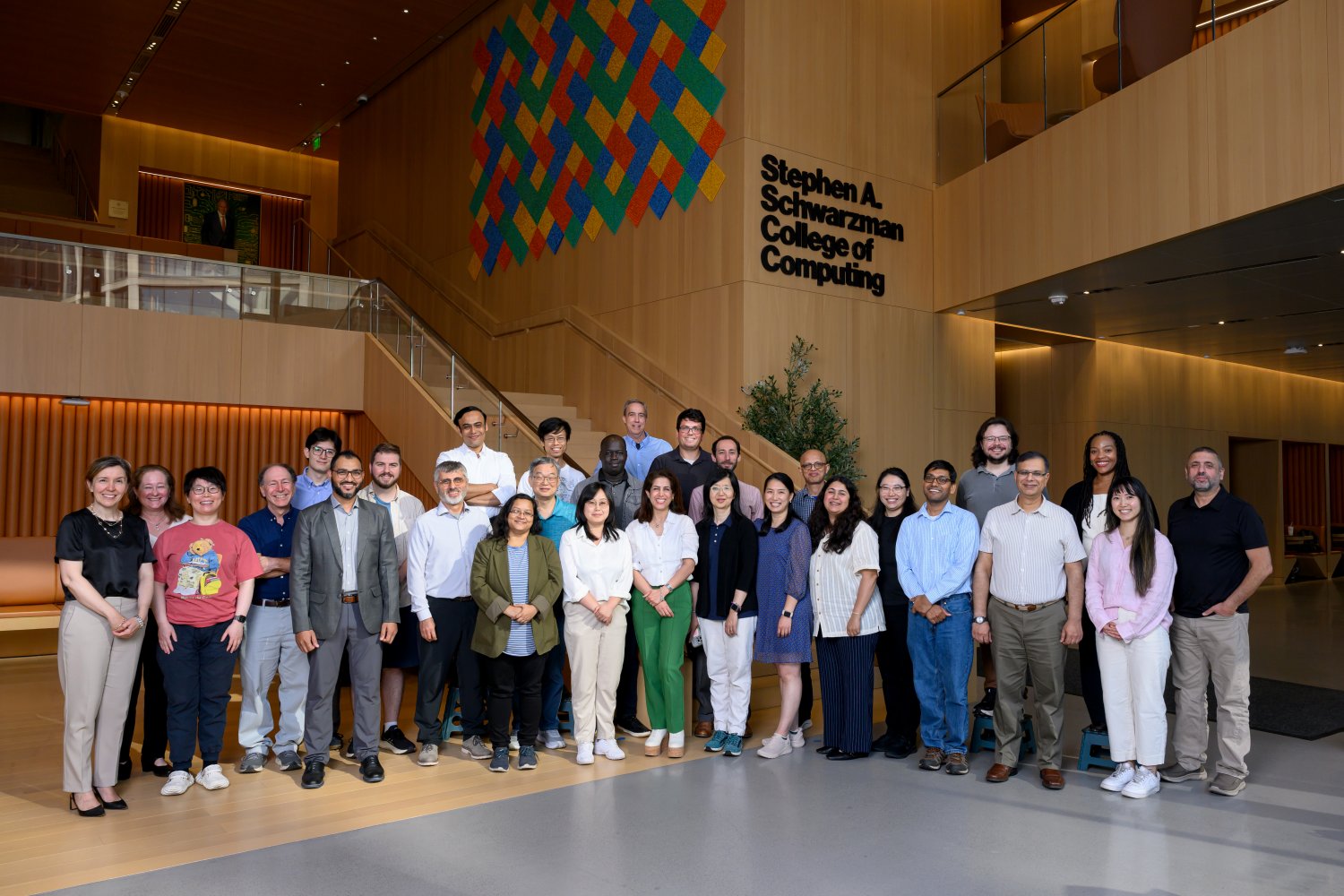
A weeklong summer workshop brought higher education faculty to campus to explore how AI and machine learning materials can be adapted for their classrooms.
MIT News · Artificial Intelligence· news.mit.eduAug 27, 2026
A new machine-learning framework aims to improve the success rate of computational protein design while moving away from results that reproduce sequences found in nature.
Microsoft Research Blog· microsoft.comAug 20, 2026
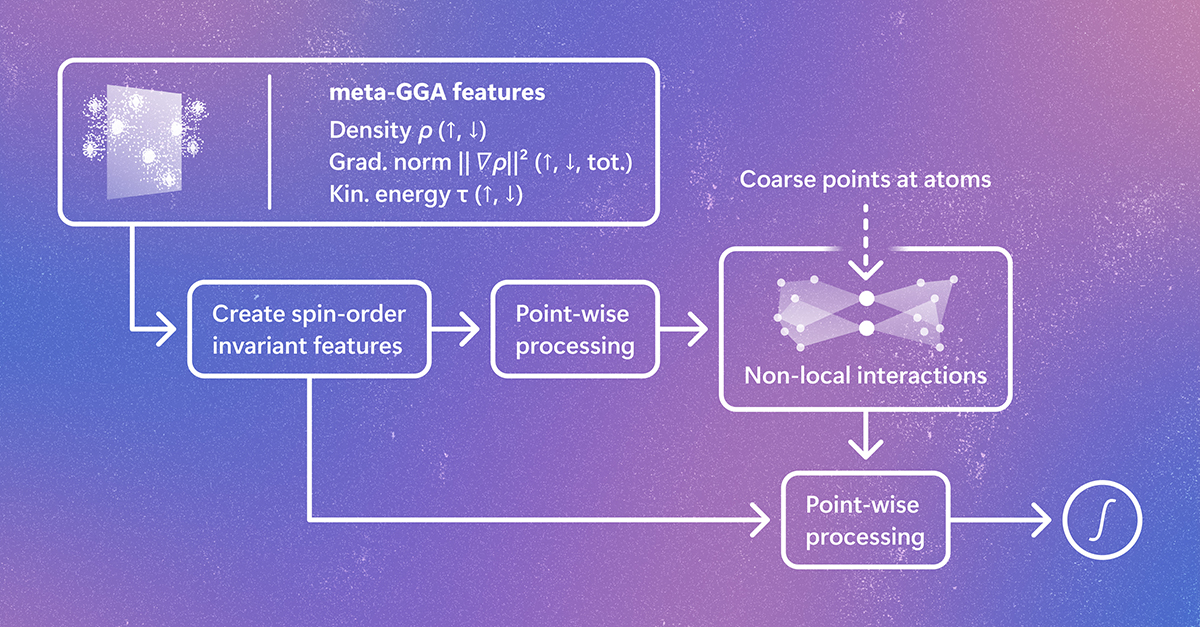
Skala 1.1, the updated deep-learning exchange-correlation functional from Microsoft Research, provides greater accuracy, expanded accessibility across the computational chemistry ecosystem, and a living benchmark to track computational performance. The post Broadening access to Skala creates a faster path to predictive DFT appeared first on Microsoft Research.
We use cookies to run the site and, with your consent, for analytics and to show ads.
See our Cookie Policy.