Skip to content

FedNereus: Incentive-Aware Heterogeneous Federated Learning Under Resource Constraint

Oct 2026 · IEEE transactions on computers · Vol 75, pp. 3629-3642 · 0 citations · 46 references

Abstract

As public concern about data privacy continues to grow, federated learning (FL), as a machine learning technique that does not require the disclosure of user raw data, has attracted widespread attention. However, it still has many common problems. The first problem stems from the absence of incentive mechanisms utilized to incentivize more participation to improve the performance of learning models. The second problem arises from the limited resources of mobile devices that can be utilized for model training, which will seriously decrease the performance of learning models. To address the aforementioned issues, in this paper, we propose a novel incentive-aware collaborative construction of heterogeneous <underline>Fed</underline>erated lear<underline>N</underline>ing und<underline>e</underline>r <underline>re</underline>so<underline>u</underline>rce con<underline>s</underline>traint, namely FedNereus. In fact, FedNereus incentivizes more workers to participate in model training by applying an auction-based incentive mechanism. It is proved that FedNereus allows participating workers to report their actual cost as their bidding price, which is referred to as <italic>truthfulness</italic>. Furthermore, it also allows workers to obtain non-negative reward, which is also referred to as the <italic>individual rationality</italic>. In order to break the resource limitation, FedNereus meticulously designs the rules of model selection so that workers can only train a portion of the learning model based on their limited hardware capabilities, while maintaining the performance guarantee of learning models. The excess empirical risk of FedNereus is shown to be upper bounded by <inline-formula><tex-math notation="LaTeX">$\mathcal{O}(\frac{1}{T})$</tex-math><alternatives><mml:math><mml:mrow><mml:mi mathvariant="script">O</mml:mi></mml:mrow><mml:mo stretchy="false">(</mml:mo><mml:mfrac><mml:mn>1</mml:mn><mml:mi>T</mml:mi></mml:mfrac><mml:mo stretchy="false">)</mml:mo></mml:math><inline-graphic xlink:href="ying-ieq1-3713425.gif"/></alternatives></inline-formula>, where <inline-formula><tex-math notation="LaTeX">$T$</tex-math><alternatives><mml:math><mml:mi>T</mml:mi></mml:math><inline-graphic xlink:href="ying-ieq2-3713425.gif"/></alternatives></inline-formula> is the number of training rounds. Finally, extensive experiments are conducted, whose results show that FedNereus outperforms state-of-the-art approaches in different learning tasks.
View source

Similar papers

Open access Sep 2025

Adaptive Dual-Mode Distillation for Robust and Communication-Efficient Federated Learning Under Statistical and Model Heterogeneity

The growing volume of data from smart devices offers significant potential for machine learning, yet privacy concerns hinder centralized use. Federated Learning (FL) has emerged as a promising decentralized learning (DL) approach enabling the use of distributed data without compromising privacy. However, practical depl...

Zahid Iqbal, Fatima N. al-Aswadi, Haziqah Shamsudin et al. · 0 citations
2026

Toward Sustainable Federated Learning: A Learning Incentive Framework Balancing Energy Limits and Fairness

Federated Learning (FL) has gained significant attention for its ability to collaboratively train machine learning models across distributed clients. However, traditional FL approaches often overlook the issues of both participation willingness of clients and their early dropouts due to energy depletions over a long-te...

Gang Li, Si-Wei Xue, Jun Cai et al. · 0 citations
#machine learning Preprint Sep 2026

FedeRage: Provably Convergent Agnostic Federated Learning under General Client Drift

Federated learning (FL) enables collaborative model training without sharing raw data, but its performance degrades under non-IID data and stochastic client participation. Remedies built on classical Federated Averaging (FedAvg) typically presuppose that client participation probabilities are known to the server, which...

Herlock Rahimi, Dionysis Kalogerias · 0 citations
2026

FedDPRL: Communication-Efficient Differentially Private Federated Reinforcement Learning With Adaptive Gradient Compression

Cross-silo federated reinforcement learning (FRL) trains a shared policy across silos that must simultaneously respect a per-round uplink budget and on-device privacy. Although differential privacy (DP) and gradient compression each have mature solutions in supervised federated learning, naively stacking them in the po...

Jian-Tao Xu · 0 citations
#federated learning Open access Sep 2026

FedQS: asynchronous federated learning based on queue scheduling

With the rapid development of the Internet of Things (IoT) and edge computing, Federated Learning (FL) has emerged as a promising distributed framework capable of effectively leveraging distributed devices for machine learning tasks while preserving data privacy. However, in practical scenarios characterized by signifi...

Jia-Hui Zhou, Fang Li, Tian-Yu Shi et al. · 0 citations

Related blog posts

Microsoft Research Blog Sep 30, 2026

Forecasting space weather risks on power grids

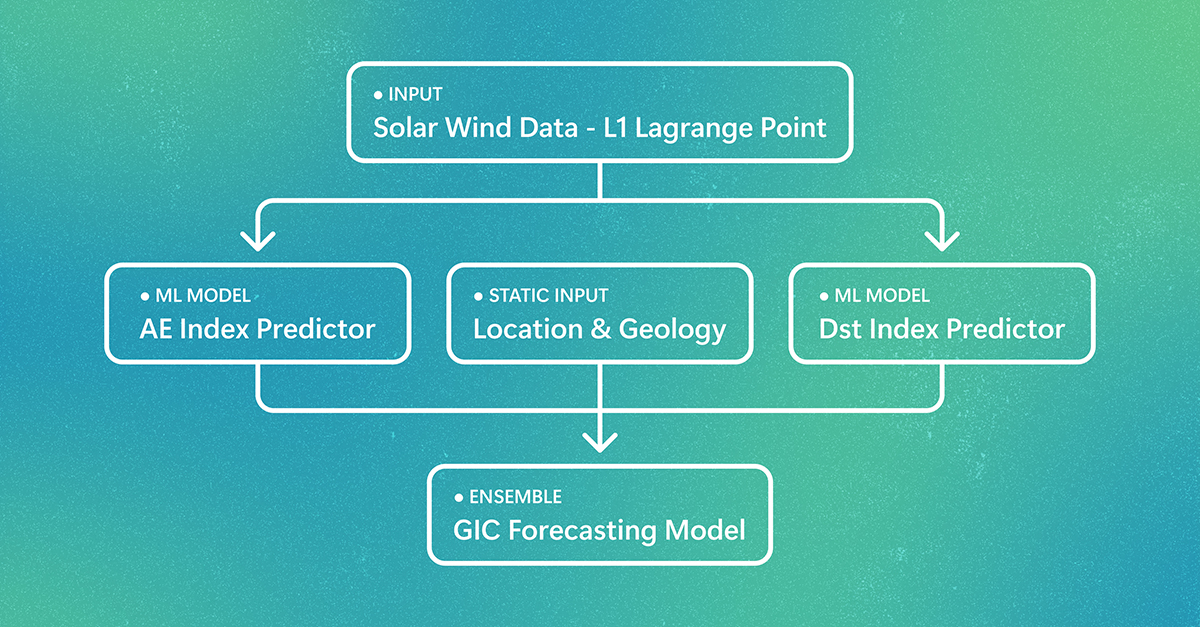
Extreme space-weather events can damage power systems on Earth and degrade GPS accuracy and satellite operations. A new machine learning system can predict where damage is likely to occur 30-60 minutes before a storm arrives. The post Forecasting space weather risks on power grids appeared first on Microsoft Research.

We use cookies to run the site and, with your consent, for analytics and to show ads. See our Cookie Policy.