This work introduces a diffusion model as a generative prior to produce high-quality global deployment plans, effectively avoiding the local-optima problem common in conventional reinforcement learning.
Jie Gao, Xing-Dan Wang, Zhi-Qing Tang et al.· Tsinghua Science and Technol...· 0 citations
A cooperative multi-agent orchestration framework, in which each edge node is equipped with a scheduling agent to route tasks to local ASPs or neighboring edge nodes, and an attention-guided centralized critic to estimate per-agent values from cross-agent states under GPU memory heterogeneity is proposed.
Chong-Zhi Wu, Zheng-Tao Li, Jia-Wen Kang et al.· 0 citations
Influence maximization (IM) in social networks aims to identify the optimal set of seed nodes that maximizes influence spread under a given diffusion model. The standard Grey Wolf Optimizer (GWO) suffers from two fundamental limitations when applied to this problem: an inflexible exploration–exploitation transition con...
Action Generation with Topology Awareness (AGTA), a topology-aware sequential decision-making framework in MARL that integrates inter-agent correlation modeling with topology-guided decision-order optimization, and outperforms the state-of-the-art counterparts.
Kun Hu, Shanghua Wen, Wen-Di Wu et al.· Mathematics· 0 citations
In recent years, constrained multi-objective optimization problems(CMOPs) remain challenging due to the complex structure of feasible regions, the difficulty of balancing convergence and diversity, and the lack of adaptive operator scheduling mechanisms. To address these issues, this paper proposes a hierarchical reinf...
Lu-Peng Hao, Yahui Shan, Guangyin Jin et al.· Journal of King Saud Univers...· 0 citations
Related blog posts
MIT News · Artificial Intelligence· news.mit.eduOct 2, 2026
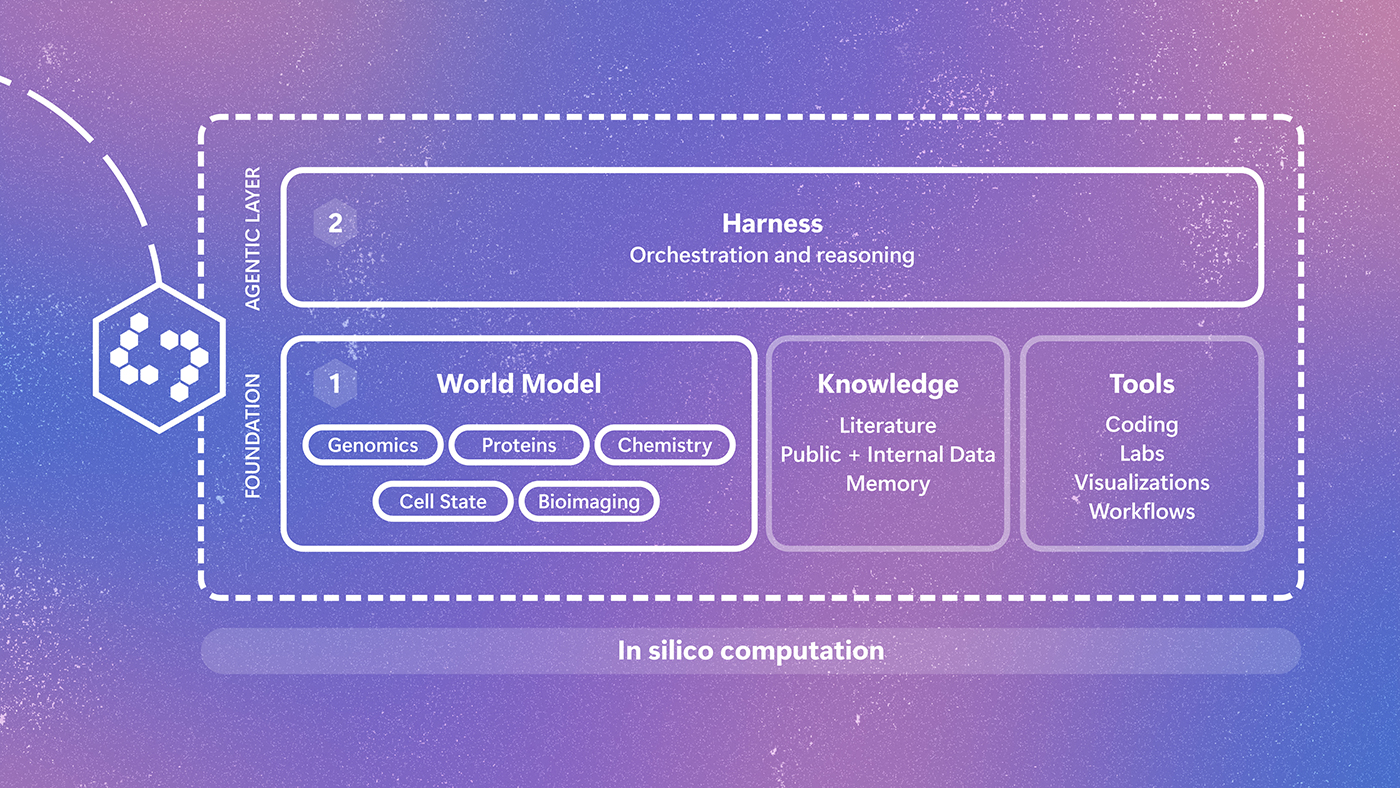
Biology doesn't operate in silos, and neither should the AI representation of it. Quine is an early-stage research effort to create a multimodal world model of biology. By connecting insights across biological scales and modalities, Quine helps scientists computationally search a space far larger than intuition allows and prioritize hypotheses before they reach the lab. Experimental results provide important feedback, helping researchers sharpen future research directions. The post Introducing Q…