Skip to content

Efficient Serverless Federated Learning With Edge Model Migration on Non-IID Data

Oct 2026 · IEEE Transactions on Mobile Computing · Vol 25, pp. 17815-17830 · 0 citations · 38 references

Abstract

Federated Learning (FL) has emerged as a transformative distributed learning paradigm, offering a privacy-preserving solution for collaborative model training. However, its conventional cloud-centric architecture suffers from a significant communication bottleneck casused by frequent model transmissions and heterogeneous data, particularly in dynamic mobile computing environments. To address this challenge, we introduce EdgeFLow, a novel, efficient serverless FL framework that fundamentally redesigns the system architecture by replacing the central cloud server with a sequential model migration across edge nodes, while deliberately preserving the cluster-based parallel training topology. EdgeFLow targets an intermediate design point between cloud-centric parallel FL and fully decentralized sequential FL, aiming to retain the convergence stability of intra-cluster parallel aggregation while eliminating the long-distance cloud transmissions that dominate the communication overhead in realistic edge deployments. This paradigm confines both model aggregation and propagation to the edge, forming a structured learning “flow” that gives the framework its name. We provide a theoretical analysis of communication savings using queuing theory, and establish a formal convergence guarantee under non-convex objective functions with non-independent and identically distributed (non-IID) data. Building on these findings, we propose Heterogeneity-Aware EdgeFLow (HA-EdgeFLow), an enhanced algorithm that mitigates the impact of non-IID data through a gradient-based client selection mechanism. Experimental results across various configurations validate the theoretical analysis, demonstrating that our proposed framework significantly reduces communication overhead and latency while achieving comparable or superior model accuracy to traditional baselines. As a system-level architectural innovation for communication-efficient FL, EdgeFLow establishes a foundational framework for future developments in edge network learning systems.

View source

Similar papers

Conference Open access Sep 2026

DASFL: Dynamic Adaptive Split Federated Learning for Heterogeneous Clients

Split Federated Learning (SFL) has emerged as a pivotal paradigm for privacy-preserving distributed training on resource-constrained edge devices by partitioning neural networks between clients and a server. A critical design choice in SFL is the split layer, which determines the computation distribution and the semant...

Ai-Jing Li, Ya-Wen Li, Guan-Hua Ye et al. · 0 citations
#federated learning Open access Sep 2026

FedQS: asynchronous federated learning based on queue scheduling

An asynchronous framework named FedQS, which employs a multi-dimensional staleness evaluation mechanism that dynamically assesses updates by combining the similarity between local and global models with client latency metrics, and implements a decoupling solution via a queue scheduling algorithm to resolve the coupling...

Jia-Hui Zhou, Fang Li, Tian-Yu Shi et al. · 0 citations
#machine learning Preprint Sep 2026

Client and Training Data Selection for Computationally Efficient Synchronized Federated Learning

Federated learning (FL) is a promising paradigm of machine learning, which preserves user privacy by enabling learning without sharing raw data with a cloud server. Straggling clients have been a problem for FL as they introduce delays in aggregating the local models and hence, the convergence of the global model. Ther...

Muzaffer Citir, Hiroki Nishikawa, Sangyoung Park · 0 citations
#federated learning Review Open access Sep 2026

Communication-Efficient Federated Learning under Non-IID Data: Aggregation and Compression Strategies

As data in scenarios such as medical, transportation and the Internet of Things continue to be dispersed to institutions and edge devices, how to balance the quality of model training and communication costs without concentrating raw data has become an important issue in the deployment of federated learning. Federated...

Chang Ma · 0 citations
Oct 2026

Taming Staleness in Asynchronous Federated Learning With System Heterogeneity

Asynchronous federated learning is a distributed machine learning framework designed for parallel and distributed systems. However, system heterogeneity in communication and computation can cause stragglers to upload stale updates, which may degrade the performance of the global model. Existing studies primarily focus...

Zhen-Hao Liu, Meng-Yao Li, Bo Zhang et al. · 0 citations
#artificial intelligence Preprint Oct 2026

Federated Learning for LLMs over Mobile Networks: Issues and Solutions in the RAN Transport

Federated LLM fine-tuning enables large models to be adapted using private and geographically distributed data at the network edge, creating recurring and deadline-sensitive communication workloads across access and transport networks. This challenge is particularly relevant in mobile RANs, where wireless variability,...

E. Paolini, Andrea Pinto, Flavio Esposito et al. · 0 citations

Related blog posts

Microsoft Research Blog Sep 29, 2026

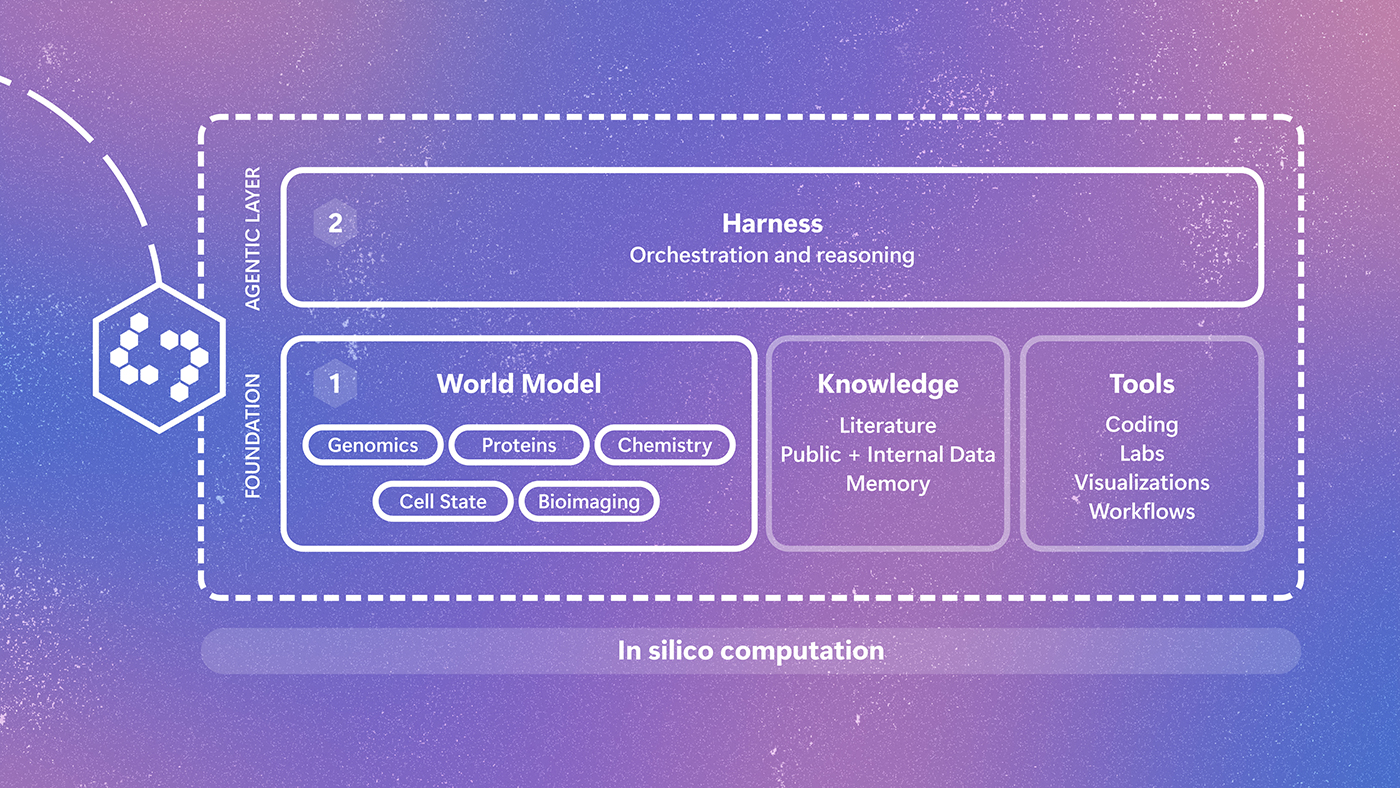
Introducing Quine: An AI research system designed for the complexity of biology

Biology doesn't operate in silos, and neither should the AI representation of it. Quine is an early-stage research effort to create a multimodal world model of biology. By connecting insights across biological scales and modalities, Quine helps scientists computationally search a space far larger than intuition allows and prioritize hypotheses before they reach the lab. Experimental results provide important feedback, helping researchers sharpen future research directions. The post Introducing Q…

We use cookies to run the site and, with your consent, for analytics and to show ads. See our Cookie Policy.