Skip to content

FedOTO: Toward Low-Latency Drowsiness Detection Service in IoV via Structured Federated Pruning

Oct 2026 · IEEE Transactions on Mobile Computing · Vol 25, pp. 16557-16572 · 0 citations · 60 references

Abstract

Drowsy driving continues to be a leading cause of motor vehicle accidents (MVAs), accounting for nearly 30% of all incidents according to recent studies. While numerous drowsiness detection methods have been developed, existing solutions often struggle with practical deployment due to limitations in detection accuracy, processing latency, or computational efficiency. To overcome these challenges, we propose federated only-train-once (FedOTO), a low-latency drowsiness detection framework for the internet of vehicles (IoV). FedOTO integrates edge computing with a novel two-tier structured federated pruning framework to deliver personalized, accurate, and real-time drowsiness detection services. By leveraging individual user data, local models on vehicular edge nodes are dynamically pruned and optimized to capture the individual drowsiness patterns. To reduce the processing latency, we employ zero-invariant groups (ZIGs), which identify computation-redundant parameter groups that can be safely pruned, and a hybrid efficient structured sparse optimizer (HESSO), which automatically trains local models and performs pruning, thereby minimizing local training time, communication delay, and response time. Additionally, our co-adaptive strategy dynamically adjusts both the number of redundant groups and learning rate across iterations, thus significantly accelerating the model convergence. Extensive experiments demonstrate FedOTO’s superior performance, achieving an average accuracy of 0.9997 and an average F1 score of 0.9989. Moreover, compared to conventional federated learning, FedOTO reduces local training time by 30.7%, communication delay by 28.9%, and response time by 34.3% to achieve superior overall performance over state-of-the-art baselines.

View source

Similar papers

#machine learning Preprint Sep 2026

QoS-Aware Federated Learning for Multimodal In-Cabin Interaction in Smart Vehicles

Modern smart vehicles leverage multimodal sensors, ranging from high-bandwidth vision systems to low-rate physiological monitors, to provide personalized in-cabin services. However, integrating high-fidelity multimodal fusion with collaborative training is often hindered by the heterogeneous and time-varying Quality of...

Baran Can Gül, M. Nakıp, N. Jazdi et al. · 0 citations
Open access 2026

Forward Federated Learning for Intelligent Sensing and Navigation in 6G-Supported Internet of Vehicles

: The Internet of Vehicles (IoV) is moving towards sixth-generation (6G) communication technologies to enable intelligent transportation to transmit data at ultra-low latency and high speed. Effective vehicle navigation and environmental sensing are key to providing instantaneous decision-making in dynamic driving cond...

Ahmed Mazin Jalal, Muhammad Asshad, A. A. Ahmed et al. · 0 citations
Preprint Aug 2026

Hierarchical Federated Transfer Learning in Digital Twin-Based Vehicular Networks

A framework for DT-VANET is constructed, along with two algorithms designed for cloud server model updates and intra-cluster federated transfer learning, to improve the accuracy of the global model and a data quality score-based mechanism to prevent the global model from being affected by malicious vehicles is develope...

Qasim Zia, Sai-De Zhu, Haoxin Wang et al. · 0 citations
#federated learning Open access Sep 2026

FedQS: asynchronous federated learning based on queue scheduling

With the rapid development of the Internet of Things (IoT) and edge computing, Federated Learning (FL) has emerged as a promising distributed framework capable of effectively leveraging distributed devices for machine learning tasks while preserving data privacy. However, in practical scenarios characterized by signifi...

Jia-Hui Zhou, Fang Li, Tian-Yu Shi et al. · 0 citations

Related blog posts

Microsoft Research Blog Sep 29, 2026

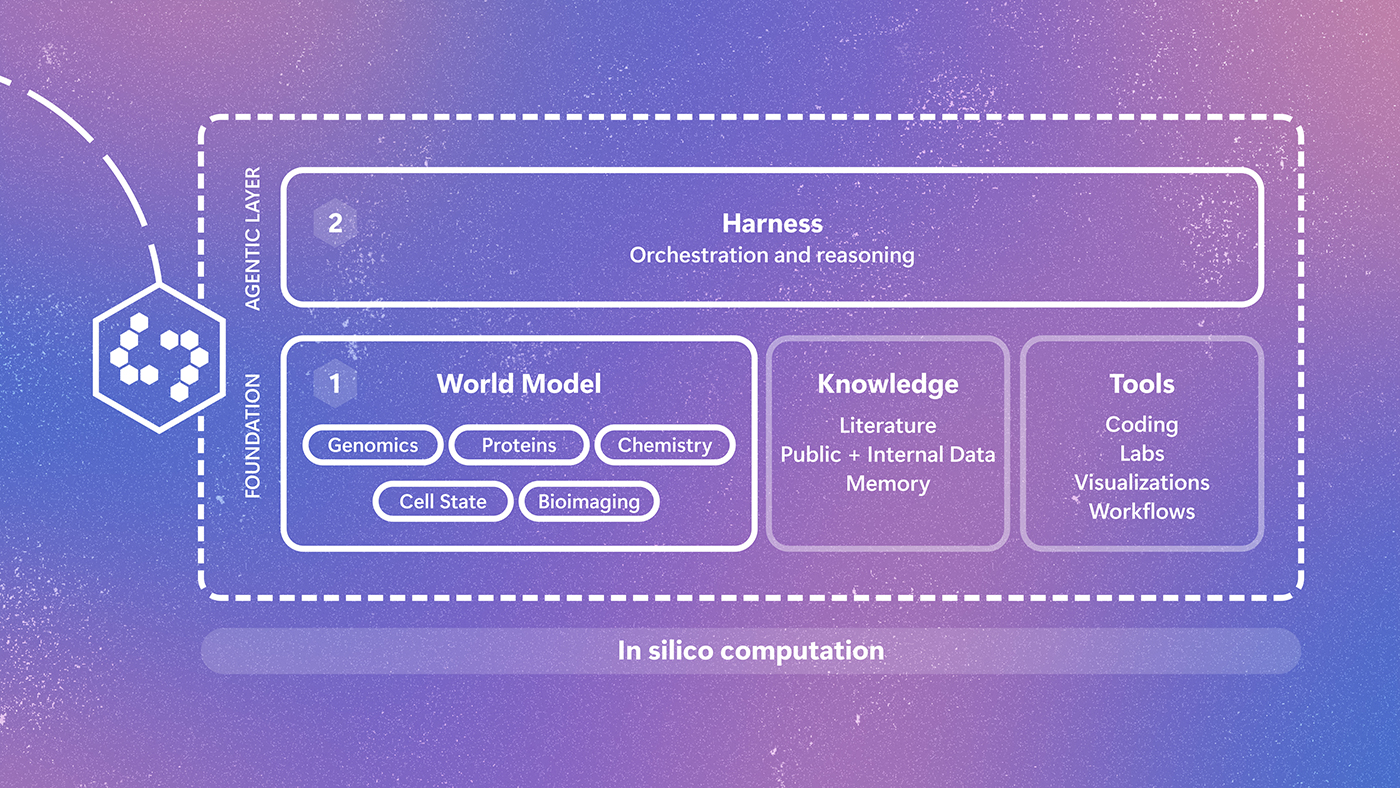
Introducing Quine: An AI research system designed for the complexity of biology

Biology doesn't operate in silos, and neither should the AI representation of it. Quine is an early-stage research effort to create a multimodal world model of biology. By connecting insights across biological scales and modalities, Quine helps scientists computationally search a space far larger than intuition allows and prioritize hypotheses before they reach the lab. Experimental results provide important feedback, helping researchers sharpen future research directions. The post Introducing Q…

We use cookies to run the site and, with your consent, for analytics and to show ads. See our Cookie Policy.