Skip to content
#software testing Open access

A Partitioned Coupling Approach for Electromechanics Simulations of Skeletal Muscles Using FEBio

Sep 2026 · Proceedings in Applied Mathematics and Mechanics · 0 citations · 17 references

Abstract

This work presents a partitioned coupling approach for electromechanical simulations of skeletal muscles. For the first time, we couple our highly specialized electrophysiology solver, which computes both force generation in muscle cells and action potential propagation in muscle fibers, with an external finite element continuum mechanics solver. In particular, we couple an OpenDiHu electrophysiology solver with an FEBio mechanics solver using the coupling library preCICE. Thereby, we present the FEBio adapter and a customized FEBio material, enabling multi‐scale, multi‐physics simulations using a coupled OpenDiHu‐FEBio approach, and incorporating more complex excitation–contraction dynamics and spatial inhomogeneity than in a standard FEBio simulation. We test the OpenDiHu‐FEBio approach on two muscle geometries and compare it to the existing coupled OpenDiHu–OpenDiHu approach, showing that the OpenDiHu–FEBio approach is faster. Besides, we show that preCICE's coupling overhead is small compared to the simulation's total runtime, even when complex, expensive data mapping methods between OpenDiHu and FEBio are used. Using FEBio instead of the OpenDiHu mechanics solver has additional advantages, including support for unstructured grids, multiple well‐established, verified, and tested material models, and an extensive user community. All in all, the implemented OpenDiHu‐FEBio approach shows how we can combine highly application‐specific muscle software with more general tools in a flexible, efficient way, and is a step forward for future development of application‐specific muscle simulations.
Read PDF

Similar papers

Preprint Oct 2026

A Neural-Network Approach for the Stability of Loosely-Coupled FSI Simulations in Hemodynamics

The development of accurate and efficient computational methods for fluid-structure interaction (FSI) problems remains an active research area due to its broad engineering and biomedical applications. Partitioned loosely coupled (LC) schemes are attractive for large-scale simulations because of their modularity and low...

Francesca Renzi, Stefano Pagani, P. Antonietti et al. · 0 citations
Oct 2026

A comparison of traveling wave properties in minimal and biophysically detailed models of cardiac tissue using a novel software tool.

Models of cardiac tissue span a wide range of complexity, from minimal models to biophysically detailed models. It is often assumed that minimal models accurately capture the core behaviors of propagating action potentials in biophysically detailed models. However, it remains unclear whether additional physiological de...

Vincent Lovero, Stephanie Dodson, Timothy J. Lewis · 0 citations
Preprint Sep 2026

A Predictive Design Framework for a Soft Robotic Ventricle using Contractile Actuators

The natural cardiac cycle is divided into the systole and diastole phases which encompass four distinct stages: isovolumetric contraction and ejection during systole, followed by isovolumetric relaxation and filling during diastole. Cardiovascular modeling of this cycle ranges from high-fidelity multiphysics simulation...

Jeongmin Kim, Qiong Wang, Liu-Yang Cheng et al. · 0 citations
Open access Sep 2026

An Approach for Computationally Efficient Yet Accurate Modeling of Vibrating Machines With Neidhart Springs

Accurate modeling of vibrating machines equipped with Neidhart springs is challenging due to the strong nonlinearities introduced by the elastomer–metal torsional elements and the constraints imposed by their kinematic arrangement. Multibody modeling methodologies for such vibrating machines are often computationally...

Davide Galli, Veit Gufler, Andrea Giusti et al. · 0 citations

Related blog posts

Microsoft Research Blog Oct 12, 2026

Simulating student learning for better AI tutoring

StudentSim is a research system for evaluating and improving AI tutoring tools before they are tested with learners. It models how individuals may engage with tutors, giving feedback to improve tutor performance across subjects like chess, writing, and mathematics. The post Simulating student learning for better AI tutoring appeared first on Microsoft Research.

MIT News · Artificial Intelligence Oct 2, 2026

Documenting the tech worker movement

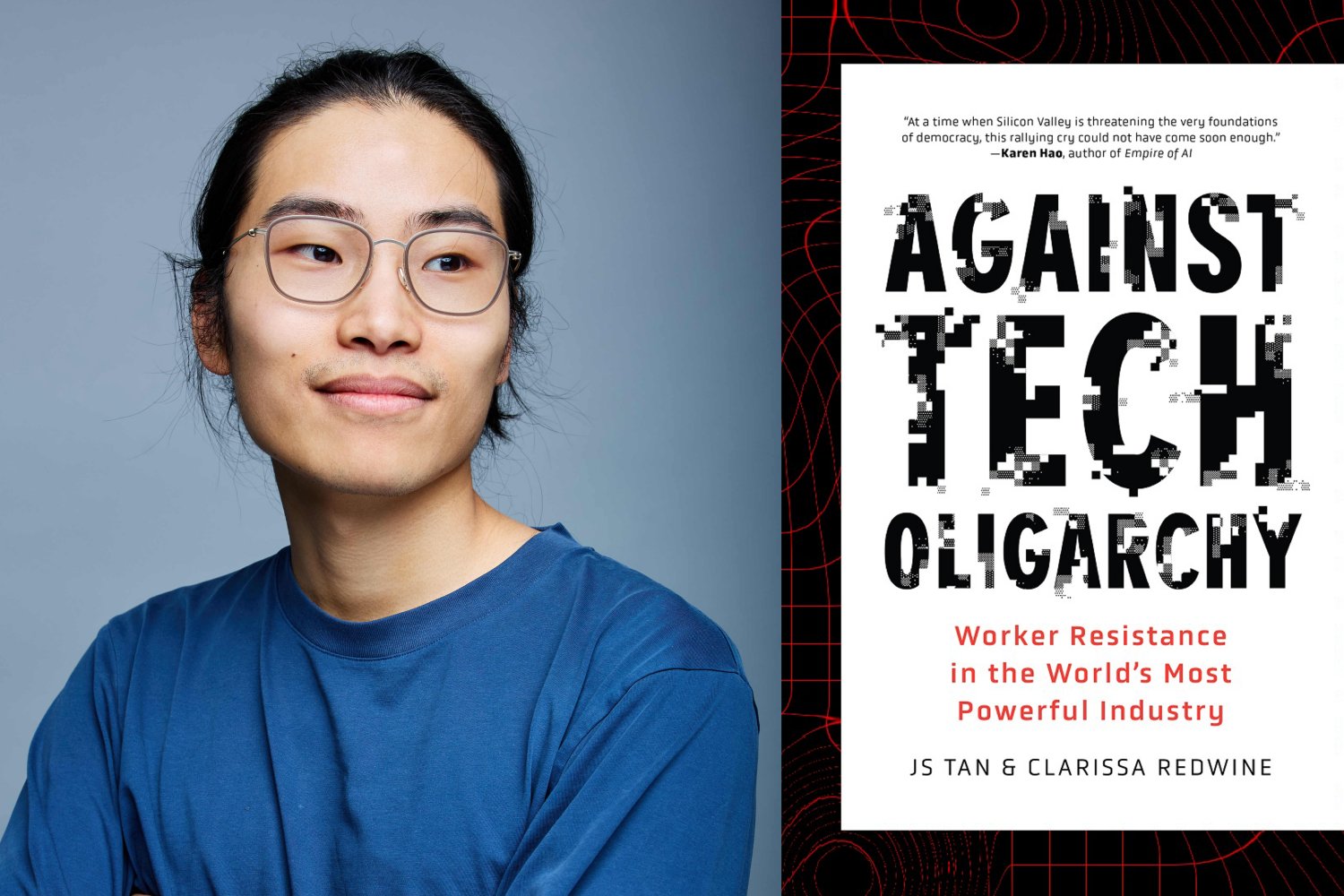
Writing as a participant and researcher, PhD student JS Tan SM ’22 has co-authored a new book about the rise of tech worker protests and the employer backlash that followed.

MIT News · Artificial Intelligence Oct 2, 2026

Documenting the tech worker movement

Writing as a participant and researcher, PhD student JS Tan SM ’22 has co-authored a new book about the rise of tech worker protests and the employer backlash that followed.

We use cookies to run the site and, with your consent, for analytics and to show ads. See our Cookie Policy.