Completeness-aware Motion Correspondence (CMC), a ground-truth-anchored evaluation protocol that jointly measures localization, trajectory completeness, visibility, and continuity, counting missing predictions as failures on visible dynamic points, is introduced.
Abstract
Counterfactual world models (CWM) extract motion from pretrained video predictors by comparing factual and intervened predictions. However, responses generated under different target-frame masks vary in reliability, while uniform aggregation weights them equally. We formulate response aggregation as candidate reliability learning and propose LPA-CWM with a lightweight Learned Physical Adjudicator (LPA). Trained on dense MOVi-F trajectories, the 3.0M-parameter LPA compares visual context and response structure across an unordered candidate set to predict relative weights, while the CWM predictor and intervention generator remain frozen. The weighted responses undergo windowed localization and one paired re-evaluation to recover motion. We also introduce Completeness-aware Motion Correspondence (CMC), a ground-truth-anchored evaluation protocol that jointly measures localization, trajectory completeness, visibility, and continuity, counting missing predictions as failures on visible dynamic points. On the evaluated DAVIS and Kinetics subsets, LPA-CWM improves $\mathrm{DCA}_{\mathrm{avg}}$ over Uniform CWM by 60.0\% and 29.0\%, respectively, and also improves tracking accuracy under TAP-Vid First. A quick overview is available at https://LPA-CWM.github.io.

It is found that Llama 3 delivers comparable quality to leading language models such as GPT-4 on a plethora of tasks, and performs competitively with the state-of-the-art on image, video, and speech recognition tasks.
This paper investigates developing real-world perception for active agents, proposes Gibson Environment for this purpose, and showcases a set of perceptual tasks learned therein.
F. Xia, Amir Zamir, Zhi-Yang He et al.· 2018 IEEE/CVF Conference on...· 1,069 citations· ⚡112
This publication proposes a definition and a classification of agile software development approaches and analyses ten software development methods that can be characterized as being "agile" against the defined criterion.
P. Abrahamsson, O. Salo, Jussi Ronkainen et al.· arXiv.org· 727 citations· ⚡54
The study shows that agile practices improve both informal and formal communication, but indicates that, in larger development situations involving multiple external stakeholders, a mismatch of adequate communication mechanisms can sometimes even hinder the communication.
M. Pikkarainen, Jukka Haikara, O. Salo et al.· Empirical Software Engineeri...· 401 citations· ⚡48
The results indicate that software engineering work practices are chosen opportunistically, adapted and configured to provide value under the constrains imposed by the startup context.
Nicolò Paternoster, Carmine Giardino, M. Unterkalmsteiner et al.· Information and Software Tec...· 394 citations· ⚡54
Related blog posts
MIT News · Artificial Intelligence· news.mit.eduNov 18, 2026
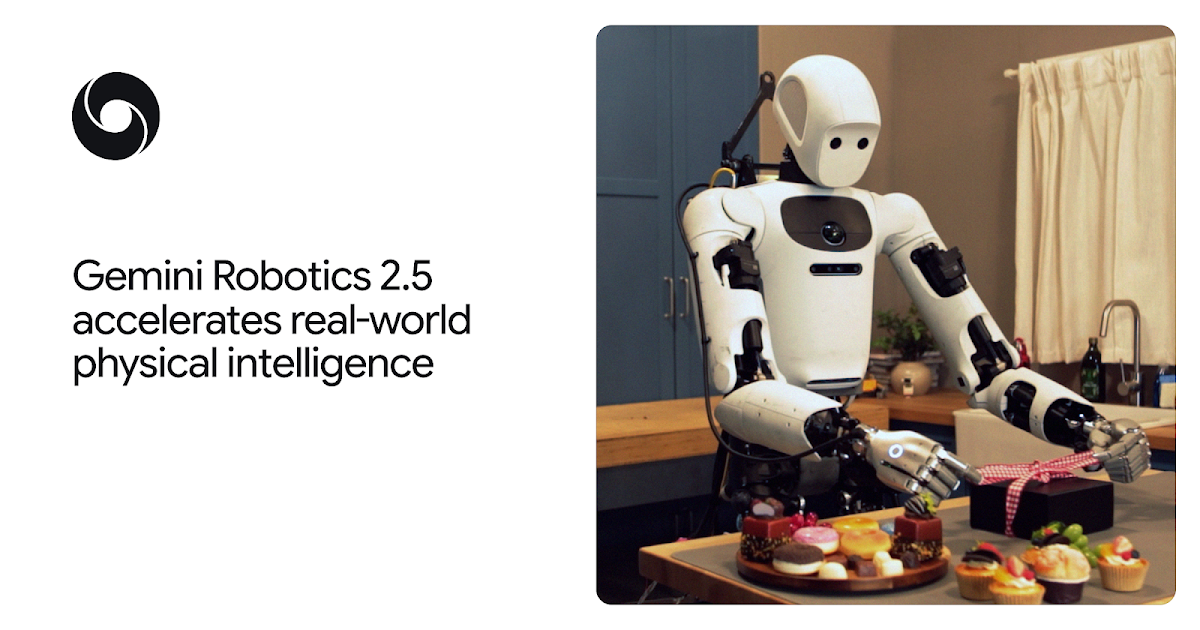
From feet to fingertips — we are teaching robots intelligent whole-body control, fine dexterity, and teamwork to complete a broad range of complex tasks.
We use cookies to run the site and, with your consent, for analytics and to show ads.
See our Cookie Policy.