This paper proposes a safe meta-RL framework that explicitly accounts for safety during adaptation, and develops a safe meta-RL algorithm that learns the safety value function and leverages it for safety filtering and constrained policy optimization.
Abstract
Meta-reinforcement learning (meta-RL) enables agents to adapt to unseen tasks with limited experience. Despite its promise, the application of meta-RL in real-world tasks is hindered by safety requirements, which have been underexplored in prior work. In this paper, we propose a safe meta-RL framework that explicitly accounts for safety during adaptation. Our key insight is to reason about safety in the information space, which captures both the physical state and the agent's belief over the underlying task. Within this space, we introduce a safety value function that measures the probability of the agent avoiding unsafe regions indefinitely. We show that this function satisfies a self-consistency condition and a Bellman equation, which make it learnable via meta-RL. Based on this formulation, we develop a safe meta-RL algorithm that learns the safety value function and leverages it for safety filtering and constrained policy optimization. Experiments on meta-RL benchmarks demonstrate the effectiveness of the proposed method.
Exploration in reinforcement learning (RL) remains a fundamental challenge. Recent goal-conditioned RL strategies (which select goals to encourage broader state coverage) have shown promising results, but none scores a goal by novelty and reachability jointly: the two signals are traded off by hand, applied in sequence...
Wen-Yan Yang, A. Mustafin, Dominik Baumann et al.· 0 citations
A framework for learning control barrier functions (CBFs) using a novel generalized Bellman operator is developed, yielding a persistent safety set from which the agent can remain safe indefinitely, and a new reward maximization algorithm is proposed that effectively exploits the learned persistent safety set for rewar...
A. Choudhury, J. Brahmanage, Akshat Kumar et al.· Proceedings of the Thirty-Fi...· 0 citations
Evaluation metrics for safe RL are introduced that address each of these concerns and in addition allow for aggregation across tasks and safety bounds and an open-source evaluation suite to support the reliable characterization of safety in future safe RL research is provided.
This dissertation presents a work in safe RL, where agents must also respect safety constraints using pure-past linear-time temporal logic (PPLTL), and presents how to enforce safety constraints using pure-past linear-time temporal logic (PPLTL).
In some multi-agent systems, the quantity to be optimized is not an externally specified reward but the information acquired about unknown properties of the environment as done in active sequential hypothesis testing (ASHT) problems. However, the ASHT literature tends to focus on finite single-agent problems with well-...
While reinforcement learning (RL) allows generalist robot policies to continually improve during deployment, the large model size of modern generalist policies, such as VLAs, poses a fundamental obstacle to effective RL improvement. In particular, their severe inference latency---which can lead to pauses or jerky movem...
Brian Zhu, Momen Khalil, E. Harrison et al.· 1 citation
Related blog posts
MIT News · Artificial Intelligence· news.mit.eduOct 2, 2026
Martin Trust Center Managing Director Bill Aulet introduces Dear Dreamer, a free platform for middle and high school students who want to learn about entrepreneurship.
Microsoft Research Blog· microsoft.comSep 30, 2026
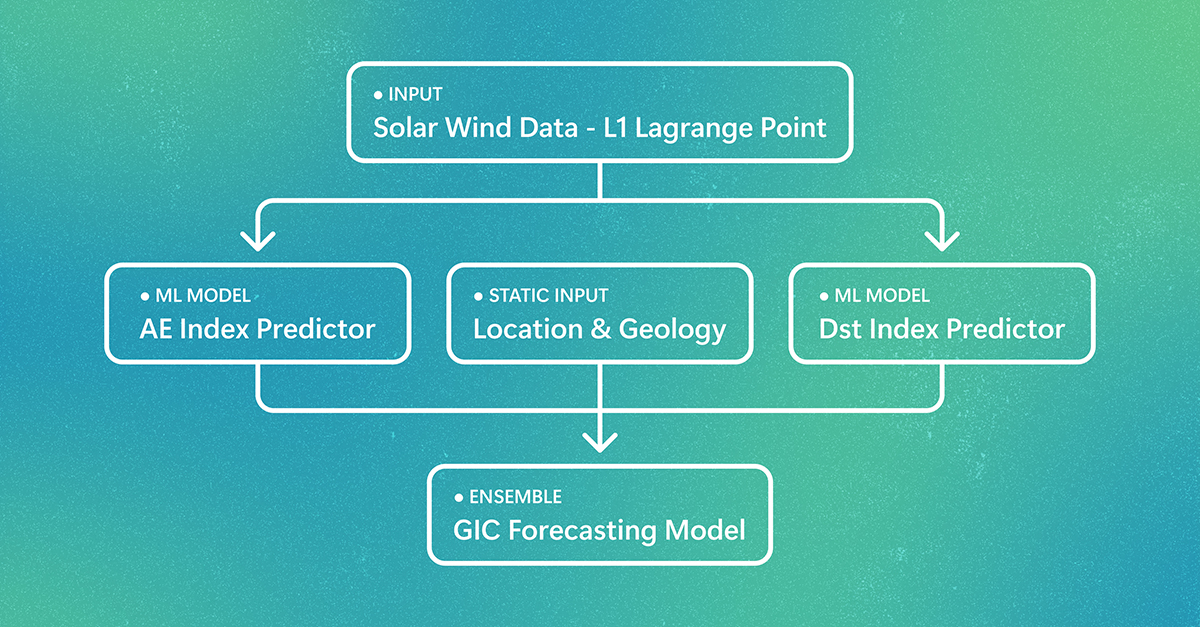
Extreme space-weather events can damage power systems on Earth and degrade GPS accuracy and satellite operations. A new machine learning system can predict where damage is likely to occur 30-60 minutes before a storm arrives. The post Forecasting space weather risks on power grids appeared first on Microsoft Research.
We use cookies to run the site and, with your consent, for analytics and to show ads.
See our Cookie Policy.