Sep 2026· Journal of Institute of Control Robotics and Systems· 0 citations· 23 references
Computer Science
TL;DR
A framework that fuses the output of Trajectron++, a neural network-based trajectory predictor, with extended Kalman filter (EKF)-based multiple trajectory candidates at a late stage indicates that EKF-based trajectory candidates can effectively complement neural trajectory prediction through learned fusion.
Abstract
Predicting the future trajectories of surrounding vehicles in autonomous driving is important for collision risk assessment and safe ego-vehicle path planning. Conventional neural network-based trajectory predictors typically achieve strong prediction performance by exploiting agent history, dynamic scene graphs, and semantic maps. However, in specific motion regimes such as acceleration, deceleration, and turning, these predictors may fail to reflect physically feasible trajectories. To address this issue, this study proposes a framework that fuses the output of Trajectron++, a neural network-based trajectory predictor, with extended Kalman filter (EKF)-based multiple trajectory candidates at a late stage. On the nuScenes dataset, the proposed method reduces the average displacement error and final displacement error of the Trajectron++ robot baseline by 13.7% and 14.6%, respectively, without modifying the baseline architecture. These results indicate that EKF-based trajectory candidates can effectively complement neural trajectory prediction through learned fusion.
A Neural Ordinary Differential Equation (Neural ODE)-based framework is proposed that formulates single-frame prediction as continuous-time motion-state forecasting and achieves competitive short-horizon prediction accuracy under the single-frame setting.
Yijun Tang, Wenhao Huang, Yang Pu et al.· Discover Computing· 0 citations
A Stochastic Gating Decoder for multimodal latent variable sampling, adaptively fusing kinematics and data-driven paths to capture driver intention uncertainty while maintaining kinematic consistency is introduced.
Simulation results show that the proposed adaptive MPC method can accurately predict the future trajectory of the target vehicle and dynamically adjust the safety constraint range according to the prediction uncertainty, so that the autonomous vehicle can maintain a relatively stable driving state and a more reliable o...
Ling-Yu Xu, Si-Yu Tian· International Conference on...· 0 citations
The proposed framework improves the safety and crossing efficiency of autonomous vehicle decision-making at unsignalized intersections and introduces a composite prioritized replay mechanism into the Twin Delayed Deep Deterministic Policy Gradient algorithm.
Shufeng Wang, Yu-Hang Wang, Yongxin Lei et al.· Machines· 0 citations
Results indicate that combining physical structure with learned residual correction provides a more accurate, physically consistent, and operationally interpretable approach for UAV trajectory forecasting.
Md Ashraful Islam, Stanley Förster, Tianxiong Zhang et al.· Scientific Reports· 0 citations
The rapid growth of wireless devices and the emergence of dynamic traffic hotspots have increased the need for intelligent trajectory planning in unmanned aerial vehicle base stations (UAV-BSs) operating in complex urban environments, where conventional reactive methods relying only on current system states cannot anti...
Tariq, Zhuo-Xiu Wei, K. Shaukat et al.· Scientific Reports· 0 citations
Related blog posts
MIT News · Artificial Intelligence· news.mit.eduJul 15, 2026
Assistant Professor Pat Pataranutaporn describes a new interface that lets everyday users glimpse inside an AI's neural network before their chatbot ever says a word.
Microsoft Research Blog· microsoft.comJul 13, 2026
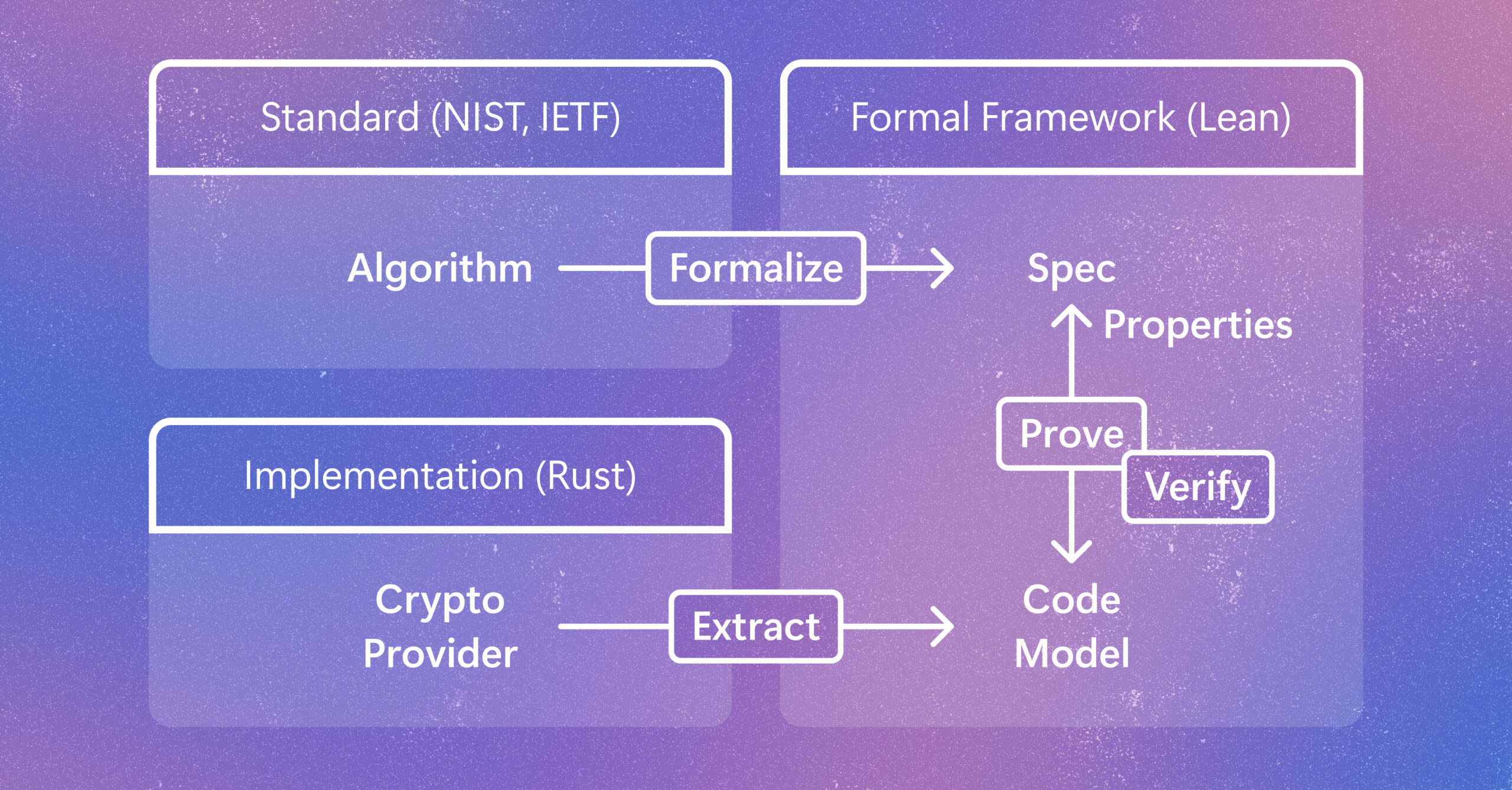
Cryptographic code supports vital protections in modern computing systems. Learn how a new method helps verify code as developers write it while preserving speed and adaptability as it gets implemented and evolves. The post Verifying Rust cryptography in SymCrypt, from standards to code appeared first on Microsoft Research.
MIT News · Artificial Intelligence· news.mit.eduJul 6, 2026
PhD student Rachel Sava, winner of the Envisioning the Future of Computing Prize, explores transformative improvements and dystopian risks of neural technology.