Skip to content

Heterogeneous graph neural networks with biological prior knowledge for interpretable drug repurposing in triple-negative breast cancer

Sep 2026 · bioRxiv · 0 citations · 73 references
Biology

TL;DR

Paired Wilcoxon tests in 39 AURORA-US patients with matched primary and metastatic samples confirm that 4 of the 10 IG-identified TFs are significantly altered during metastatic progression after Bonferroni correction.

Abstract

Drug repurposing offers a cost-effective path to new therapies for triple-negative breast cancer (TNBC), a subtype with limited targeted treatment options. We present PRECISION, a framework integrating transcription factor (TF) regulatory networks, protein-protein interactions, and drug-target edges into a heterogeneous graph neural network (GNN) to identify TFs mediating drug sensitivity and prioritize repurposing candidates. The knowledge graph has 23,498 nodes and approximately 830,000 edges from CollecTRI, OmniPath and the PRISM screen. In a fair cell-line holdout evaluation, the GNN matches ML baselines in global prediction (Pearson r = 0.76). Per-drug mechanistic attributions via Integrated Gradients on the trained GNN, replicated across three independent training seeds and robust to baseline choice (Spearman’s ρ = 0.94 between the mean and the random Gaussian baselines), highlight stress-response (CREB3L1), epithelial-mesenchymal transition (EMT; KLF8, ZEB1), stromal/TNBC-specific (AEBP1, MZF1), and epithelial (SPDEF) regulators as stable mediators of drug response. Multi-cohort validation in SCAN-B (n = 7,397), METABRIC (n = 1,979), and TCGA-BRCA (n = 1,072) shows that predicted drug sensitivity is associated with overall survival in 623 drugs in SCAN-B and 74 in METABRIC (FDR < 0.05). Fisher’s meta-analysis identifies 551 drugs at FDR < 0.05, validated by positive controls paclitaxel (padj = 8.6 × 10⁻³), docetaxel (3.1 × 10⁻²), epirubicin (3.2 × 10⁻⁶), and talazoparib (1.4 × 10⁻⁴). Paired Wilcoxon tests in 39 AURORA-US patients with matched primary and metastatic samples confirm that 4 of the 10 IG-identified TFs (CREB3L1, KLF8, AEBP1, SPDEF) are significantly altered during metastatic progression after Bonferroni correction. An explicit rule applied to the PAM50-adjusted Cox multivariate results (penalizer = 0.1) selects seven candidates (osimertinib, saracatinib, erlotinib, brigatinib, pelitinib, entinostat, trametinib), revealing pharmacological convergence on the EGFR signaling axis.
Read PDF

Similar papers

Review Open access Aug 2026

Graph neural networks for multi-scale gene-drug interaction modeling in cancer: applications, challenges, and therapeutic opportunities for breast cancer drug resistance

Breast cancer drug resistance remains a major clinical challenge driven by complex genetic, signaling, and microenvironmental interactions. Conventional machine learning and deep learning represent genes, drugs, and patients as independent feature vectors, limiting their ability to capture biological relationships gove...

Priyanshu Das, Md. Jarifur Rahman, Sowhanur Rahman Nirob et al. · 0 citations
Open access Aug 2026

Evaluating Graph Neural Network Architectures for Multi-Omics Cancer Subtyping using Methylation and Gene Expression Profiles

A benchmarking study on multiple GNNs on a Protein-Protein Interaction (PPI) network for Kidney Renal Clear Cell Carcinoma and Breast cancer subtype prediction, performing an in-depth investigation of architectures, incorporating skip connections and various data modalities.

Julia Schirmacher, M. C. Maurer, J. M. Metsch et al. · 0 citations
Open access Sep 2026

AI‑Driven Multi‑Omics Integrative Model for Predicting Tumor‑Specific Drug Responses

An AI-driven multi-omics model using GDSC, CCLE, DepMap, CTRP, and TCGA data, integrating mutation, copy-number variation, RNA expression, DNA methylation, drug SMILES, and IC50/AUC responses is developed, demonstrating that multi-omics fusion and drug-structure modeling improve prediction stability and support interpr...

Xin-Yuan Kang, Ai-Lin Deng · 0 citations
Sep 2026

GraphPert: A graph autoencoder framework for network-based drug repurposing using transcriptional signatures-A case study on melanoma.

GraphPert demonstrates that propagating transcriptional signatures through a pre-trained GAE extends the reach of virtual screening beyond direct transcriptional similarity, enabling the discovery of mechanistically diverse compounds that recapitulate the network-level effects of a therapeutic reference perturbation.

G. A. Conti, J. L. Gómez Chávez, Ernesto Rafael Perez et al. · 0 citations
2026

Graph Neural Networks for Cancer Driver Gene Prediction: From Fundamentals to Applications.

This chapter provides a comprehensive technical protocol for predicting CDGs using a Graph Convolutional Network (GCN) and guides the reader through hyperparameter optimization, model training, and performance evaluation, while discussing practical considerations related to generalization, computational cost, and inter...

Renan Soares de Andrades, M. Recamonde-Mendoza · 0 citations
Open access Sep 2026

Artificial-intelligence- and multi-omics-guided predictive and drug repurposing framework construction for colorectal cancer: evidence from succinylation–neutrophil signatures

Background Succinylation-linked metabolic rewiring and neutrophil-driven inflammation are key drivers of colorectal carcinoma (COAD) progression; however, they have rarely been translated to an end-to-end artificial intelligence (AI) drug-design pipeline connecting target nomination, resistance-relevant tumor microenvi...

Hui-Min Jie, Hua-Ying Huo, Jia-Mei Wang · 0 citations

Related blog posts

Microsoft Research Blog Jul 13, 2026

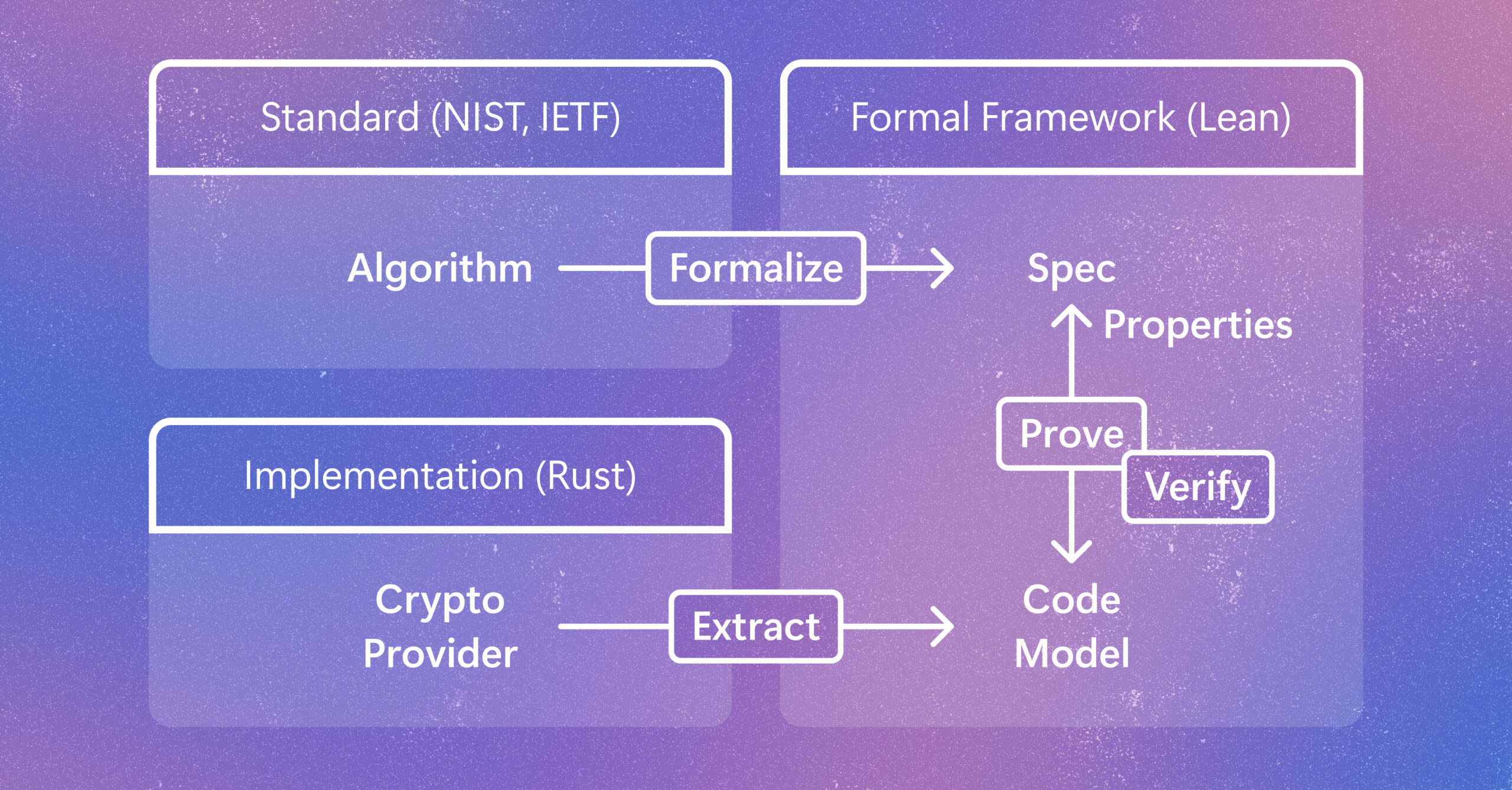
Verifying Rust cryptography in SymCrypt, from standards to code

Cryptographic code supports vital protections in modern computing systems. Learn how a new method helps verify code as developers write it while preserving speed and adaptability as it gets implemented and evolves. The post Verifying Rust cryptography in SymCrypt, from standards to code appeared first on Microsoft Research.

We use cookies to run the site and, with your consent, for analytics and to show ads. See our Cookie Policy.