Skip to content

High-Performance Tensor Formulation of the Viterbi Algorithm for Hidden Semi-Markov Models

Sep 2026 · 0 citations · 38 references
Computer Science

TL;DR

This work presents a tensor-based formulation of the Viterbi algorithm for HSMMs, restructuring the inner loops into tensor operations that naturally map onto SIMD units and massively parallel architectures and provides optimized implementations spanning single- and multi-core CPUs, and, for the first time, GPU.

Abstract

Hidden Semi-Markov Models (HSMMs) are fundamental probabilistic models widely adopted across diverse domains, from computational biology to finance and signal processing. The Viterbi algorithm decodes the most likely state sequence given an HSMM and can be applied iteratively for ab initio model learning. However, existing Viterbi implementations remain sequential, and GPU-accelerated solutions are entirely absent, making HSMM decoding impractical for large-scale workloads. We present a tensor-based formulation of the Viterbi algorithm for HSMMs, restructuring the inner loops into tensor operations that naturally map onto SIMD units and massively parallel architectures. Building on this formulation, we provide optimized implementations spanning single- and multi-core CPUs, and, for the first time, GPU. Experimental evaluation demonstrates speedups of up to 14x on a single core, over 200x with multi-core, and over 570x on GPU over the state-of-the-art sequential baseline, establishing a new performance baseline for large-scale HSMM decoding.
View source

Similar papers

Open access Sep 2026

SAKTHI: Sparse Tucker Acceleration via Adaptive Kernels for TTMc and SVD in HOOI

Tensors provide a natural representation for multi-dimensional data, and Tucker decomposition via Higher-Order Orthogonal Iteration (HOOI) is widely used to uncover their latent structure. Many tensors that arise in practice are highly sparse. On GPUs, sparse HOOI is bottlenecked by the tensor-times-matrix chain (TTMc)...

Bhaskar Marati, Raghavendra Kanakagiri · 0 citations
#graph neural networks Open access Oct 2026

Bonsai: Efficient and Optimal Automatic Tensor Rematerialization for Memory-Constrained DNN Training

GPU memory is increasingly the primary bottleneck in scaling deep neural network (DNN) training, where the activation tensors footprint of a model may exceed the memory capacity. Tensor recomputation is a powerful technique that trades additional computation for reduced peak memory usage. However, existing approaches f...

Dat Nguyen, Vasudha Devarakonda, An-Xiao Jiang et al. · 0 citations
#artificial intelligence Preprint Oct 2026

SoftServe: A Scalable Quasi-Newton Method for Deep Learning

Quasi-Newton (QN) methods have long been among the most effective methods for large-scale unconstrained convex optimization. Two obstacles have limited their use in deep learning: non-convexity and enormous parameter sizes. We introduce SoftServe, a family of QN methods designed to overcome these obstacles without line...

Joohwan Ko, Tetiana Parshakova, Diana Cai et al. · 0 citations
#machine learning Preprint Sep 2026

Format-Aware Fusion for Fast FP4 Pretraining

Four-bit floating-point (FP4) Tensor Cores accelerate matrix multiplication, but scale computation, operand packing, layout construction, and saved backward state can erase the gain. We present \emph{format-aware fusion}, which co-designs each quantization producer with its scale domain and consumer layout for native \...

R. Hu · 0 citations
Preprint Aug 2026

BaKron: Efficient Quantization with Kronecker-Factored Hessians

BaKron is an efficient solver that combines anti-diagonal parallelism with a recursive divide-and-conquer construction that matches the cubic scaling of GPTQ while exploiting richer curvature information.

Johann Birnick, R. Saab · 2 citations
Preprint Sep 2026

MpFA: Hardware-Efficient Train-Free QK4V8 FlashAttention Kernels on Blackwell GPUs

Long-context LLM inference pushes modern GPU serving stacks into an attention-bound regime, where both compute and memory are dominated by the softmax-GEMM pipeline. On NVIDIA Blackwell GPUs, FP4 Tensor Cores offer high matmul throughput, but we find that fully FP4 attention often fails to translate this throughput int...

Chen-Cheng Deng, Jian-Bin Fang, De-Zun Dong · 0 citations

Related blog posts

Microsoft Research Blog Sep 30, 2026

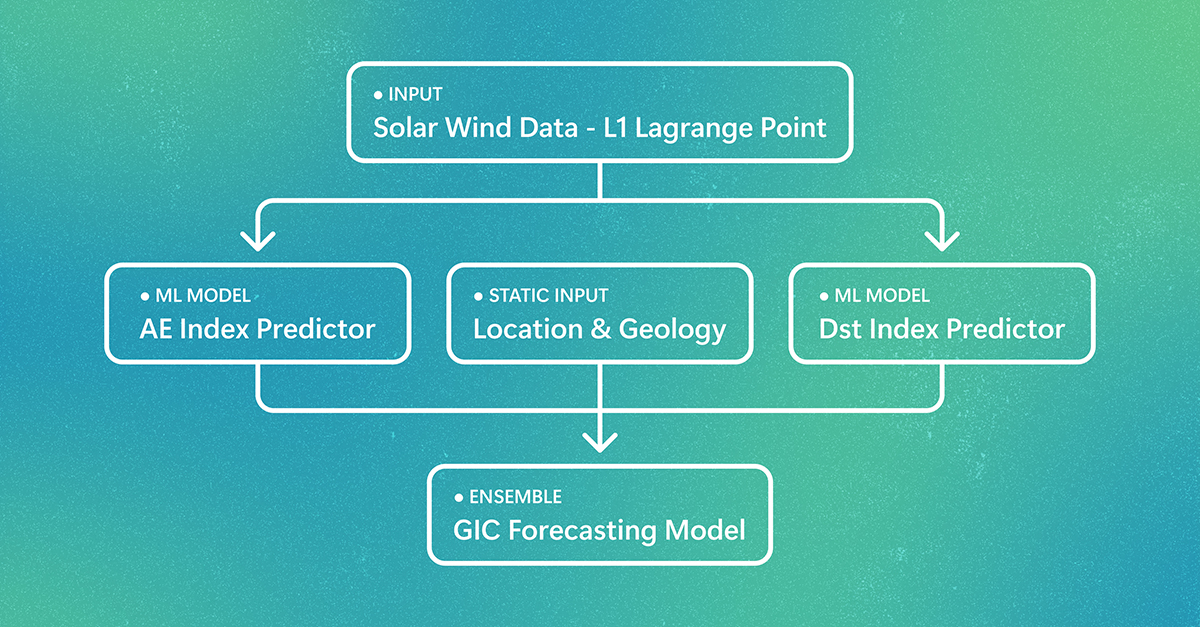
Forecasting space weather risks on power grids

Extreme space-weather events can damage power systems on Earth and degrade GPS accuracy and satellite operations. A new machine learning system can predict where damage is likely to occur 30-60 minutes before a storm arrives. The post Forecasting space weather risks on power grids appeared first on Microsoft Research.

We use cookies to run the site and, with your consent, for analytics and to show ads. See our Cookie Policy.