Oct 2026· IEEE Transactions on Systems, Man & Cybernetics. Systems· Vol 56, pp. 5510-5523· 0 citations· 55 references
Abstract
Heterogeneous graph neural networks (HGNNs) have demonstrated exceptional capabilities in modeling complex relationships for recommendation tasks. Their integration with contrastive learning (CL) has recently garnered significant attention due to its ability to effectively capture both structural and semantic features, while leveraging unlabeled data to improve robustness. However, existing methods face two key challenges: 1) noise in metapath-based message passing weakens user and item representations, especially with sparse data and 2) popularity bias in heterogeneous graphs causes popular items to dominate, while less popular “tail” items suffer from limited connections and relations. To address these challenges, we propose heterogeneous debiasing CL (HDCL), which combines heterogeneous graph debiasing with a neighborhood-aggregated strategy to enhance recommendation accuracy and diversity. Specifically, HDCL employs a neighborhood-aggregated CL (NACL) algorithm, which utilizes k-nearest neighbor features to enhance training signals and mitigate noise in sparse data settings. Additionally, HDCL introduces a hierarchical clustering-based debiasing (HCD) mechanism that dynamically distinguishes head nodes from tail nodes, refining the embedding space and improving recommendations for long-tail items. Extensive experiments on public datasets demonstrate that HDCL consistently outperforms state-of-the-art methods in terms of Recall and NDCG. The source code for the model implementation is available at the link https://github.com/Jhcodeno1/HDCL
Recommendation systems play a crucial role in efficiently filtering vast amounts of information, and supporting businesses across various domains such as e-commerce, social media, and online entertainment. Traditional recommendation methods, including collaborative filtering, often suffer from data sparsity issues, lim...
Heterogeneous Graph Contrastive Recommendation is proposed, a heterogeneous graph contrastive learning framework for cold-start multi-modal recommendation that consistently outperforms representative graph-based and multi-modal recommendation baselines.
A novel Multi-Hop Lightweight Graph Convolutional Network (MH-LGCN) conversational recommendation model based on a multi-hop attention mechanism that abandons redundant operations in traditional graph convolution and designs a lightweight information propagation mechanism that retains only neighbor feature aggregation.
Xua Li, Ru-Jun Wang· International Conference on...· 0 citations
Graph neural networks (GNNs) have been widely adopted in collaborative filtering to model higher order relationships between users and items. However, existing methods mainly focus on interaction-based structures and neglect the explicit modeling of semantic relations among users and among items. Within these graph str...
Yi-Xin Liu, Yu Zhang, Lei Sang et al.· IEEE Transactions on Computa...· 0 citations
Related blog posts
MIT News · Artificial Intelligence· news.mit.eduOct 13, 2026
Machine-learning networks can learn without detailed instructions from a designer. Those that do may offer insight into how the brain reorganizes itself during learning.
MIT News · Artificial Intelligence· news.mit.eduJul 15, 2026
Assistant Professor Pat Pataranutaporn describes a new interface that lets everyday users glimpse inside an AI's neural network before their chatbot ever says a word.
Microsoft Research Blog· microsoft.comJul 13, 2026
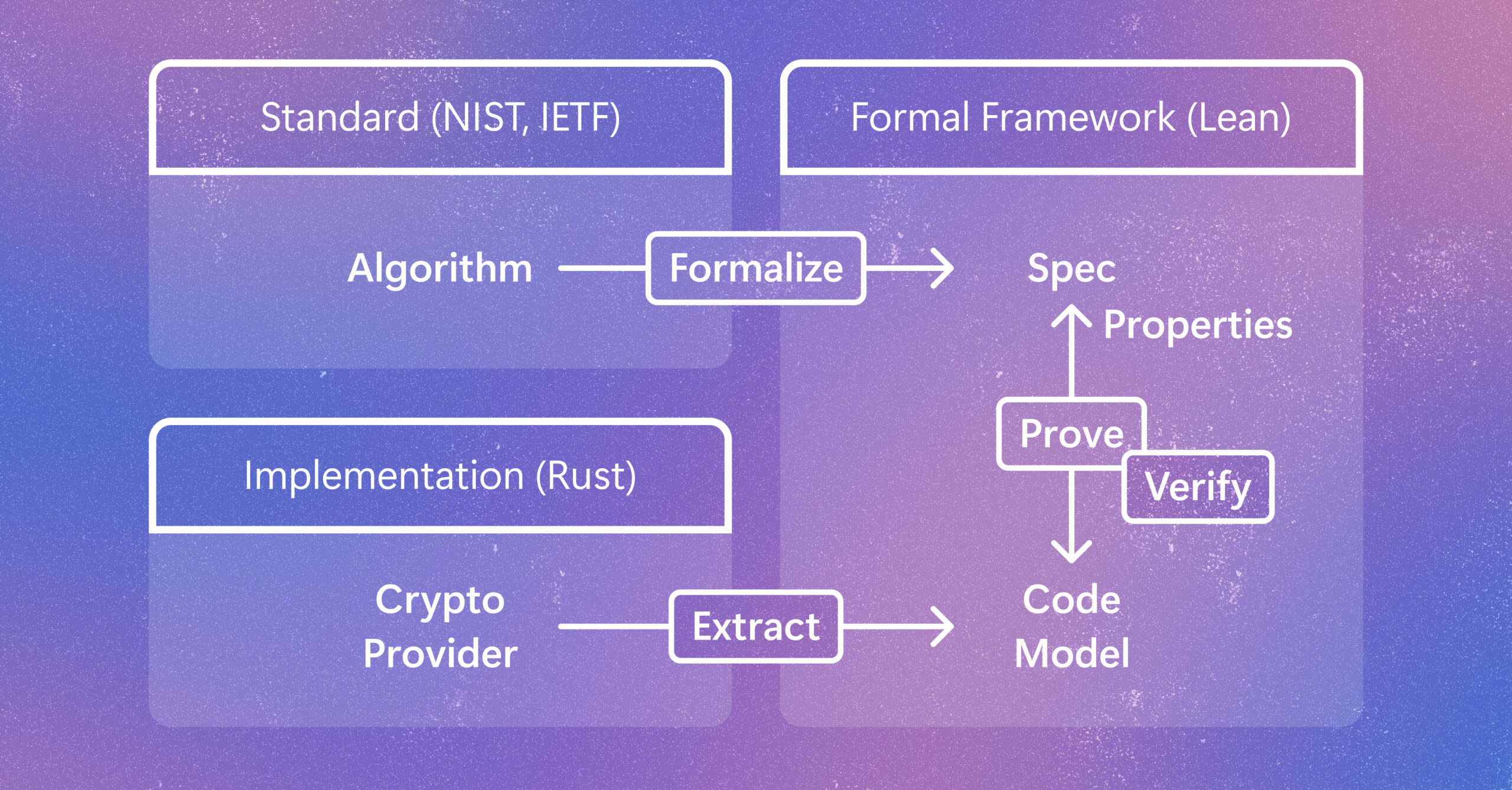
Cryptographic code supports vital protections in modern computing systems. Learn how a new method helps verify code as developers write it while preserving speed and adaptability as it gets implemented and evolves. The post Verifying Rust cryptography in SymCrypt, from standards to code appeared first on Microsoft Research.
MIT News · Artificial Intelligence· news.mit.eduJul 6, 2026
PhD student Rachel Sava, winner of the Envisioning the Future of Computing Prize, explores transformative improvements and dystopian risks of neural technology.
We use cookies to run the site and, with your consent, for analytics and to show ads.
See our Cookie Policy.