Skip to content

Urban electric vehicle fast charging load forecasting: an LGRL approach

Sep 2026 · Sustainable Energy Research · Vol 13 · 0 citations · 21 references
Electric Vehicles and Infrastructure

TL;DR

Test results show that the proposed hybrid forecasting method outperforms traditional algorithms in forecasting accuracy, convergence speed, and robustness under extreme conditions such as data missing, and it can effectively quantify the impact of load fluctuations on the voltage of distribution networks.
Abstract

To address the challenges that traditional single models have in balancing high-dimensional spatio-temporal correlation, long-sequence dynamic dependence, and a lack of a multi-station coordination mechanism in electric vehicle (EV) charging load forecasting, a hybrid forecasting method based on long short-term memory-graph reinforcement learning (LGRL) is proposed in this paper. First, a spatio-temporal feature decoupling architecture is constructed. The graph attention network (GAT) is used to dynamically aggregate high-order spatial features of neighboring nodes via adaptive attention coefficients, thereby characterizing the topological correlations of the charging station road network. Meanwhile, residual connections and a gated noise suppression mechanism are introduced into the long short-term memory network (LSTM) to adaptively filter irregular load disturbances, which enables accurate capture and noise-resistant extraction of non-linear temporal evolution laws. Second, a multi-agent coordinated forecasting framework based on value decomposition (QMIX) is established. Each charging station is modeled as an independent agent, and the global forecasting objective is decomposed into a decentralized local decision-making process in a lossless manner by introducing monotonicity constraints. A two-layer network structure comprising local and global mixing layers is designed. A parameterized hypernetwork is employed to fit the non-linear mapping between global states and local action value functions, thus achieving multi-station coordinated forecasting while ensuring the optimal performance of the global system. Third, a robust optimization strategy integrated with prioritized experience replay (PER) is designed. Key load samples are reweighted and trained according to temporal difference errors, which solves the problems of difficult algorithm convergence and weak generalization ability to extreme samples in dynamic heterogeneous scenarios. Finally, a case study is conducted based on the actual power grid topology of Fengxian District, Shanghai. Test results show that the proposed method outperforms traditional algorithms in forecasting accuracy, convergence speed, and robustness under extreme conditions such as data missing, and it can effectively quantify the impact of load fluctuations on the voltage of distribution networks.

Read PDF

Similar papers

Review Open access 2026

Deep Learning for Electric Vehicle Charging Load Forecasting: A Survey

The widespread adoption of electric vehicles (EVs) is reshaping modern energy systems, necessitating accurate and efficient forecasting of EV charging demand to ensure grid stability and infrastructure optimization. Traditional statistical and machine learning models offer foundational insights but often struggle with...

Chong-Ren Sun, Bassem Mikhail, Felix Chen et al. · 0 citations
Open access Aug 2026

Short-Term Electric Vehicle Charging Load Forecasting Based on Sample Entropy and CEEMDAN-TCN-BiGRU Hybrid Model

The large-scale integration of electric vehicles (EVs) brings significant challenges to power grid operation due to the strong nonlinearity and non-stationarity of charging loads. To address the limitations of existing methods in noise suppression and temporal feature extraction, this paper proposes a short-term EV cha...

Si-Chang Xiao, Tian-Tian Song, Si-Hang Qin et al. · 0 citations
Open access Sep 2026

City-Scale Optimization of Public Electric Vehicle Charging Infrastructure: Spatio-Temporal Demand Forecasting, Graph Learning and Multi-Objective Siting

Electric vehicle (EV) adoption is accelerating rapidly, increasing pressure on public charging infrastructure, urban energy systems, and network-expansion planning. However, many existing studies examine charging demand forecasting, station network characteristics, or infrastructure siting as separate problems, limitin...

B. Thango, G. K. Ayetor · 0 citations
Aug 2026

An adaptive time-frequency fusion PatchTST model for electric vehicle charging load forecasting

Accurate electric vehicle (EV) charging load forecasting is important for grid dispatch, peak-load management, and charging infrastructure planning. However, residential EV charging loads exhibit both multi-scale periodicity and stochastic fluctuations, making it difficult for fixed-window models to capture dynamic tem...

Jingyue Zhang, Jing-Hua Wang, Peng-Tao Su et al. · 0 citations
Conference Open access 2026

Electric Vehicle Charging Demand Prediction in Shenzhen Based on Random Forest and LSTM

Reliably forecasting how much energy electric vehicles (EVs) will require at public chargers is a prerequisite for infrastructure planning and matching available capacity to real-world usage. This study compares two representative approaches, Random Forest and Long Short-Term Memory (LSTM), to forecast hourly charging...

Hao-Ran Luo · 0 citations

Related blog posts

Microsoft Research Blog Sep 30, 2026

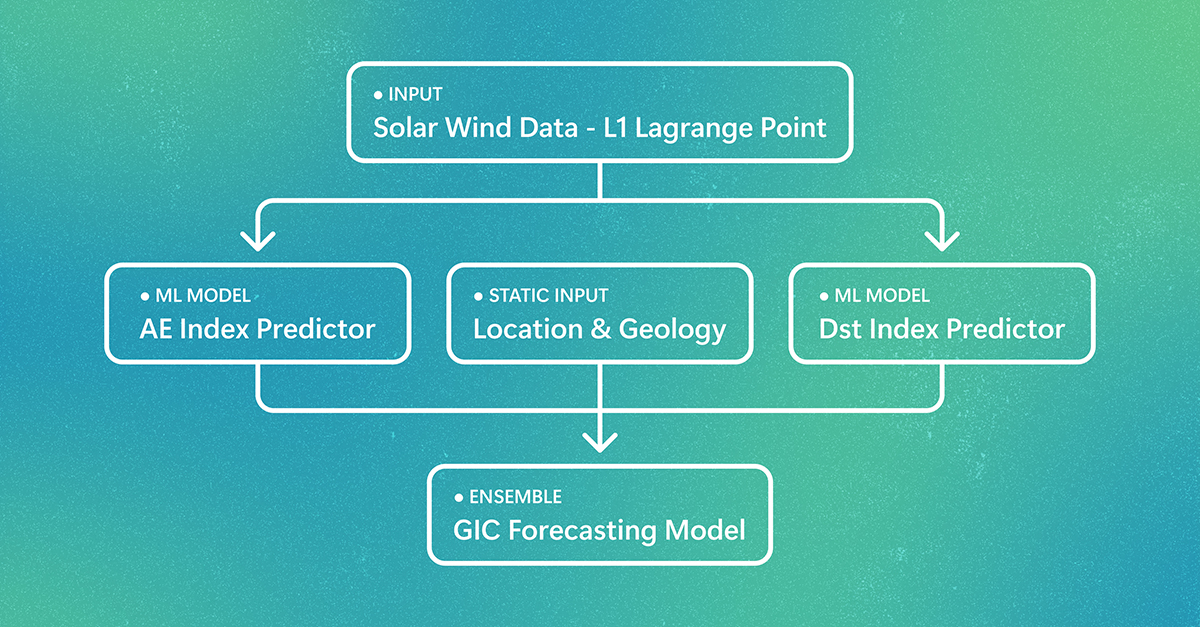
Forecasting space weather risks on power grids

Extreme space-weather events can damage power systems on Earth and degrade GPS accuracy and satellite operations. A new machine learning system can predict where damage is likely to occur 30-60 minutes before a storm arrives. The post Forecasting space weather risks on power grids appeared first on Microsoft Research.

We use cookies to run the site and, with your consent, for analytics and to show ads. See our Cookie Policy.