Skip to content

An energy-aware federated intelligence framework for sustainable WSN-IoT ecosystems

Sep 2026 · Peer-to-Peer Networking and Applications · Vol 19 · 0 citations · 38 references
IoT and Edge/Fog Computing

TL;DR

The proposed framework, EcoSense-AI, combines Energy-Weighted Federated Learning, Adaptive Differential Privacy, Energy-Aware Graph Neural Network-based topology modeling, and multi-objective resource optimization to facilitate secure, efficient, and adaptive edge-cloud collaborative intelligence for sustainable WSN-IoT ecosystems.

Abstract

With the rapid development of Internet of Things (IoT), the deployment of Wireless Sensor Networks (WSNs) as vital infrastructure for environmental monitoring, industrial automation, precision agriculture, and smart city applications has increased significantly. Despite this, WSN-IoT ecosystems are still hindered by the issues of limited energy, communication overhead, scalability, preserving privacy, and learning in an intelligent decentralized fashion. To overcome these challenges, this study suggests a federated energy-aware intelligence framework namely EcoSense-AI for sustainable WSN-IoT ecosystems. It combines Energy-Weighted Federated Learning, Adaptive Differential Privacy, Energy-Aware Graph Neural Network (EA-GNN)-based topology modeling, and multi-objective resource optimization, to facilitate secure, efficient, and adaptive edge-cloud collaborative intelligence. The effectiveness of EcoSense-AI was tested with a simulated WSN-IoT network of heterogeneous sensor nodes operating with different residual energy levels, communication ranges and moving network conditions. Distributed environmental sensing data in the device, edge and cloud layer were subjected to experimental analysis. The proposed framework was compared with FedAvg and FedProx for equal training rounds, communication setup and in energy constrained deployment settings. The accuracy, energy efficiency, privacy score, communication cost reduction and network lifetime extension were used as evaluation metrics to measure performance. The experimental results show that the proposed method, EcoSense-AI outperforms the baseline methods with 98.56% accuracy, 93.2% energy efficiency, and 0.97 privacy score, and increased network lifetime by 58.9% and decreased communication cost. The proposed framework for sustainable intelligent sensing and decentralized learning in next-generation WSN-IoT applications is proved to be effective through the results.
Read PDF

Similar papers

Open access Aug 2026

OptiBC-WSN: Multi-Objective Optimization for Energy Efficiency, Security, and Scalability in IoT-Based Wireless Sensor Networks

A new framework called OptiBC-WSN is proposed that combines Particle Swarm Optimisation (PSO) clustering, AES-128 encryption, Proof of Authority (PoA) blockchain and Random Forest-based Intrusion Detection System (IDS) to improve the scalability and security of IoT.

S. Kumar, K. S. Reddy · 0 citations
2026

Towards Sustainable IoT: An AI-Driven Framework for Enhanced Energy Harvesting in Wireless Sensor Networks

An AI-driven framework integrates hybrid energy harvesting mechanisms with Deep Reinforcement Learning (DRL) to optimize energy efficiency in IoT systems and achieves up to 300% improvement in network lifetime under low-energy harvesting conditions.

Elkhatim Abuelysar Elmobarak Mohammed Ali · 0 citations
#edge computing Aug 2026

Multi-mode energy harvesting–enabled edge computing architecture for industrial IoT environments

This work presents a multi-mode energy harvesting-assisted edge computing architecture, integrated with a joint optimization of energy consumption and communication behaviour, aimed at enhancing the sustainability, reliability and autonomy of operation in an industrial IoT context.

Dr. Deepa, M. Mehfooza, Padmavathy Thiruppathi Raj · 0 citations
Review Open access Sep 2026

Toward Energy-Autonomous Distributed Intelligence in IoT Automation Networks: From Self-Powered Nodes to Edge–Fog–Cloud Integrated Smart Systems

Energy-autonomous Internet of Things (IoT) nodes are becoming important components of distributed fieldbus and wireless networks used in building automation, industrial monitoring and wider smart systems. Their operation is constrained not only by the amount of harvested and stored energy, but also by sensing activity,...

A. Ożadowicz · 0 citations
Open access Aug 2026

Energy-Aware Cluster-Optimized Intelligent Routing Protocol for WSN-based IoT Networks

Wireless Sensor Networks (WSNs) use resource-constrained sensor nodes to continuously monitor ambient conditions and serve as data sinks for various Internet of Things (IoT) applications. However, maximizing Energy Efficiency (EE) while maintaining reliable data delivery remains a significant challenge. Existing cluste...

P. Kumbhar, A. Naik · 0 citations

Related blog posts

Microsoft Research Blog Jul 13, 2026

Verifying Rust cryptography in SymCrypt, from standards to code

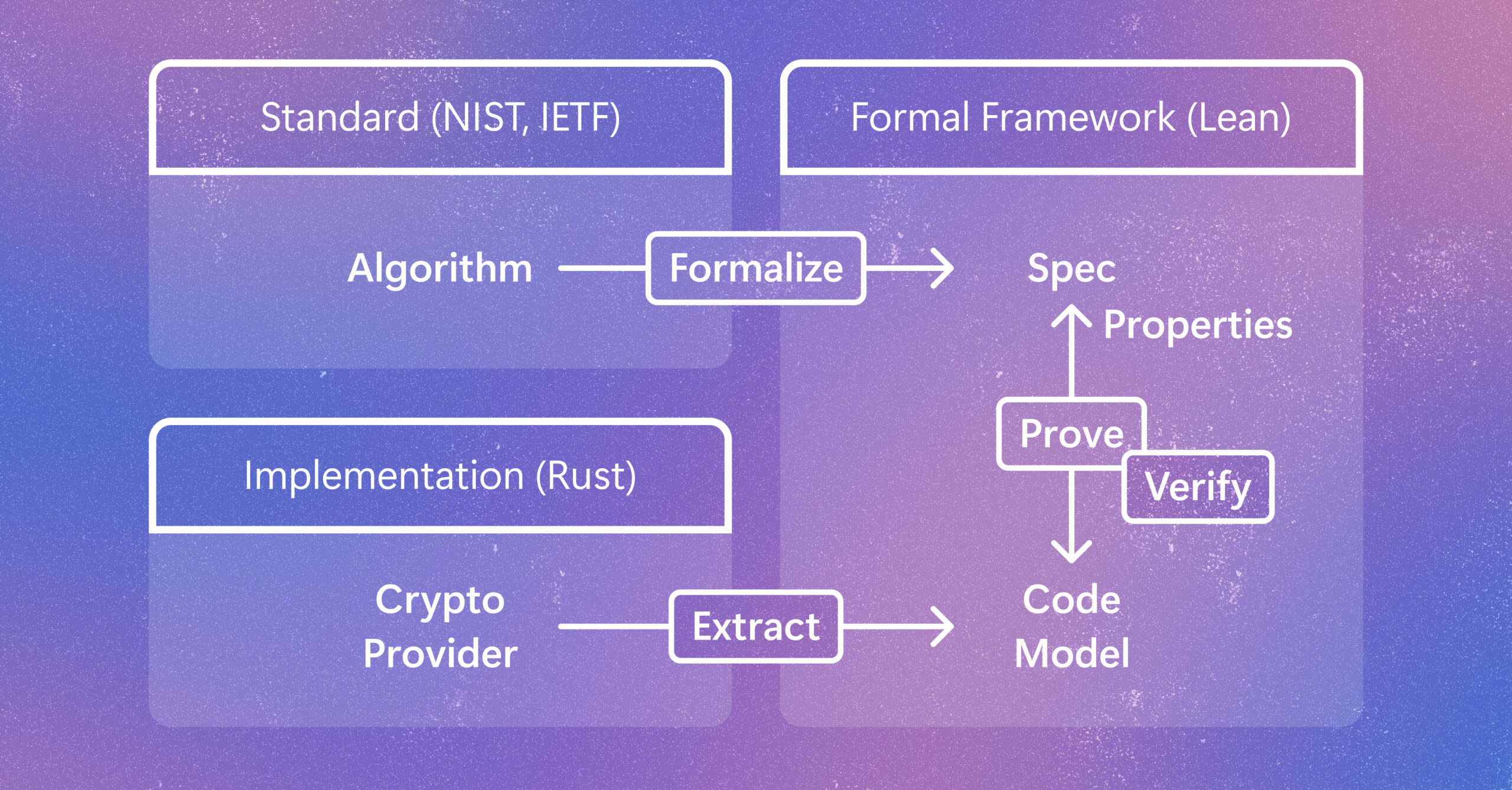
Cryptographic code supports vital protections in modern computing systems. Learn how a new method helps verify code as developers write it while preserving speed and adaptability as it gets implemented and evolves. The post Verifying Rust cryptography in SymCrypt, from standards to code appeared first on Microsoft Research.

We use cookies to run the site and, with your consent, for analytics and to show ads. See our Cookie Policy.