Aug 2026· Infokommunikacionnye tehnologii· 0 citations· 10 references
Engineering
Abstract
Accuracy and intolerance to interference of GNSS receivers depend on the efficiency of tracking modules. To achieve better characteristics, designers should implement various issues, affecting the process of tracking in these modules: integration interval, spacing and configuration parameters of PLL and DLL. The article discusses practical issues concerning implementation of tracking modules. Using the obtained results, it is possible to improve transient characteristics of tracking modules. These issues were tested in an experimental navigation receiver. The results were obtained using the simulation software, developed by the authors, as well as Vivado simulator and experimental testing.
Using the phase of a signal as an informative parameter usually allows for the
highest efficiency of signal isolation from interference and the accuracy of estimating its parameters.
However, in some cases, in particular in conditions of intense interference and fluctuations in signal
parameters caused by the movement...
A. Nemykin, L. N. Isaeva· Legal and Applied Metrology· 0 citations
The proposed algorithm enables the development of universal navigation receivers with software-defined adaptability to Global Navigation Satellite Systems updates, significantly reducing hardware modernization costs.
A. Kozlov, A. M. Petushkov, E. A. Sakovsky et al.· Proceedings of Telecommunica...· 0 citations
An approach is proposed to improve accuracy through adaptive weighting strategies and multipath isolation techniques and this strategy is combined with a multipath detection technique using the Code-minus-carrier (CMC) rate of change.
S. Chiodini· Materials Research Proceedin...· 0 citations
Digital television signals received from a geostationary satellite can be used as signals of opportunity to calculate and predict the satellite orbit. This is an inexpensive and practical way to evaluate satellite collision risks, a key aspect of space surveillance and space safety. The technique is based on measuring...
R. Piriz, Francesc Vilardell Sallés, A. A. Maté· IEEE International Workshop...· 0 citations
Simultaneous use of pseudorange, phase and Doppler data from multiple GNSSs for Position, Velocity and Timing (PVT) requires the alignment of the time and frequency scales of the used GNSSs, and additional calibrations, some of them related to the different signal offsets. The accuracy of the PVT solution is also depen...
M. Pertile, Anna Fantoni, Joaquin Zurutuza et al.· IEEE International Workshop...· 0 citations
Global Positioning System (GPS) signals in the L1 band are inherently vulnerable to both intentional and unintentional jamming because of their low received power levels. In this study, the performance of three different adaptive filtering algorithms is investigated against five representative jammer types in a GPS L1...
Akın Can Özbaş, Yılmazcan Bekleviş, Mesut Erol et al.· Signal Processing and Commun...· 0 citations
Related blog posts
MIT News · Artificial Intelligence· news.mit.eduOct 22, 2026
“X-Hinges” helps design and 3D print items like lamps and gloves with an interactive twist: automatically embedded sensors that perceive and adaptively respond to human contact.
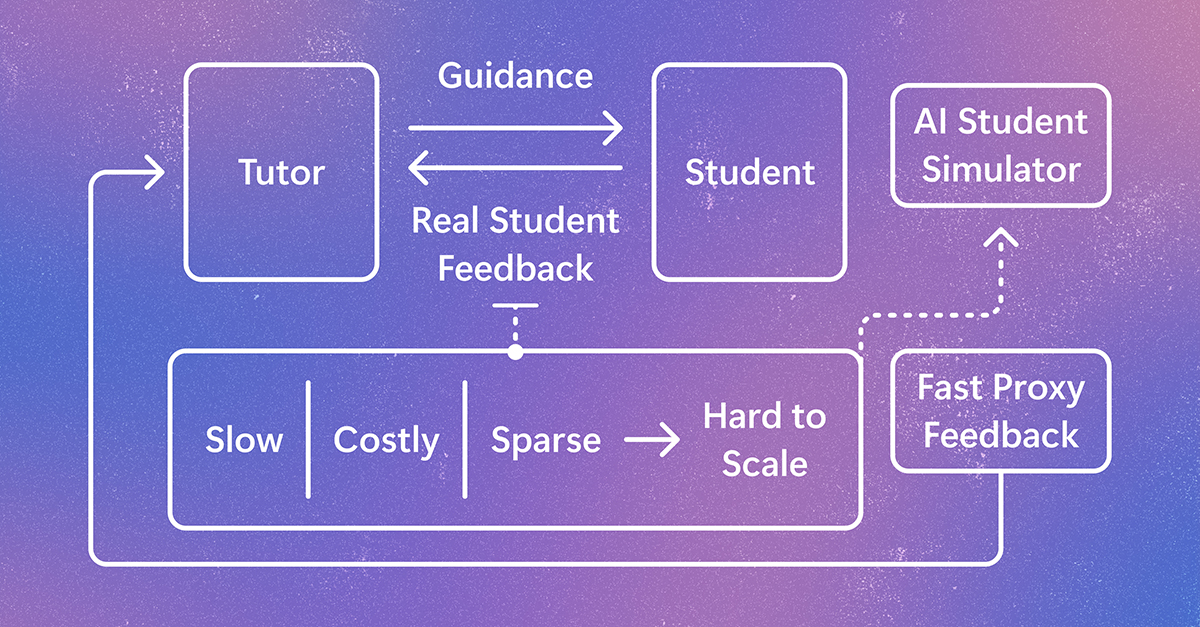
StudentSim is a research system for evaluating and improving AI tutoring tools before they are tested with learners. It models how individuals may engage with tutors, giving feedback to improve tutor performance across subjects like chess, writing, and mathematics. The post Simulating student learning for better AI tutoring appeared first on Microsoft Research.
MIT News · Artificial Intelligence· news.mit.eduOct 6, 2026