QEncodeBench tasks large language models with encoding classical constraint problems as phase oracles and scores the generated circuits with an adversarially self-validated verifier that decides full solution-set equivalence up to a global phase, with ancillas restored and resource budgets enforced.
Abstract
Grover search, amplitude amplification, and quantum counting all rely on the same reusable subroutine, a phase oracle, whose construction the algorithms literature takes as given: the classical predicate is assumed to be already encoded as a correct, resource-bounded circuit. We turn this assumption into a measured capability. QEncodeBench tasks large language models (LLMs) with encoding classical constraint problems as phase oracles and scores the generated circuits with an adversarially self-validated verifier that decides full solution-set equivalence up to a global phase, with ancillas restored and resource budgets enforced. Sampled basis-state tests, we show, systematically overestimate this ability. Measured this way, models separate sharply: code models without a reasoning mode solve essentially nothing, and enabling native reasoning on identical weights improves accuracy by an order of magnitude. The failures are overwhelmingly semantic rather than syntactic. Two architectures, a unit-verified constraint agent and a neuro-symbolic compilation pipeline, close most of the remaining gap by delegating correctness-critical composition to deterministic procedures. Ablations quantify the contribution of each component, and resource gating exposes an architecture-dependent trade-off between circuit width and depth. Finally, controlled difficulty escalation reveals architecture-specific responses to difficulty structure: different difficulty axes degrade different methods, while the neuro-symbolic pipeline passes every evaluated instance. Code and data are available at https://github.com/chexujun/QEncodeBench.

Quantum compilers face the test oracle problem, judged by an output-equivalence oracle: the compiled circuit must compute the same unitary as the original, modulo global phase and a qubit-layout permutation. This oracle, by construction, checks only that semantic map, not the circuit's own layout, permutation, or phase...
Furqan Nasir, Arif Shah, Iftikhar Alam· 2 citations
We present AlchemQ v0.5, a proof-of-concept system that couples an untrusted beam-search optimizer with a machine-checkable per-result certification layer and a versioned certificate protocol (0.2.0), so that every optimized circuit ships with a verifiable artifact rather than a bare claim. The certifier proves equival...
Hybrid quantum-classical compilers exchange programs among circuit, control-flow, pulse, device, and physical representations. Existing formats make different abstraction choices, so the properties that must survive a lowering step are often enforced by tool-specific code rather than stated in a common intermediate rep...
The results indicate that typed state transitions and deterministic evidence control contribute beyond fluent generation alone on quantum-acceleration hypotheses beyond fluent generation alone.
Yijing Zuo, Zhengkang Fu, Zihan Nie et al.· 0 citations
Test oracles for quantum transpilers typically judge correctness by comparing compiled output against a reference: a statevector, a sampled distribution, or a unitary compared modulo global phase. A companion empirical study measures how often that choice fails. Roughly 28% of merged Qiskit transpiler bug-fixes (95% Wi...
Furqan Nasir, Arif Shah, Iftikhar Alam· 1 citation
This work introduces two complementary synthesis-oriented existence-checking methods: a rewrite-based normalization algorithm (RwUn) and a template-based reasoning system (TpUn) that guarantees uncomputation through structured Store-Use patterns.
Chenke Liu, Li Zhou, Bo-Ning Meng· 0 citations
Related blog posts
MIT News · Artificial Intelligence· news.mit.eduOct 2, 2026
A weeklong summer workshop brought higher education faculty to campus to explore how AI and machine learning materials can be adapted for their classrooms.
MIT News · Artificial Intelligence· news.mit.eduAug 27, 2026
A new machine-learning framework aims to improve the success rate of computational protein design while moving away from results that reproduce sequences found in nature.
Microsoft Research Blog· microsoft.comAug 20, 2026
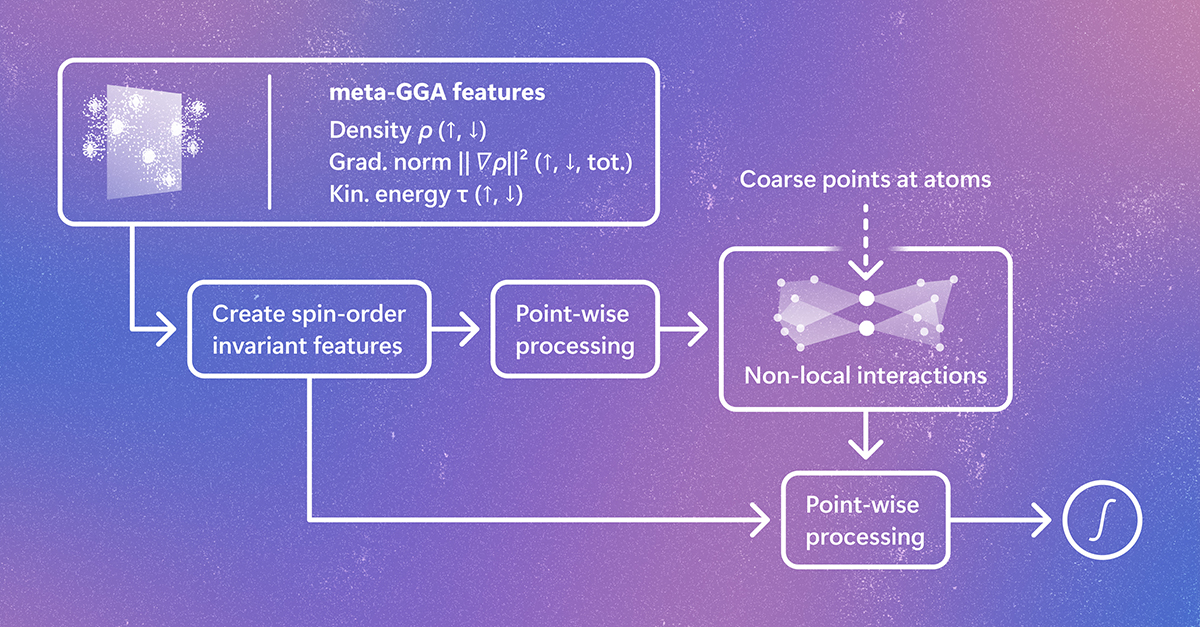
Skala 1.1, the updated deep-learning exchange-correlation functional from Microsoft Research, provides greater accuracy, expanded accessibility across the computational chemistry ecosystem, and a living benchmark to track computational performance. The post Broadening access to Skala creates a faster path to predictive DFT appeared first on Microsoft Research.
We use cookies to run the site and, with your consent, for analytics and to show ads.
See our Cookie Policy.