The recording and utilization of execution traces of assignments, operation calls, and return statements are proposed to make the internal behavior of operations persistent and analyzable as state-based models.
Abstract
VDM has been pursuing rigorous verification through mathematical theorem proving and software testing via simulated execution. Animation through an interpreter enables validation of the specification to ensure it meets the required functionality. Step-by-step execution in a debugger also allows the user to follow the internal behavior of operations. In this paper, we propose the recording and utilization of execution traces of assignments, operation calls, and return statements to make the internal behavior of operations persistent and analyzable as state-based models. The data model of events in execution traces, its implementation in ViennaTalk, and its application to visualization will be introduced.
This paper introduces the first verification-aware data-plane language: VeriLucid, which aims to unify programming and specification in one high-level language, with built-in proof automation.
John Sonchack, P. Zave, Jennifer Rexford· Conference on Applications,...· 0 citations
BCerT is developed, an extension of the Meeduse language workbench originally dedicated to the formal modeling of domain-specific languages, allowing animation and model checking with ProB, as well as theorem proving with Atelier B.
Akram Idani, Germán Vega· Software Language Engineerin...· 0 citations
This approach uses LLMs to infer candidate specifications solely from test code and dynamic execution traces: the LLM observes only the program interface, selected inputs, and corresponding outputs or state changes, while the implementation internals remain hidden.
Tian-Hai Liu, Maximilian Müller, Tobias Hey et al.· 0 citations
We present the Measurement Template Library (Mtl), a Go library and runtime for specifying and executing measurements. Mtl provides a framework for specifying and executing extensible, modular, and auditable measurements using generic programming techniques. By leveraging the notion of polymorphic measurement programs,...
I. Ndubuisi-Obi, Siya Kulkarni· Applied Networking Research...· 0 citations
Forbench is introduced, a word-level symbolic simulation framework that retains the familiar execution semantics of simulation but augments it with solver-backed symbolic signals and state transitions, enabling systematic exploration of RTL behaviors under symbolic inputs and conditions.
Ziyi Yang, Wenbin Che, Ziyue Zheng et al.· 0 citations
A novel multiverse debugger capable of effectively pruning redundant paths from the state space to reduce the effect of state explosion is presented, which uses a trace-based approach which significantly reduces the overhead of multiverse de-bugging.
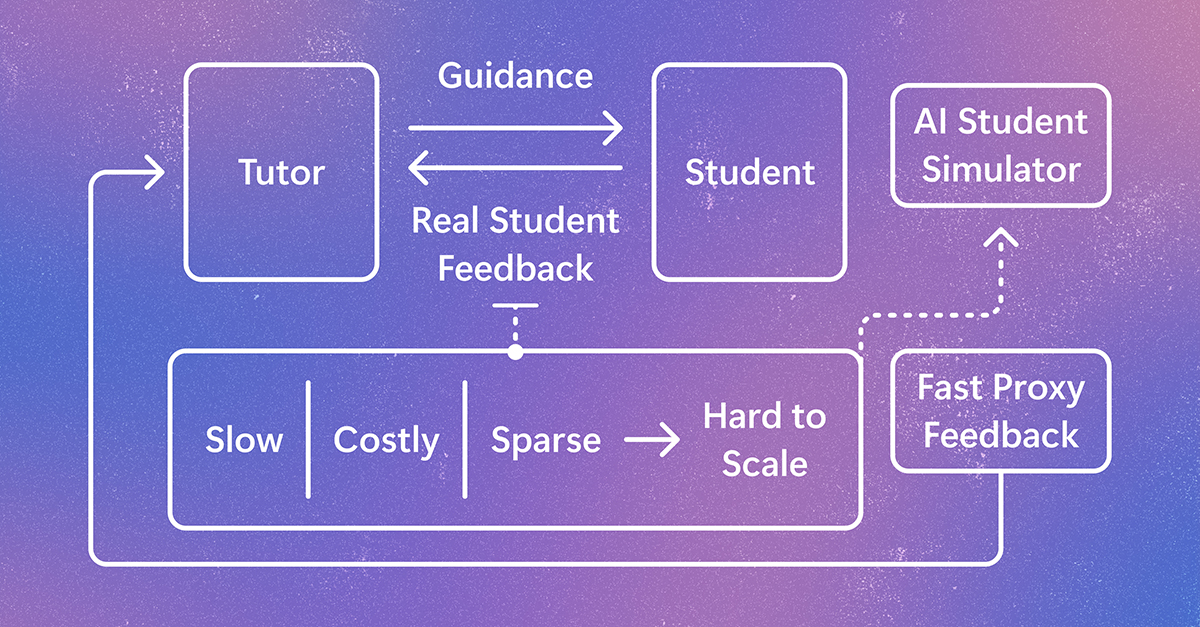
StudentSim is a research system for evaluating and improving AI tutoring tools before they are tested with learners. It models how individuals may engage with tutors, giving feedback to improve tutor performance across subjects like chess, writing, and mathematics. The post Simulating student learning for better AI tutoring appeared first on Microsoft Research.
MIT News · Artificial Intelligence· news.mit.eduOct 6, 2026
Writing as a participant and researcher, PhD student JS Tan SM ’22 has co-authored a new book about the rise of tech worker protests and the employer backlash that followed.
We use cookies to run the site and, with your consent, for analytics and to show ads.
See our Cookie Policy.