Skip to content

Corpus-level behavioral intensity in human–AI conversations

Sep 2026 · Frontiers in Artificial Intelligence · Vol 9 · 0 citations · 24 references
Medicine

TL;DR

This study proposes a transparent rule-based framework for estimating persistence, delegation-related lexical patterns, and refinement-related lexical markers without inferring psychological dependence in conversational generative models.

Abstract

Conversational generative models are increasingly used to produce, transform, and revise information through multi-turn exchanges. However, large human–AI datasets are still commonly analyzed through performance, preference, or content lenses, leaving conversation-level behavioral structure less operationalized. This study proposes a transparent rule-based framework for estimating persistence, delegation-related lexical patterns, and refinement-related lexical markers without inferring psychological dependence. LMSYS-Chat-1M and WildChat were analyzed as primary conversational corpora, while Chatbot Arena was included as a structurally conditional A/B comparator. Across 1,879,085 valid analytical records, we calculated IPF, CDR, SRS, and the Conversational Behavioral Intensity Index (CBII), together with an equal-weight control. WildChat showed the highest mean CBII (0.2463), followed by LMSYS-Chat-1M (0.2123) and Chatbot Arena (0.1762). This ordering was stable under language controls, IPF thresholds of 5, 10, and 20 user turns, and question-level analysis of Chatbot Arena. Pairwise effect sizes were small to moderate, with the largest contrast between WildChat and Chatbot Arena (Cohen's d = 0.363).

Read PDF

Similar papers

#natural language process... Preprint Sep 2026

Lost with a Map: Conversational State and Behavioral Reliability in Language Models

Task-oriented dialogue requires maintaining and updating information across turns, yet language models expose no explicit belief-state object. We study how conversational state is represented, updated, and used inside eight instruction-tuned language models from four families on MultiWOZ and SGD. Structure and values s...

Atahan Dokme, Larry Heck · 0 citations
Open access Sep 2026

Words matter: measuring and titrating the communicative character of AI

The Intellect-Emotion-Action Profile (IEAP), a purpose-built lexical framework featuring an inductively constructed dictionary from AI-generated text that decomposes any response into the proportional usage of intellectual, affective, and action words, is introduced.

William C. Kouns · 0 citations
#natural language process... Preprint Aug 2026

How To Do Things With Prompts

This paper applies speech act and politeness theory to a corpus-pragmatic analysis of 2,000 English-language prompts drawn from publicly shared ChatGPT conversations, showing a consistent movement toward indirect, implicit, and fragmentary realizations of directive force, accompanied by a decline in politeness marking.

Kristina Šekrst, Virna Karlić · 0 citations
#generative ai Review Open access Sep 2026

A Survey of conversational AI from rule based to generative and retrieval augmented generation chatbots

This survey presents a structured, design-oriented analysis of RAG-driven conversational systems through a principled framework that decomposes architectures along critical dimensions, including document segmentation and chunking strategies, embedding and indexing mechanisms, retriever and re-ranking models, knowledge...

V. Ghaywat, Abhyuday Singh, Aniket K. Shahade et al. · 0 citations
#artificial intelligence Preprint Sep 2026

Talking Past the Machine: Morality, Politeness, and Alignment in Human-AI Dialogue

It is suggested that AI reproduces the surface of cooperation without the mutual adaptation that grounds it between humans - and, more surprisingly, that mechanisms sustaining human accommodation can run in reverse with AI, suggesting a turn-level view may be insufficient for interaction-level success.

Marina Mitiaeva, Lu Xiao · 0 citations
#natural language process... Preprint Sep 2026

CypherTurn: A Multi-Turn Benchmark for Conversational Text-to-Cypher Evaluation and the Autonomy Divergence

Graph databases are increasingly queried through natural language, yet every existing benchmark evaluates isolated single-turn queries rather than the multi-turn sessions through which analysts actually work. We introduce CypherTurn, the first benchmark for conversational Text-to-Cypher evaluation, comprising 721 sessi...

Yu-Zhe Zhang, Wei-Jie Zhu, Hao-Lin Yang et al. · 0 citations

Related blog posts

MIT News · Artificial Intelligence Sep 30, 2026

This game-playing AI is the new champ at Stratego

Able to defeat top-ranked human players and more efficient than other models, the new system could help decision-makers in military maneuvers or business negotiations.

Microsoft Research Blog Sep 29, 2026

Introducing Quine: An AI research system designed for the complexity of biology

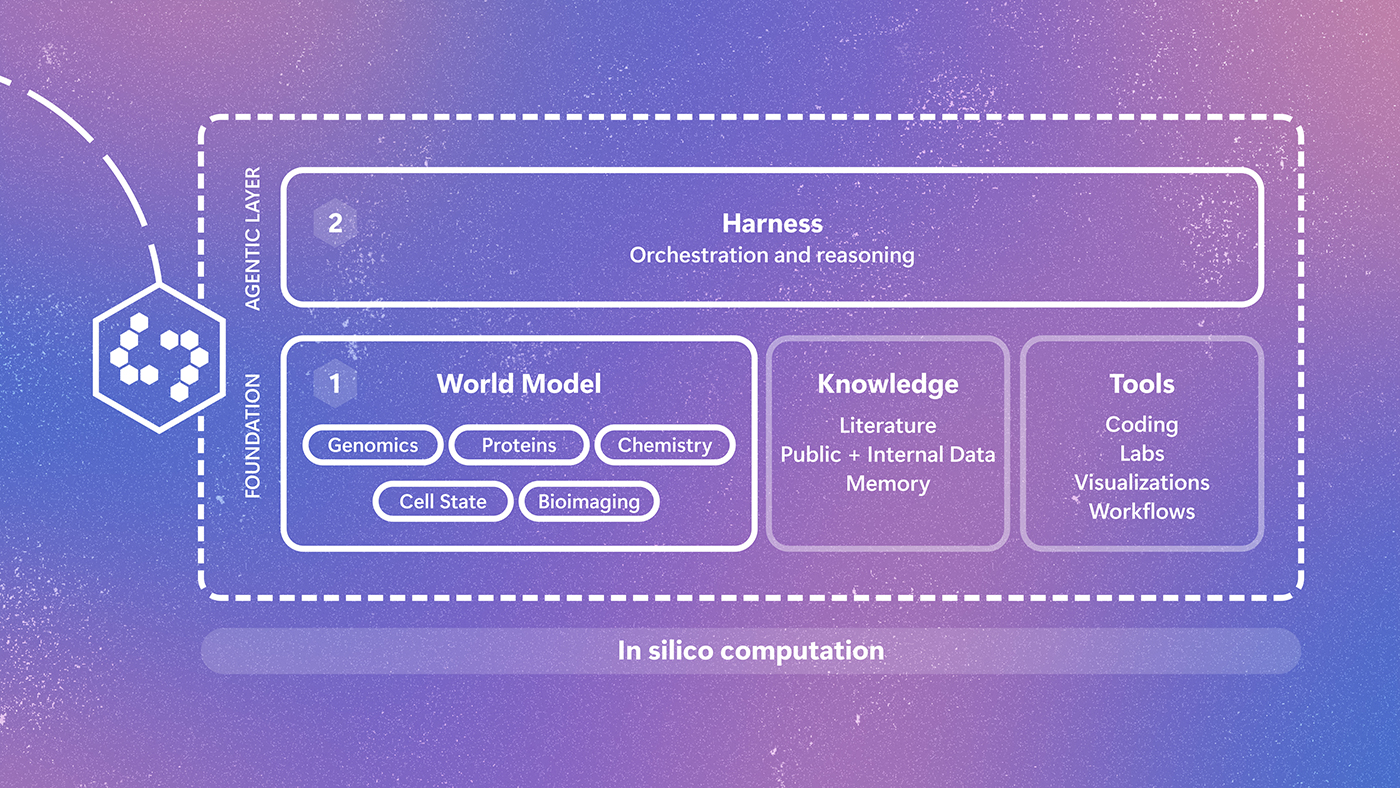
Biology doesn't operate in silos, and neither should the AI representation of it. Quine is an early-stage research effort to create a multimodal world model of biology. By connecting insights across biological scales and modalities, Quine helps scientists computationally search a space far larger than intuition allows and prioritize hypotheses before they reach the lab. Experimental results provide important feedback, helping researchers sharpen future research directions. The post Introducing Q…

We use cookies to run the site and, with your consent, for analytics and to show ads. See our Cookie Policy.