Skip to content
#federated learning Open access

Information Security and Federated Learning for Collaborative Healthcare Diagnosis

Sep 2026 · International Journal of Artificial Intelligence and Agent Systems · 0 citations · 25 references
Privacy-Preserving Technologies in Data

TL;DR

A federated learning framework with data locality for healthcare diagnostics that enables multiple hospitals to jointly train accurate models while keeping patient data within institutional boundaries is introduced.

Abstract

Healthcare institutions produce enormous quantities of medical data daily. However, regulations such as HIPAA, GDPR, and DPDPA create strict barriers to sharing patient information for collaborative artificial intelligence development. This forces individual hospitals to develop models using only their local data, producing systems that fail to generalize across diverse populations. We introduce a federated learning framework with data locality for healthcare diagnostics that enables multiple hospitals to jointly train accurate models while keeping patient data within institutional boundaries. From an information security perspective, the system follows a coordinator-client architecture using the Flower framework with a FastAPI backend and a Next.js frontend, facilitating distributed training under data locality. Medical imaging remains entirely within local hospital infrastructure while encrypted parameter updates traverse secure channels. The system implements Federated Averaging, Federated Optimization, Federated Matched Averaging, and our novel Performance-Adaptive Weighted Aggregation algorithm. Our approach demonstrates the feasibility of collaborative training under data locality in limited experiments; a direct comparison with centralized training was not performed.

Read PDF

Similar papers

Conference Aug 2026

Decentralized Machine Learning for Healthcare: Survey on Disease Prognosis and Secure Communication Frameworks

One of the biggest challenges in implementing AI in healthcare is the fragmentation of data across hospitals, as well as privacy regulations. Federated learning tackles these challenges by allowing models to be collaboratively built, while patient data is kept at its source. The survey focuses on two primary medical fi...

Bhaskar Adepu, T. Archana · 0 citations
Open access Aug 2026

Federated Self-Supervised Learning for Privacy-Preserving Clinical Diagnostics in Distributed Healthcare Systems

The proposed FSSL framework provides a scalable foundation for privacy-conscious collaborative clinical AI while keeping patient data within the originating healthcare institution and is intended to support, rather than replace, professional clinical decision-making.

A. V, S. Swathi, G. Sharmila et al. · 0 citations
Sep 2026

FedDeepRiskNet++: a privacy-enhanced federated learning framework for secure and scalable medical IoT systems

The results demonstrate that strong privacy protection, communication efficiency, and high diagnostic reliability can coexist within large-scale federated healthcare systems, making FedDeepRiskNet + + a practical solution for next-generation medical IoT systems.

Ibrahim Aqeel, Emad S. Hassan, Noha Mostafa et al. · 1 citation
Aug 2026

A Secure and Scalable Federated Deep Learning Framework for Distributed Medical Imaging

This paper proposes SecFedMed—a Secure and Scalable Federated Deep Learning Framework for Distributed Medical Imaging—integrating four tightly coupled innovations: a Rényi Differential Privacy mechanism with adaptive noise calibration for formal gradient-level privacy guarantees, a Secure Aggregation Protocol employing...

Sanjay Kumar · 0 citations

Related blog posts

Microsoft Research Blog Nov 16, 2026

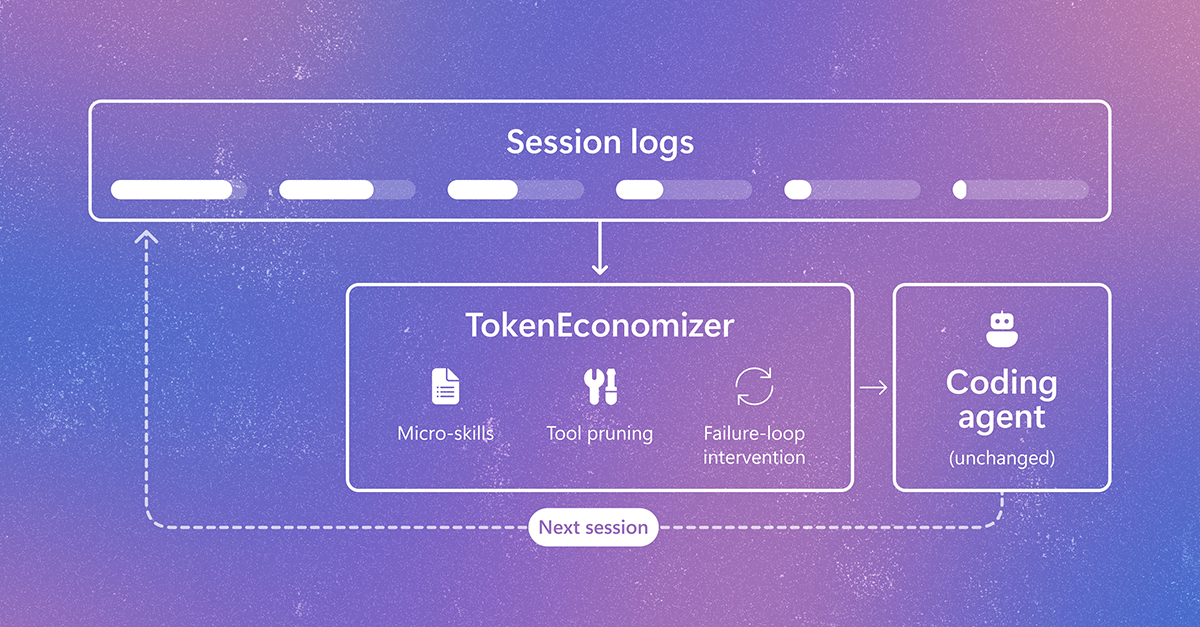
TokenEconomizer: Learning from Experience to Make AI Coding Agents More Efficient

AI coding agents are increasingly help developers fix bugs and build features largely on their own, but every interaction with their models consumes tokens. In each session, an agent sends instructions, tool descriptions, and session history to its model. Most efforts to reduce this cost focus on individual tasks. Yet developers return to the same […] The post TokenEconomizer: Learning from Experience to Make AI Coding Agents More Efficient appeared first on Microsoft Research.

We use cookies to run the site and, with your consent, for analytics and to show ads. See our Cookie Policy.