Skip to content

Multi-scale physics-informed reinforcement learning method for bearing fault diagnosis under data scarcity

Sep 2026 · Structural Health Monitoring · 0 citations · 25 references
Machine Fault Diagnosis Techniques

TL;DR

A novel multi-scale physics-informed neural network with enhanced reinforcement learning (MPINN-ERL) for bearing fault diagnosis under data scarcity and achieves competitive diagnostic accuracy.

Abstract

Identifying mechanical faults is crucial for maintaining stability in industrial systems. However, the lack of labeled fault data significantly undermines the accuracy and generalization of diagnostic methods in practical applications. To address this issue, this paper presents a novel multi-scale physics-informed neural network with enhanced reinforcement learning (MPINN-ERL) for bearing fault diagnosis under data scarcity. First, a multi-scale convolutional bi-directional gated recurrent unit with physics-inspired residual regularization module is developed to effectively integrate physics-inspired dynamic residual regularization into the system, thereby improving the stability of diagnostic performance. Furthermore, a conditional channel-spatial Wasserstein generative adversarial network is designed to generate augmented fault samples for alleviating the limited-sample problem. Finally, a novel loss function and an ERL algorithm are introduced to dynamically adjust the weight of physics-inspired dynamic residual regularization, thereby improving the model’s diagnostic stability when labeled data are scarce. Experimental results on the evaluated bearing fault datasets show that the proposed method achieves competitive diagnostic accuracy. Compared with several representative state-of-the-art deep learning methods, MPINN-ERL also exhibits relatively stable diagnostic performance.
Read PDF

Similar papers

Open access Sep 2026

Physics-Guided Multi-Source Representation Learning for Aero-Engine Bearing Fault Diagnosis under Data Scarcity

This paper proposes the physics-informed dual-stream contrastive diagnostic network (PIDC-Net), a unified framework resolving both difficulties through three integrated mechanisms. The fault-physics encoding stream (FPES) constructs multi-scale depth-wise separable convolutional encoders whose receptive field width...

Xiang-Di Meng, Jia-Tong Ju, Xin Wang · 0 citations
Open access Aug 2026

GSR-enhanced sparse feature learning for bearing fault diagnosis under data scarcity

A GSR-enhanced robust sparse feature learning framework that derives stability control conditions for the GSR system, integrates a lightweight dual-branch architecture to fuse global convolutional features and local sparse spectral peak features, and constructs a Wasserstein-regularized dual-loss function to optimize t...

Xue Wen, Xue-Rui Zhang, Li-Feng Lin et al. · 0 citations
Open access Aug 2026

Bearing fault diagnosis based on a spectral-guided adaptive multi-scale convolutional network

The results show that SAMACNN outperforms both classical and advanced methods on the two datasets, demonstrating strong robustness and generalization capability in complex variable-condition measurement environments.

DaXin Li, Hong Wang, Hai Xue et al. · 0 citations
Open access Sep 2026

An Intelligent Bearing Fault Diagnosis Model with Physics-Information Fusion: Design and Interpretability Mechanism Research

To address the issue of limited interpretability in current deep learning-based bearing fault diagnosis methods, this study proposes a convolutional neural network model incorporating spectral physical constraints. The model integrates data-driven learning with physical constraints by embedding the spectral features of...

Zhen-Yang Yu, F. Shao, Qian Xu et al. · 0 citations
Conference Aug 2026

Application of Feature Fusion-Driven Physics-Informed Neural Network in Remaining Useful Life Prediction

Addressing the issues of traditional data-driven methods lacking interpretability and physics-informed neural network (PINN) being susceptible to noise due to statistical feature inputs, this paper proposes a feature fusion-based physics-informed neural network method for predicting the remaining useful life (RUL) of b...

Chao-Ge Wang, Xiang-Yin Meng, Zi-Yi Jia · 0 citations

Related blog posts

Microsoft Research Blog Sep 30, 2026

Forecasting space weather risks on power grids

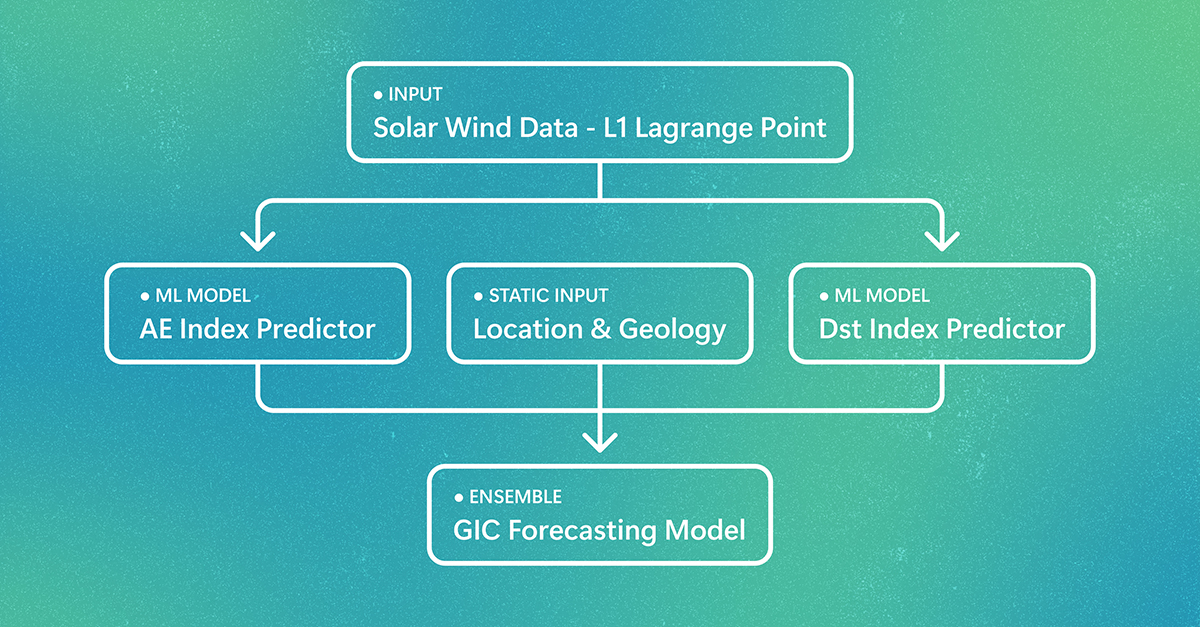
Extreme space-weather events can damage power systems on Earth and degrade GPS accuracy and satellite operations. A new machine learning system can predict where damage is likely to occur 30-60 minutes before a storm arrives. The post Forecasting space weather risks on power grids appeared first on Microsoft Research.

We use cookies to run the site and, with your consent, for analytics and to show ads. See our Cookie Policy.