May 2026· arXiv.org· Vol abs/2606.00515· 3 citations· 23 references
Computer ScienceEngineering
TL;DR
PaCo-VLA is introduced, a passivity-shielded compliance prior that recasts the VLA interface, and establishes a provably sampled-passive runtime contract at the admittance port and provides a runtime interface for deploying foundation models in contact-rich domains.

Abstract
Contact-rich manipulation demands both high-level semantic reasoning and the safe regulation of high-frequency contact dynamics. While Vision-Language-Action (VLA) models provide unprecedented semantic generalization, their low-rate outputs lack the reliability required for direct plant authority in force-sensitive tasks. To bridge this semantic-to-control gap, we introduce PaCo-VLA, a passivity-shielded compliance prior that recasts the VLA interface. Rather than trusting VLAs with direct motor commands, PaCo-VLA treats network outputs as task-level compliance proposals: semantic bindings, task stages, and admittance schedules. A high-frequency, proposal-independent passivity shield governs these proposals through energy-tank accounting and boundary checks, preventing invalid, stale, or unverified model predictions from bypassing low-level contact physics. This decoupled architecture also enables causal evaluation, isolating semantic contributions from geometric shortcuts. Extensive simulated and real-world connector-insertion experiments demonstrate that PaCo-VLA achieves superior precision over unshielded VLA baselines, sustaining zero passivity violations even under adversarial compliance shifts. This framework establishes a provably sampled-passive runtime contract at the admittance port and provides a runtime interface for deploying foundation models in contact-rich domains.
GAOKAO-Bench is introduced, an intuitive benchmark that employs questions from the Chinese GAOKAO examination as test samples, including both subjective and objective questions that contribute a robust evaluation benchmark for future large language models and offers valuable insights into the advantages and limitations...
Xiaotian Zhang, Chun-yan Li, Yi Zong et al.· arXiv.org· 216 citations· ⚡17
An algorithm is proposed which leverages disentangled semantic factors to generate adversarial perturbation by altering controlled semantic attributes to fool the learner towards various "adversarial" targets.
Haonan Qiu, Chaowei Xiao, Lei Yang et al.· arXiv.org· 208 citations· ⚡17
This work proposes a HALO that directly maximizes the utility of generations instead of maximizing the log-likelihood of preferences, and suggests that the best loss depends on the inductive biases most appropriate for a given setting, an oft-overlooked consideration.
This work investigates the possibilities of using LLMs in a resume screening setting via a document retrieval framework that simulates job candidate selection and finds that the MTEs are biased, significantly favoring White-associated names in 85% of cases and female-associated names in only 11.1% of cases.
This work shows that orders of magnitude enhancement in performance could be obtained by a combination of hardware improvements and tight quantum-HPC integration and introduces high-performance architectures for quantum-probabilistic computing with custom-designed accelerators to tackle today's industry-scale classical...
Masoud Mohseni, Artur Scherer, K. Johnson et al.· arXiv.org· 121 citations· ⚡9
This paper presents a comprehensive overview of the Ultralytics YOLO family, emphasizing architectural evolution, benchmarking, deployment, and emerging directions from YOLOv5 through YOLO27, and examines detection, segmentation, depth, classification, pose, oriented detection, tracking, export, quantization, and deplo...
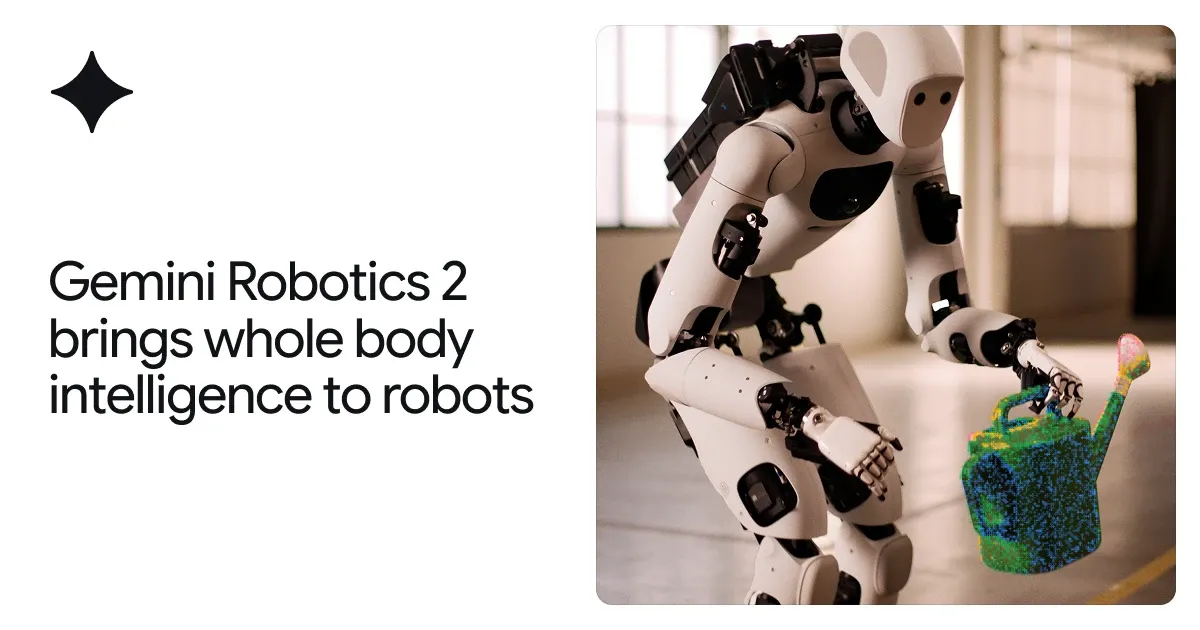
From feet to fingertips — we are teaching robots intelligent whole-body control, fine dexterity, and teamwork to complete a broad range of complex tasks.

