Social Proactive Intelligence (SPI) extends proactive assistance beyond task completeness to consider social appropriateness in diverse embodied scenarios. However, prior SPI research faces two key limitations. First, existing work focuses on static images, whereas dynamic videos provide crucial cues for inferring human states and needs, offering richer information than isolated images. Second, prior work often relies on free-form data collection pipelines, which fail to guarantee comprehensive coverage of diverse scenarios. To address these gaps, we introduce RobotEQ-Video, shifting the focus from image-centric to video-centric analysis. To ensure comprehensive video coverage, we construct a hierarchical world-state taxonomy organized into a four-level coarse-to-fine structure, comprising 6 domains, 20 dimensions, 142 level-1 attributes, and 816 level-2 attributes. The resulting benchmark comprises 2K+ videos with 100K+ human annotations and 16K+ labels for assessing behavior properness. Benchmark evaluation reveals that current systems remain unreliable and fall short of human performance. We further explore how world models can help tackle this task. This work advances SPI research from static images to dynamic videos and ensures more comprehensive scenario coverage during benchmarking.

This publication proposes a definition and a classification of agile software development approaches and analyses ten software development methods that can be characterized as being "agile" against the defined criterion.
P. Abrahamsson, O. Salo, Jussi Ronkainen et al.· arXiv.org· 727 citations· ⚡54
The study shows that agile practices improve both informal and formal communication, but indicates that, in larger development situations involving multiple external stakeholders, a mismatch of adequate communication mechanisms can sometimes even hinder the communication.
M. Pikkarainen, Jukka Haikara, O. Salo et al.· Empirical Software Engineeri...· 401 citations· ⚡48
The results indicate that software engineering work practices are chosen opportunistically, adapted and configured to provide value under the constrains imposed by the startup context.
Nicolò Paternoster, Carmine Giardino, M. Unterkalmsteiner et al.· Information and Software Tec...· 394 citations· ⚡54
The possibility of inferring high-dimensional data inference in a model that consists of a prior and an auxiliary differentiable constraint given some additional information is considered, thereby allowing a range of potential applications in adapting models to new domains and tasks.
Alexandros Graikos, Esmeralda S. Whitammer, N. Jojic et al.· Neural Information Processin...· 316 citations· ⚡15
Computer scientist, entrepreneur, and philanthropist will collaborate with the MIT Schwarzman College of Computing to advance AI and scientific discovery.
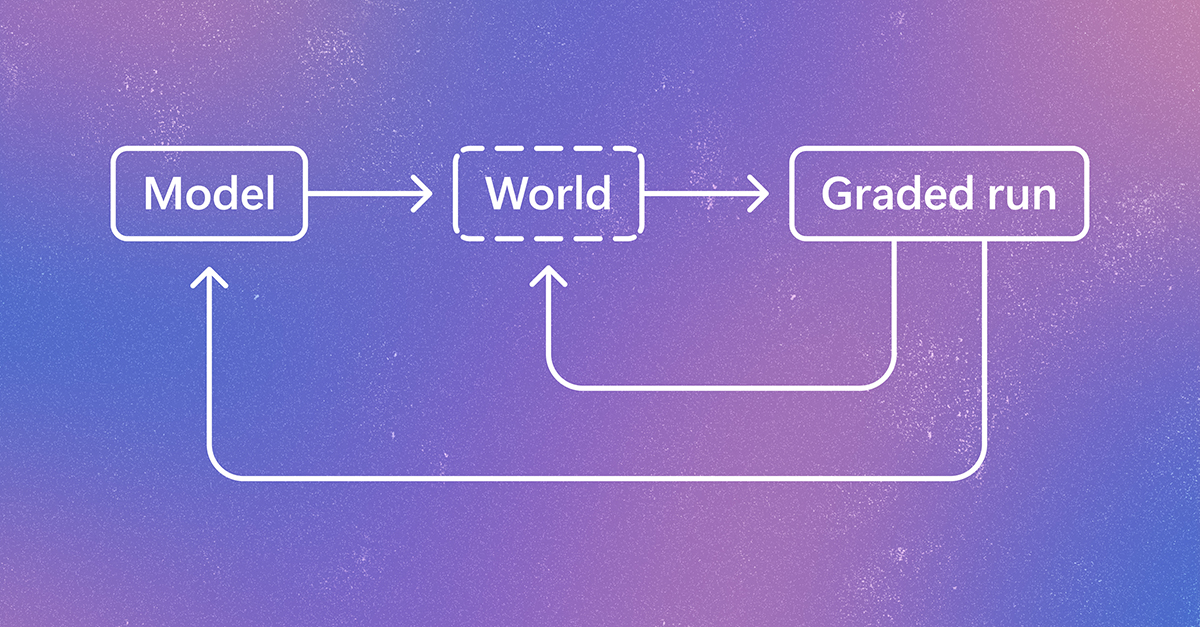
Computer-use AI agents struggle with multi-step workflows like email and customer support. Echoverse trains agents in realistic environments rather than simply providing more training tasks, helping them improve as the tasks, tests, and environments evolve. The post Echoverse: Deep, evolving environments for computer-use agents appeared first on Microsoft Research.
We use cookies to run the site and, with your consent, for analytics and to show ads.
See our Cookie Policy.