It is indicated that for small structured datasets, classifiers based on quantum computing have not yet surpassed well-tuned classical counterparts, though not on malignant-class recall, where the VQC in particular performed worse than the classical baselines.
Abstract
A potential path forward is Quantum Machine Learning (QML), which aims to leverage quantum computing in conjunction with classical machine learning to enhance computing efficiency and the expressiveness of models. In this paper, two different quantum classifiers - Variational Quantum Classifier (VQC) and Quantum Kernel Support Vector Machine (QSVM) - are compared with three classical classifiers as baseline classifiers - Logistic Regression, Support Vector Machine (SVM), and a Multi-Layer Perceptron (MLP) - on the Breast Cancer Wisconsin dataset. The quantum circuits were created in the PennyLane framework and simulated on a classical backend. However, in terms of accuracy, classical Logistic Regression performed better with an accuracy of 97.8%, classical SVM and QSVM with an accuracy of 95.6% each, although the Quantum VQC achieved a lower accuracy of 88.9% and had a recall of 100% for the benign class, though it correctly identified only 12 of the 17 malignant cases (a malignant-class recall of approximately 70.6%). The drawback of quantum models is the higher training time; however, since the quantum circuit needs to be classically simulated, the quantum SVM took 23.29 seconds compared to less than 0.01 seconds for the classical linear models. These results indicate that for small structured datasets, classifiers based on quantum computing have not yet surpassed well-tuned classical counterparts. In some respects (e.g., benign-class recall), they perform competitively, though not on malignant-class recall, where the VQC in particular performed worse than the classical baselines, which is worth further investigation on real quantum computers.
Current research provides an overview of important QML algorithms, such as Quantum Support Vector Machines (QSVM), Quantum Neural Networks (QNN), Variational Quantum Eigensolvers (VQE), Quantum Approximate Optimization Algorithm (QAOA), and hybrid quantumclassical computing techniques, which have recently become more p...
J. Chen· Recent Research Reviews Jour...· 0 citations
A systematic comparison of four classical machine learning architectures, support vector machines, artificial neural networks, convolutional neural networks, and long short-term memory networks against their quantum counterparts against their quantum counterparts characterize the trade-offs between classical and quantu...
Tariq Mahmood, Z. Abidin, Itzel Luviano Soto et al.· 0 citations
The findings across the five datasets indicate that the choice of quantum feature encoding strategy should account for the underlying structure of the data and that predictive performance should be evaluated together with quantum circuit complexity.
Breast cancer is a major health concern, and early detection can make a great difference in treatment and survival rates for breast cancer patients. Machine learning methods have noticeably improved prediction accuracy on high-dimensional medical datasets and have become widely used tools in medical diagnostics. The tr...
Jovana Gluhovic· American Journal of Computer...· 0 citations
Reliable attribution of artificial intelligence (AI)-generated text to a specific large language model (LLM) matters increasingly as LLMs proliferate, yet where quantum machine learning actually stands on this task has, to our knowledge, never been measured systematically. We benchmark the quantum support vector machin...
Kalin Kopanov, Tatiana V. Atanasova· Information· 0 citations
The forecasting of financial time series has gained more significance in decision making within a dynamic economic setting. Over the last few years, there has been a push in exploring both classical machine learning methods and novel quantum machine learning models with a view to enhance predictive accuracy. This paper...
Rashmi S. Nair, Pankaj Chandre, Shahin Makubhai et al.· Frontiers in Artificial Inte...· 0 citations
Related blog posts
MIT News · Artificial Intelligence· news.mit.eduOct 2, 2026
A weeklong summer workshop brought higher education faculty to campus to explore how AI and machine learning materials can be adapted for their classrooms.
MIT News · Artificial Intelligence· news.mit.eduAug 27, 2026
A new machine-learning framework aims to improve the success rate of computational protein design while moving away from results that reproduce sequences found in nature.
Microsoft Research Blog· microsoft.comAug 20, 2026
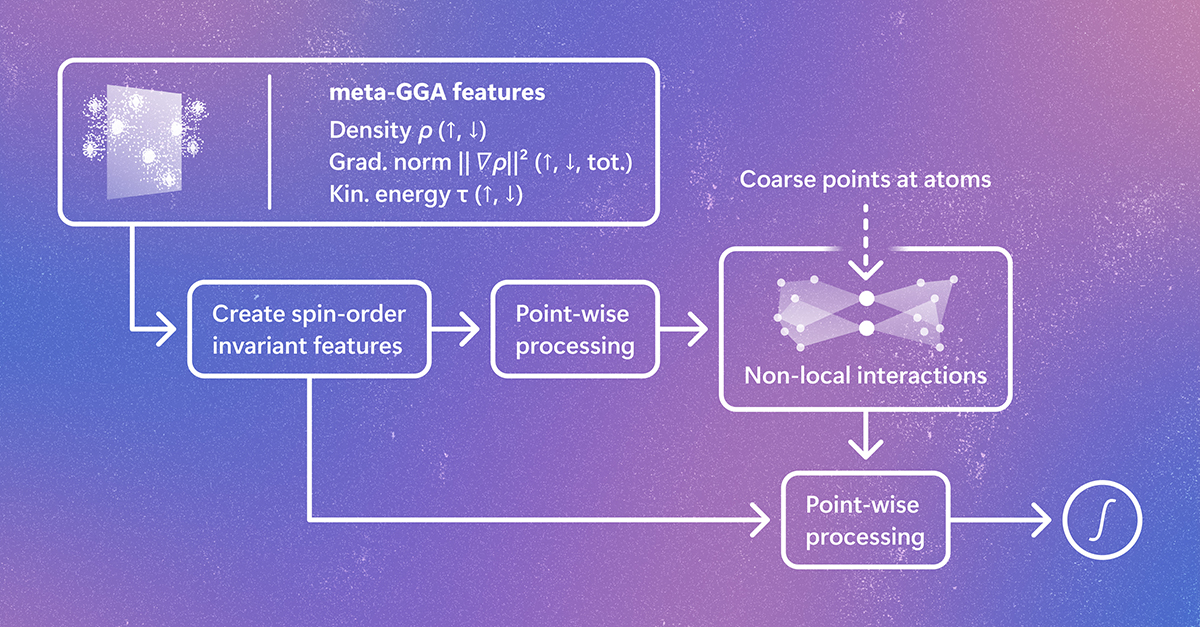
Skala 1.1, the updated deep-learning exchange-correlation functional from Microsoft Research, provides greater accuracy, expanded accessibility across the computational chemistry ecosystem, and a living benchmark to track computational performance. The post Broadening access to Skala creates a faster path to predictive DFT appeared first on Microsoft Research.
We use cookies to run the site and, with your consent, for analytics and to show ads.
See our Cookie Policy.