Sep 2026· Intelligent Data Analysis· 0 citations· 29 references
Network Security and Intrusion DetectionAdvanced Graph Neural Networks
TL;DR
This study presents an intrusion detection framework based on a GNN that represents packet-flow data as communication graphs constructed over temporally segmented time windows, using a time-window-driven graph construction method that effectively models the temporal evolution of communication patterns while maintaining low detection latency.
Abstract
Graph Neural Network (GNN)-based intrusion detection systems (IDS) have emerged as powerful tools for modeling the structural patterns of network traffic. However, most existing methods rely on large, temporally aggregated graphs and random train-test splits, which risk information leakage from future traffic and overstate real-world performance. In practice, IDSs must operate continuously on partial, time-limited data. Bridging this methodological gap is essential for translating GNN-IDS research into deployable, real-time defense systems. This study presents an intrusion detection framework based on a GNN that represents packet-flow data as communication graphs constructed over temporally segmented time windows. The method performs periodic classifications to detect deviations from normal operation and raise early alerts on emerging attacks. Using a time-window-driven graph construction method, it effectively models the temporal evolution of communication patterns while maintaining low detection latency. For graph representation learning, an EdgeGAT-based architecture exploits both structural and edge-level features, achieving up to a 9.7% F1-score improvement over the E-GraphSAGE baseline across diverse datasets. An attention-based explainability mechanism further generates compact explanatory subgraphs that highlight the most relevant communication flows, supporting operators in understanding and mitigating attacks. The results demonstrate that the proposed approach effectively balances accuracy, responsiveness, and interpretability, offering a practical foundation for online, explainable intrusion detection in operational environments.
Dynamic Multiscale Graph Contrastive Representation Learning (DMGCRL), a self-supervised framework that hierarchically models network intrusions at different levels, is proposed, which consistently outperforms SOTA methods in network intrusion detection.
Raeed Al-Sabri, Abdullatif Albaseer, Mohamed M. Abdallah et al.· IEEE Transactions on Network...· 0 citations
Decentralized networks—spanning Internet-of-Things deployments, edge computing platforms and peer-to-peer
systems—offer improved scalability, resilience and the elimination of single points of failure. At the same time, their
distributed structure makes continuous monitoring and timely intrusion response substantially...
I. Achi, F. O. Ogbunude· International Journal of Mod...· 0 citations
The increasing use of computer networks, cloud platforms, and connected digital services has created a growing need
for intelligent and adaptive cybersecurity solutions. Traditional intrusion detection methods that mainly depend on predefined
rules and known attack signatures may have difficulty identifying changing or...
Shruthi Rampure, Vishal· International Journal for Re...· 0 citations
An explainable machine learning-based framework for accurate, transparent, and reliable DDoS attack detection in an SDN environment that combines reliable DDoS detection with transparent, analyst-oriented decision support for SDN security monitoring is developed.
J. Malik, N. Naz, Muhammad Saleem et al.· Italian National Conference...· 0 citations
The rapid growth of internet traffic has made computer networks vulnerable to intrusions, and a major challenge to protect them against such intrusions. Signature-based Intrusion Detection Systems (IDS) work well for known attacks but are incapable of detecting new or changing attacks. This study suggests a hybrid Netw...
Pushpanjali Baghele, Amit Kumar Jha, Divakar Singh et al.· 2026 International Conferenc...· 0 citations
Anomaly-based IDSs need to be able to learn the dynamically changing behavior of users or
systems. In this thesis, we are experimenting with packet behavior as parameters in anomaly
intrusion detection. This research work has improved on existing Network Intrusion System
and was motivated by the inability of some in...
Lydia Chiadikaobi Okechukwu· International Journal of Com...· 0 citations
Related blog posts
MIT News · Artificial Intelligence· news.mit.eduOct 13, 2026
Machine-learning networks can learn without detailed instructions from a designer. Those that do may offer insight into how the brain reorganizes itself during learning.
MIT News · Artificial Intelligence· news.mit.eduJul 15, 2026
Assistant Professor Pat Pataranutaporn describes a new interface that lets everyday users glimpse inside an AI's neural network before their chatbot ever says a word.
Microsoft Research Blog· microsoft.comJul 13, 2026
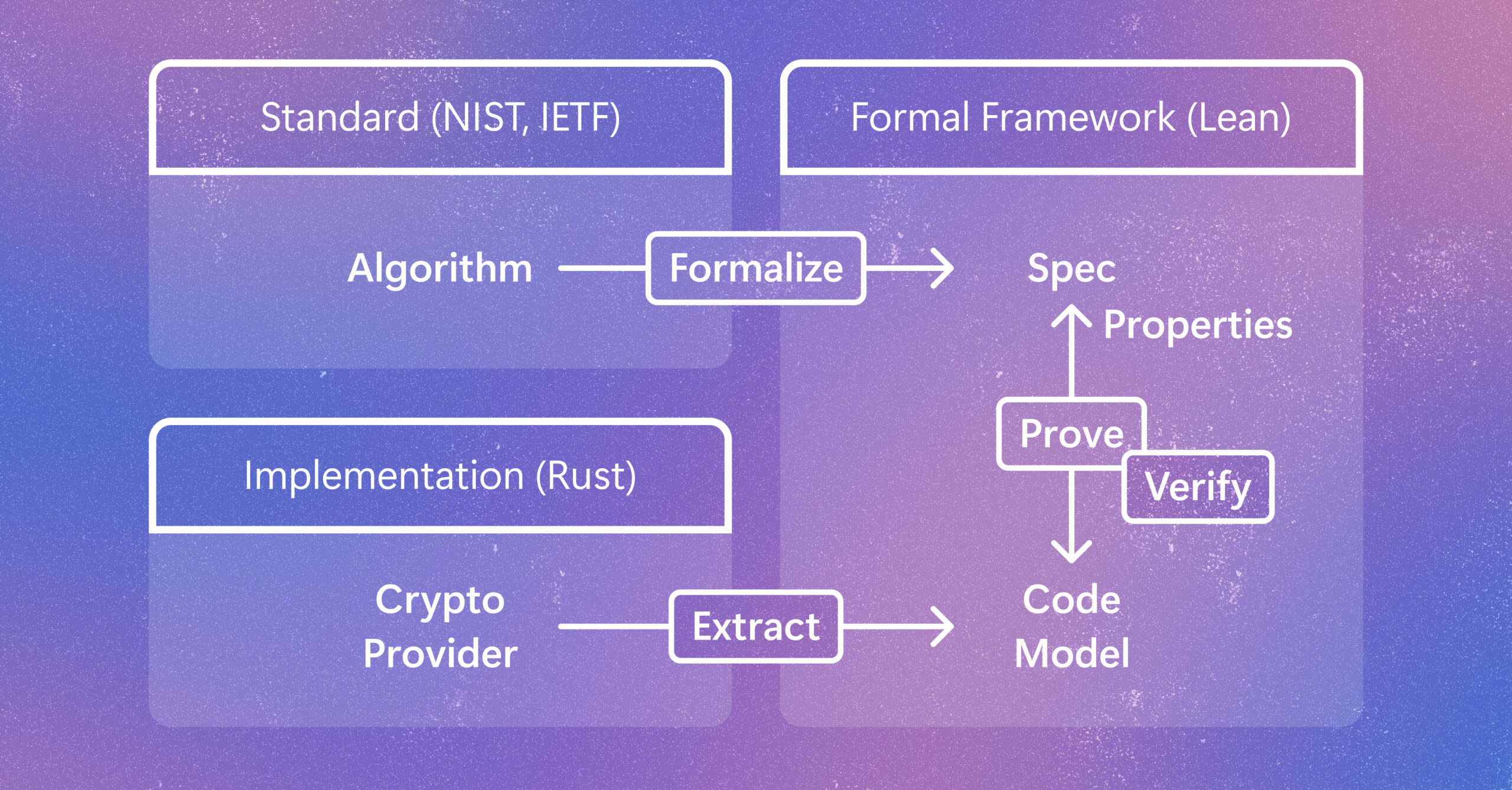
Cryptographic code supports vital protections in modern computing systems. Learn how a new method helps verify code as developers write it while preserving speed and adaptability as it gets implemented and evolves. The post Verifying Rust cryptography in SymCrypt, from standards to code appeared first on Microsoft Research.
MIT News · Artificial Intelligence· news.mit.eduJul 6, 2026
PhD student Rachel Sava, winner of the Envisioning the Future of Computing Prize, explores transformative improvements and dystopian risks of neural technology.
We use cookies to run the site and, with your consent, for analytics and to show ads.
See our Cookie Policy.