Sep 2026· Journal of Computational Design and Engineering· 0 citations
TL;DR
The results show how an integrated solver–optimizer can support lightweight lattice design under specified loading and manufacturing assumptions.
Abstract
Designing functionally graded lattices requires control of the architecture under complex loading, yet conventional workflows often rely on static datasets and sequential simulations. We developed VortexOp, a physics-informed active-learning framework for the automated design of functionally graded triply periodic minimal surface (TPMS) lattices. The workflow combines implicit TPMS generation, a GPU-accelerated finite element solver, and constrained Bayesian optimization. Gaussian Process surrogates search a five-dimensional mixed continuous–integer design space for architectures that balance structural reliability and material use. The integrated solver agreed well with commercial simulation software, and linear fits constrained through the origin gave coefficients of determination of 0.93–0.99 for the surrogate predictions along the optimization trajectory. The search identified non-dominated designs, with fitness histories stabilizing within about 30 iterations. Proof-of-concept compression tests on additively manufactured specimens, with one specimen tested per architecture and volume-fraction configuration, produced deformation patterns consistent with the simulated stress redistribution. Relative to uniform lattices, the optimized designs reduced the mean nodal failure index by 21.4–47.0% and FI90 by 21.2–52.4%; stated in the opposite direction, the uniform baselines had mean failure indices 27.3–88.7% higher. These failure-index values, the percentage reductions derived from them, and the corresponding design comparisons are specific to the meshes employed in this study; their stability under systematic volumetric mesh refinement has not been established. The optimized designs traded initial stiffness and peak stress for a wider range of stable deformation. These results show how an integrated solver–optimizer can support lightweight lattice design under specified loading and manufacturing assumptions.
Plasolver, a physics-informed neural operator framework that combines the efficiency of operator learning with the accuracy and robustness of classical numerical solvers, provides an efficient, accurate, and discretization-invariant computational framework for nonlinear, path-dependent elastoplastic problems.
Yi-Zheng Wang, M. Eshaghi, Hua-Dong Zhang et al.· 0 citations
Computational design of polycrystalline microstructures for enhanced mechanical performance requires repeated high-fidelity simulations over stochastic morphologies, rendering conventional crystal plasticity finite element (CPFE) approaches prohibitively expensive for optimization. Here, we develop a deep learning-driv...
Ashwini Gupta, Indrashis Saha, Lori Graham-Brady et al.· 0 citations
This work establishes harness engineering as a systematic approach to automating CP modeling workflows while maintaining physical interpretability and auditability through visible reasoning traces.
S. Alfred, Abhishek Kumar, V. Sundararaghavan· 0 citations
These results motivate reproducible accumulation, finite-difference validation that compares perturbation-induced loss changes with repeated-run variation, and explicit reporting of objective construction when differentiable simulation is used for robotic optimization.
Xin-Tong Yang, Ming-Lun Wei, Yu-Kun Lai et al.· 0 citations
Topological phononic crystals and elastic metamaterials support edge states defined by global topological invariants, offering a route toward vibration-control and wave-guiding devices that remain functional in the presence of defects. However, manufacturing-induced spatial variability can perturb these invariants and...
Luiz Henrique Marra da Silva Ribeiro, A. Sreekumar, V. F. Dal Poggetto et al.· 0 citations
Related blog posts
Microsoft Research Blog· microsoft.comOct 12, 2026
StudentSim is a research system for evaluating and improving AI tutoring tools before they are tested with learners. It models how individuals may engage with tutors, giving feedback to improve tutor performance across subjects like chess, writing, and mathematics. The post Simulating student learning for better AI tutoring appeared first on Microsoft Research.
MIT News · Artificial Intelligence· news.mit.eduOct 6, 2026
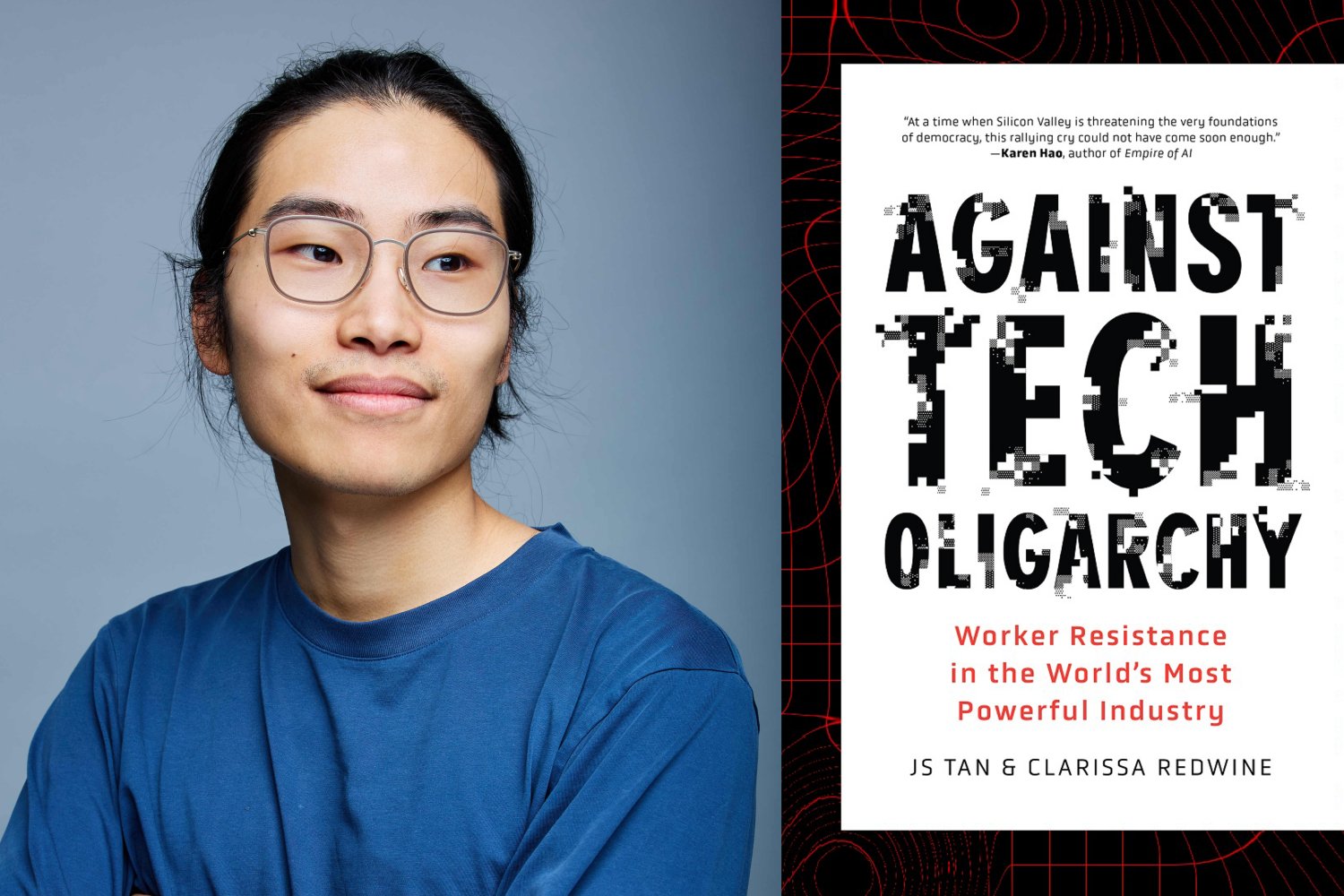
Writing as a participant and researcher, PhD student JS Tan SM ’22 has co-authored a new book about the rise of tech worker protests and the employer backlash that followed.
MIT News · Artificial Intelligence· news.mit.eduOct 2, 2026
Writing as a participant and researcher, PhD student JS Tan SM ’22 has co-authored a new book about the rise of tech worker protests and the employer backlash that followed.
We use cookies to run the site and, with your consent, for analytics and to show ads.
See our Cookie Policy.