Sep 2026· Theoretical and Natural Science· Vol 186, pp. 119-124· 0 citations
Advanced Graph Neural Networks
TL;DR
It is indicated that structural information remains important for link prediction in contemporary learning-based models and future work will continue to improve the scalability, robustness, temporal adaptation and interpretability of link prediction models for large-scale, dynamic real-world networks.
Abstract
Link prediction is a problem in network analysis that seeks to find missing or future links in a graph based on observed graph structures and available node information. This paper reviews the development of link prediction methods from traditional structural heuristics to network embeddings and graph neural networks. Common Neighbors and other similarity indices are traditional methods that are simple to use and interpret but rely heavily on manually designed structural features. Representation-learning methods, such as node2vec, reduce the requirement for feature engineering by learning low-dimensional node embeddings. More recently, graph neural network (GNN)-based methods have been developed to address issues such as neighbourhood overlap, multi-hop paths, graph incompleteness and long-tailed structural patterns in link prediction, including Neighborhood Overlap-aware Graph Neural Networks (Neo-GNNs), Neural Bellman-Ford Network (NBFNet), Common Neighbor Completion with Information Entropy (IECNC) and Long-Tailed Link Prediction (LTLP). Recently, temporal link prediction has also begun to attract some attention, and EAGLE has been developed to combine both recent temporal information and global structural patterns effectively. In short, the reviewed studies indicate that structural information remains important for link prediction in contemporary learning-based models. Future work will continue to improve the scalability, robustness, temporal adaptation and interpretability of link prediction models for large-scale, dynamic real-world networks.
A graph neural network model for predicting probabilistic links with network embedding via generalized graph convolutional networks, referred to as LPNE2GGCN for graph network datasets, has been proposed and initial results suggest that this methodology produces excellent results compared to conventional methods across...
Riju Bhattacharya, N. K. Nagwani, Deepak Suresh Asudani et al.· IEEE Access· 0 citations
Graph neural networks have shown strong potential for learning structural representations of biological networks. However, repeated message passing may blur local structural signals that are relevant for motif- and graphlet-based analysis. This paper investigates multilabel graphlet classification in protein–protein in...
Lidija Kunst, Friedhelm Schwenker, H. Kestler· Entropy· 0 citations
Dynamic link prediction on temporal graphs is fundamental to many applications such as recommendation, knowledge base completion, and user–item interaction modeling. Most existing dynamic graph neural networks (DGNNs), including memory-based and attention-based models, operate on node-level embeddings and local tempora...
Da-Wei Liu· Journal of King Saud Univers...· 0 citations
The basic ideas of online diffusion are introduced by formalising cascade and global graphs, and the extraction of structural and temporal features is described, and the shift toward modelling stochastic cascade dynamics is highlighted.
Hong-Fan Zhu· Theoretical and Natural Scie...· 0 citations
The influential nodes in complex network are the key of high effective information spreading. Several techniques have been developed for the discovery of such nodes, including centrality-based approaches, machine learning-based approaches, and deep learning-based approaches. This paper proposes CNNG, a novel hybrid dee...
M. A. Ramadhan, A. O. Mohammed· passer of basic and applied...· 0 citations
This work uses Graph Neural Networks (GNNs) to solve Inductive Correlation Clustering, a novel generalization of the CC problem designed to handle unseen graph instances, and indicates that the method serves as an efficient pooling layer, enhancing the ability of GNNs to capture hierarchical structural information in n...
Francesco Paolo Nerini, Francesco Bonchi, Arijit Khan et al.· 0 citations
Related blog posts
MIT News · Artificial Intelligence· news.mit.eduJul 15, 2026
Assistant Professor Pat Pataranutaporn describes a new interface that lets everyday users glimpse inside an AI's neural network before their chatbot ever says a word.
Microsoft Research Blog· microsoft.comJul 13, 2026
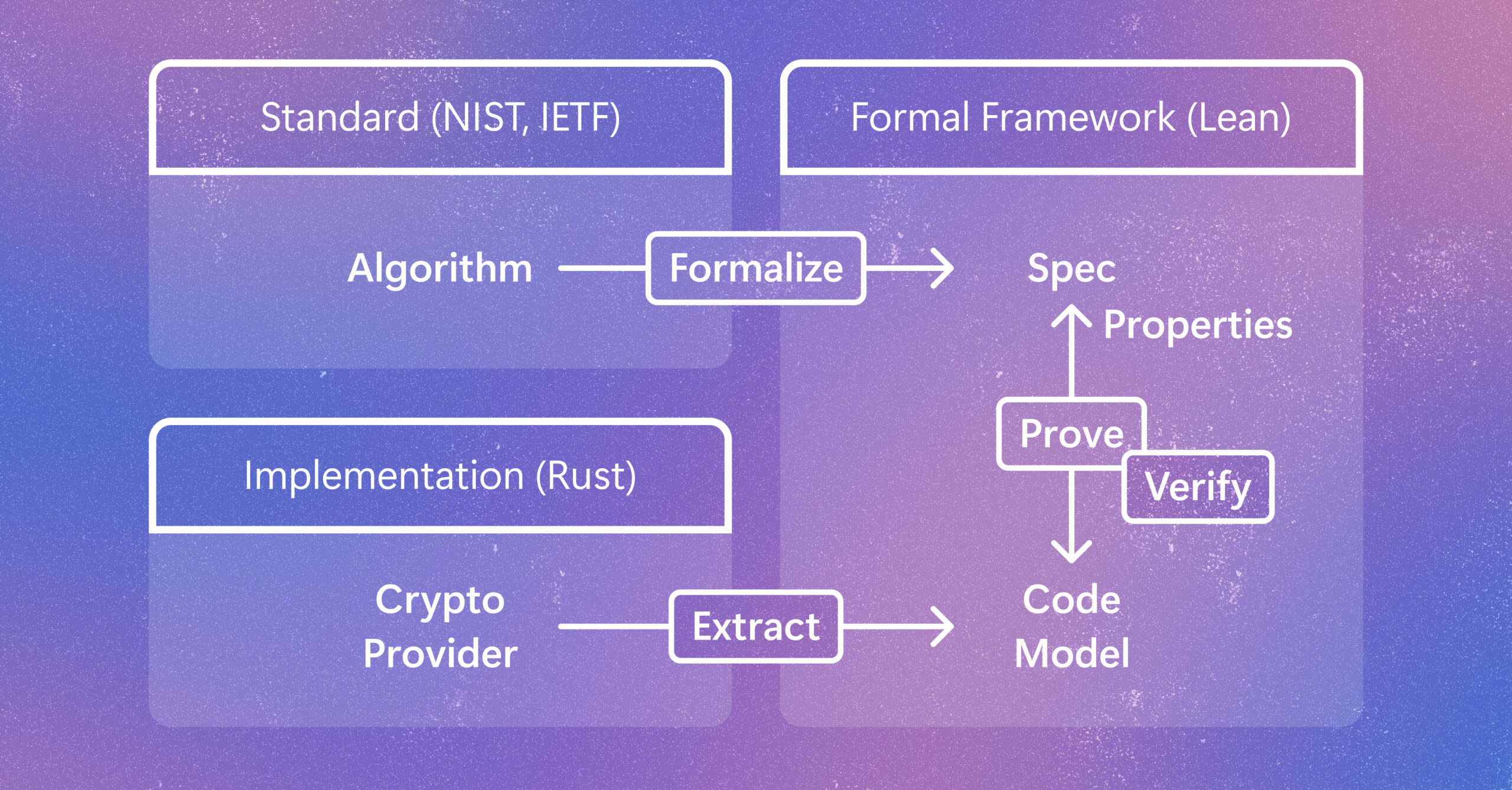
Cryptographic code supports vital protections in modern computing systems. Learn how a new method helps verify code as developers write it while preserving speed and adaptability as it gets implemented and evolves. The post Verifying Rust cryptography in SymCrypt, from standards to code appeared first on Microsoft Research.
MIT News · Artificial Intelligence· news.mit.eduJul 6, 2026
PhD student Rachel Sava, winner of the Envisioning the Future of Computing Prize, explores transformative improvements and dystopian risks of neural technology.