Order (Ontology-driven Decision-making for Embodied Reasoning), a benchmark built on a fictitious world: a 342,069-token synthetic corpus defining a self-consistent physics that cannot appear in any model's pre-training data, shows evidence of genuine world-model induction rather than memorization.
Abstract
Adapting language models to new domains via continual pre-training raises a basic evaluation problem: if the training corpus overlaps with what the model already knows, performance gains cannot be cleanly attributed to new learning rather than pre-existing knowledge. This matters most for knowledge-intensive, task-light (KHTL) robot deployments - pharmaceutical dispensing, hazardous-material handling, facility-specific protocols, where the physical task is simple but the governing rules are proprietary and safety-critical, and where extensive live testing is costly or unsafe. We introduce ORDER (Ontology-driven Decision-making for Embodied Reasoning), a benchmark built on a fictitious world: a 342,069-token synthetic corpus defining a self-consistent physics that cannot appear in any model's pre-training data. ORDER pairs a 500-question knowledge test (ORDER-BENCH) with a harder compositional task, ORDER-SPATIAL: ordering objects for safe manipulation across both familiar and entirely novel scenes. GPT-4.1 without adaptation scores below chance on ORDER-SPATIAL (Kendall's tau = 0.441), showing its priors actively conflict with the invented physics. After continual pre-training, small models improve substantially on both familiar and novel scenes alike evidence of genuine world-model induction rather than memorization. We then carry this through to a robot pipeline: models that answer the knowledge test well often cannot produce valid, executable plans without a further skill-adaptation stage, after which small, fully offline models outperform GPT-4.1 even when GPT-4.1 is given retrieval access to the same rules (Kendall's tau = 0.848 vs. 0.606), on a full perception-to-execution loop demonstrated on a simulated iiwa7 arm with human-in-the-loop correction. Throughout, ORDER-SPATIAL performance, not knowledge-test accuracy is what predicts real plan quality.

We study robotic in-context learning (ICL), an emerging paradigm that enables robots to infer and execute tasks from visual demonstrations. Despite its growing promise, the problem itself remains under-defined: a visual demonstration simultaneously conveys action trajectories, object semantics, manipulation affordances...
Min-Xing Li, Ming-Hao Han, Wei-Zhi Zhao et al.· 0 citations
This work designs each task curriculum with compositional tasks that combine aspects of the tasks seen in the sequence, and factorise this composition along the axes of action and perception to better understand how different input modalities bottleneck knowledge reuse.
Hao-Yu Zhou, Joe Watson, Anson Lei et al.· 0 citations
Across 30 RoboDojo tasks, using zero shot for Open and one demonstration elsewhere, RoboICL improves on official zero-shot \gptastra{} by 20--27 progress-score points in every category, and leads the leaderboard baselines on Memory and Open, achieves comparable performance to the strongest Precision baseline, and remai...
Robotic manipulation often requires inferring task-relevant states from past interactions when the current observation alone is insufficient to determine the appropriate action. Despite progress in benchmarking memory-augmented vision-language-action (VLA) models, application-oriented tasks requiring history-dependent...
Yi Wang, Yang Yang, Guang-Qi Xu et al.· 0 citations
SAGE (Symbolic Action-Gating and Editing), a single-LLM planner built from two lightweight mechanisms: a domain-agnostic symbolic gate that blocks precondition-violating actions with typed reasons as a runtime safety monitor, and a local edit that regenerates only the failed sub-goal's suffix, keeping completed and unt...
T. Bui, Jongsul Moon, Youngouk Kim et al.· 0 citations
FIND is introduced, an agentic real-world RL framework that closes the loop between scene understanding, weakness-aware practice, self-evaluation, and policy improvement in a persistent workspace and reframes autonomous practice as a scene-conditioned, performance-aware task-selection problem.
Yuan Fang, Ze-Chu Li, Hao-Lei Tong et al.· 1 citation
Related blog posts
MIT News · Artificial Intelligence· news.mit.eduJul 30, 2026
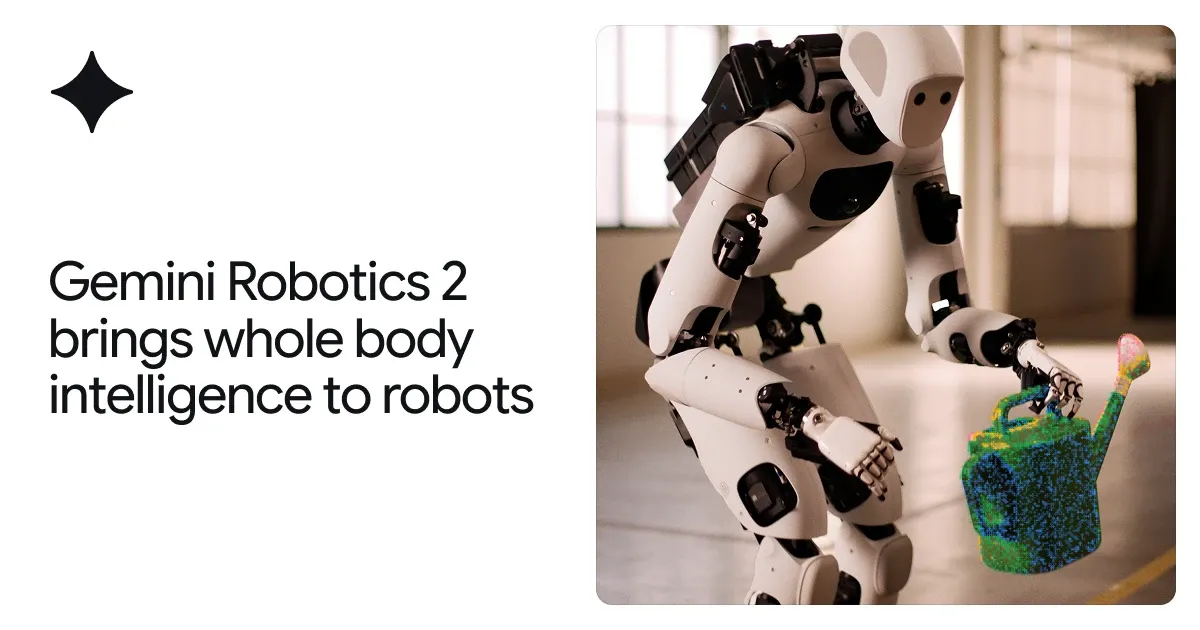
From feet to fingertips — we are teaching robots intelligent whole-body control, fine dexterity, and teamwork to complete a broad range of complex tasks.