Skip to content

A Q-learning-based mobility-aware tree routing protocol in wireless body area networks

Sep 2026 · Journal of King Saud University: Computer and Information Sciences · Vol 38 · 0 citations · 74 references
Wireless Body Area Networks

TL;DR

This study proposes a Q-learning-based mobility-aware tree routing protocol (QMTR) for WBANs integrated with vehicular ad hoc networks (VANETs) to support reliable transmission of passengers’ health data to remote medical centers.

Abstract

Wireless body area networks (WBANs) are widely used in both medical and non-medical applications. In these networks, routing protocols face specific challenges due to energy constraints, bandwidth limitations, heterogeneity, node mobility, and dynamic topology. Although reinforcement learning (RL), particularly Q-learning, can improve routing performance in WBANs, existing Q-learning-based approaches often suffer from large state spaces, slow convergence, fixed learning parameters, inefficient topology management, and limited capability to recover routing failures. This study proposes a Q-learning-based mobility-aware tree routing protocol (QMTR) for WBANs integrated with vehicular ad hoc networks (VANETs) to support reliable transmission of passengers’ health data to remote medical centers. QMTR employs a two-stage screening mechanism to reduce the learning space. The first screening stage retains only neighboring nodes that provide geographical progress toward the destination, whereas the second stage eliminates routing candidates that may violate the tree structure. Furthermore, the learning rate is dynamically adjusted according to a comprehensive link-quality index consisting of link lifetime, link delay, and link stability. The protocol further incorporates an adaptive hello-message interval to balance topology accuracy and routing overhead, and a recovery mechanism that temporarily relaxes routing constraints to reconnect isolated nodes without restarting the learning process. Extensive simulations are conducted using Network Simulator 3 (NS3) to evaluate QMTR against existing routing schemes, including ARMR, VehiHealth, and GPSR, under varying vehicle speeds and packet-sending rates. In the first simulation scenario, the evaluation outcomes show that QMTR improves packet delivery rate (PDR) and network lifespan by 3.58% and 8.38%, respectively, and reduces end-to-end delay (EED) by 28.15%. Although QMTR introduces approximately 9.57% higher routing overhead than ARMR in this scenario, it achieves better reliability and energy efficiency. In the second simulation scenario, QMTR increases PDR and network lifespan by 3.73% and 6.48%, respectively, and decreases EED and RO by 21.92% and 13.70%, respectively.
Read PDF

Similar papers

Open access Aug 2026

Reliability-Aware Local-Grid-Based Multipath Routing with Q-Learning Adaptation for Wireless Sensor Networks with a Mobile Sink

QL-LGMPRP is proposed, a reliability-aware local-grid-based multipath routing protocol that combines a sink-centered local grid, two-path delivery, link-quality-aware forwarding, and lightweight tabular Q-learning for waypoint adaptation.

Cheonyong Kim, Sangdae Kim · 0 citations
Open access Aug 2026

TLQ-Geo: a two-level q-learning-based geographic routing protocol for flying ad hoc networks

A two-level Q-learning-based geographic routing protocol called TLQ-Geo for FANETs, which significantly reduces convergence time and computational overhead and integrates hierarchical decision-making with adaptive reinforcement learning.

Mehdi Hosseinzadeh, Jawad Tanveer, Amir Masoud Rahmani et al. · 0 citations
Open access Sep 2026

QoS-Aware Multi-Hop Routing Framework for Reliable Wireless Communication in Dynamic Ad Hoc Networks

Mobile Ad Hoc Networks (MANETs) enable infrastructure-free wireless communication by allowing mobile nodes to cooperate as routers over multiple hops. Their flexibility is valuable in emergency response, tactical communication, temporary field networks, disaster recovery, and mobile sensing, but reliable Quality of Ser...

Dr. Malothu Amru, Dr. Bitla Prabhakar, Somala Rama Kishore T. Satyanarayana · 0 citations
Open access Sep 2026

Adaptive Reinforcement Learning for Reliable and Sustainable Intelligent Vehicular Communication

Vehicular ad hoc networks (VANETs) require routing decisions that balance connectivity, link reliability and energy efficiency under continuously changing mobility and density. Conventional clustering-based routing combines these objectives using weights fixed in advance, which cannot reflect the changing relative impo...

A. Khan, K. Awan, Z. ur Rehman et al. · 0 citations

Related blog posts

Microsoft Research Blog Sep 30, 2026

Forecasting space weather risks on power grids

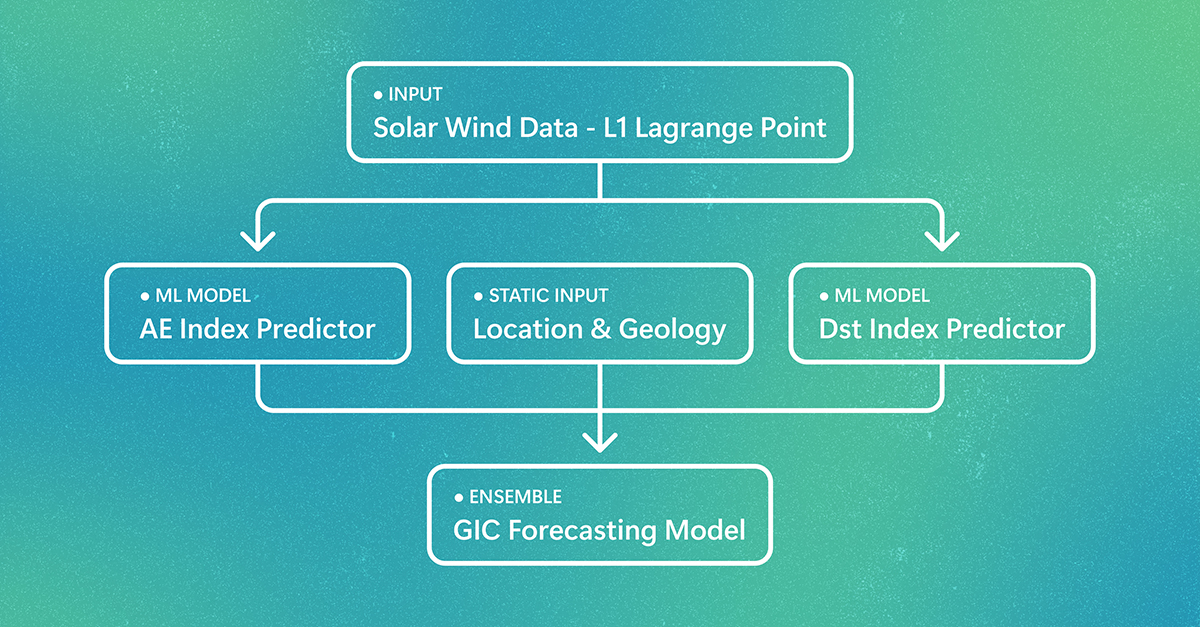
Extreme space-weather events can damage power systems on Earth and degrade GPS accuracy and satellite operations. A new machine learning system can predict where damage is likely to occur 30-60 minutes before a storm arrives. The post Forecasting space weather risks on power grids appeared first on Microsoft Research.

We use cookies to run the site and, with your consent, for analytics and to show ads. See our Cookie Policy.