Skip to content

Brain-Inspired Hierarchical Modularity for General Continual Learning

Sep 2026 · 0 citations
Computer Science

TL;DR

Across visual recognition, vision-language understanding, ego-exo video understanding, and embodied vision-language-action learning, this method consistently improves learning under online and uncertain data streams, with gains exceeding 50 percentage points over replay-free alternatives in embodied manipulation.

Abstract

Continual learning, the ability to learn from sequential experience while retaining and adapting prior knowledge, is central to intelligent systems operating in changing environments. However, conventional continual learning is typically studied with offline task-wise training and clear task boundaries, leaving a substantial gap from general continual learning under online, uncertain, and evolving data streams. In this regime, intelligent systems must separate conflicting experience to reduce interference while integrating compatible experience to promote generalization. Inspired by the organization of the Drosophila learning and memory system, we identify a hierarchical modular principle that coordinates both functions through expert specialization and ensemble integration. We instantiate this principle as lightweight modular adaptation of pretrained foundation models, combining brain-inspired random expansion for expert routing and diversified modular integration across spatial and temporal scales. Across visual recognition, vision-language understanding, ego-exo video understanding, and embodied vision-language-action learning, our method consistently improves learning under online and uncertain data streams, with gains exceeding 50 percentage points over replay-free alternatives in embodied manipulation. These findings support hierarchical modularity as a biologically grounded path for learning from dynamic experience.

View source

Similar papers

#machine learning Preprint Aug 2026

In Two Minds about Lifelong Learning: Exploring Hemispheric Redundancy and Specialisation in Neural Models

Persistent intelligent systems require the ability to learn continually, but current machine learning approaches face significant challenges in this area compared to biological learning systems. Machine learning algorithms typically trade off retention of previously learned information and adaptation to new or changing...

Benjamin Smith, Levin Kuhlmann, Kaushik Roy et al. · 0 citations
Open access Aug 2026

Predictive processing as a scalable computational principle for embodied multitask intelligence

A scalable hierarchical multimodal recurrent neural network grounded in predictive processing under the free-energy principle, capable of directly integrating more than 30,000-dimensional visuo-proprioceptive inputs without dimensionality reduction or handcrafted preprocessing is introduced.

Hayato Idei, Tamon Miyake, Tetsuya Ogata et al. · 1 citation
Preprint Aug 2026

Continual-learning rules shape representational drift

Together, these results link representational drift to the stability--plasticity trade-off: its magnitude is shaped by the mechanism that protects old knowledge, and suppressing it can restrict future learning.

Yi-Kai Si, Shanshan Qin · 1 citation
Open access Aug 2026

Structural generalization and continual learning enabled by factorized entorhinal-hippocampal memory and entorhinal-parietal action circuits

Flexible behavior requires generalizable memory and learning. For example, we rapidly learn to commute in new cities by reusing our knowledge of Euclidean two-dimensional space and structures like roundabouts and subway systems without forgetting how to get to a favorite restaurant back home. Yet we lack a detailed und...

Jaedong Hwang, Sujaya Neupane, M. Jazayeri et al. · 0 citations
Open access Sep 2026

Structured experience shapes strategy learning and neural dynamics in the medial entorhinal cortex.

Animals solve new, complex tasks by reusing and adapting prior knowledge. This flexibility depends not only on the content of experience but also on its structure. Early training curricula are especially important: poorly structured experiences can hinder abstraction and limit generalization. However, the neural mechan...

John C. Bowler, Dua B. Azhar, Cambria M. Jensen et al. · 0 citations
Book Open access Aug 2026

TTMC: Brain-Inspired Test-Time Memory Calibration with Orthogonal Projection for Online Continual Learning

Test-Time Memory Calibration (TTMC), a novel gradient-free analytic framework that introduces a transductive calibration mechanism that seamlessly fuses the second-order statistics of the unlabelled test stream into the accumulated long-term memory via a closed-form solution, allowing for real-time alignment with the t...

Yuyang Han, Zi-Yu Li, Diwei Su et al. · 0 citations

Related blog posts

MIT News · Artificial Intelligence Sep 29, 2026

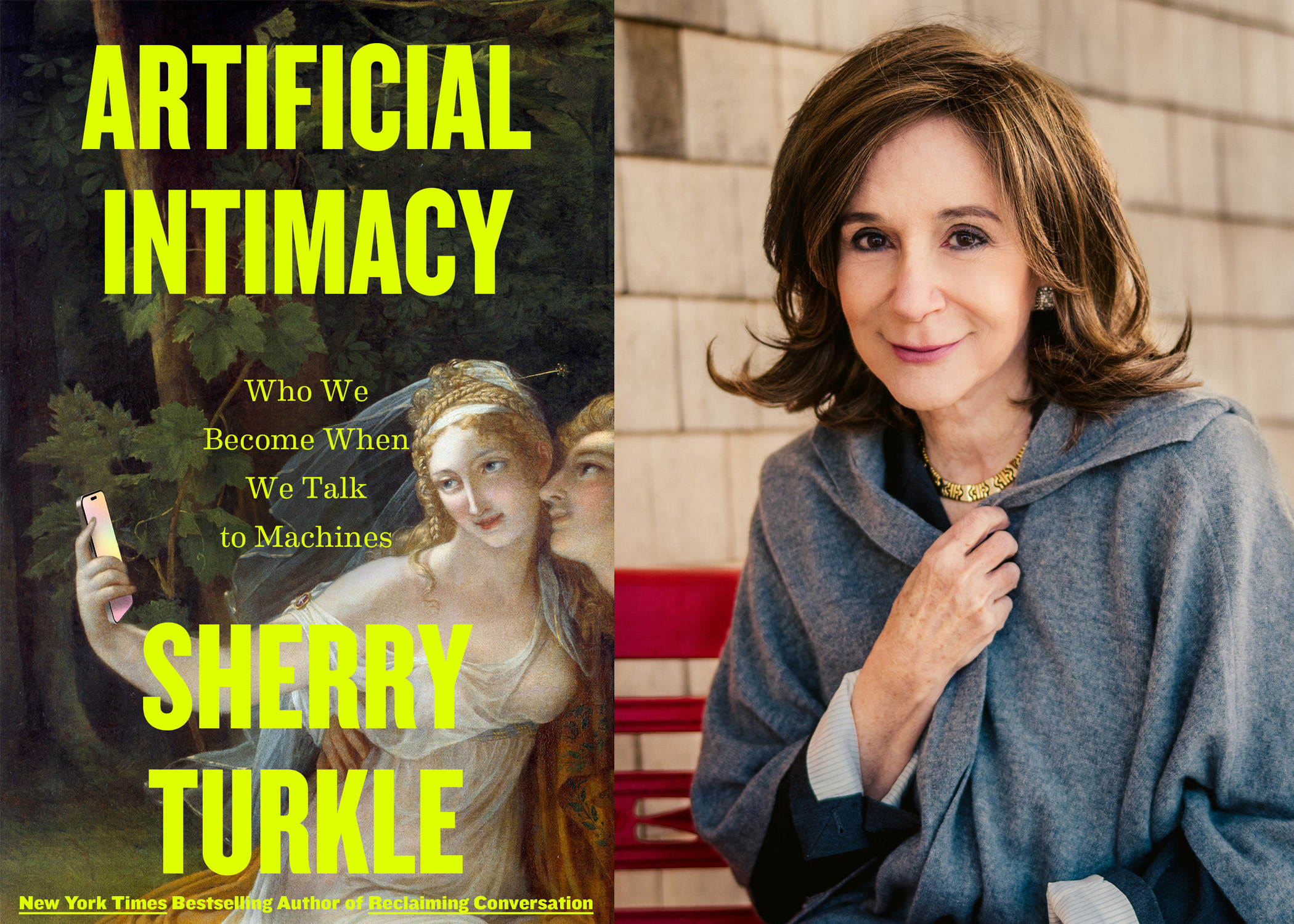
Who we become when we talk to machines

Professor Sherry Turkle’s new book, “Artificial Intimacy,” offers a withering critique of chatbots and the antisocial dynamics she believes they encourage.

We use cookies to run the site and, with your consent, for analytics and to show ads. See our Cookie Policy.