Skip to content

EquivSVA: A Formally Verified Dataset of Behavioral Assertions Across Equivalent RTL Implementations

Sep 2026 · 0 citations · 15 references
Computer Science

TL;DR

EquivSVA, a formally verified dataset organized around behavior families, illustrates how behavior-family organization can support controlled stud- ies of assertion-generation robustness without requiring changes in intended functionality.

Abstract

Large language models are increasingly used to generate SystemVerilog Assertions from natural-language specifica- tions and register-transfer-level designs. Existing datasets and benchmarks support important goals such as large- scale training, formal evaluation, specification-to-assertion generation, and mutation-based testing. A complemen- tary need is to study whether a generated assertion cap- tures externally observable behavior or depends on inci- dental details of one RTL implementation. We present EquivSVA, a formally verified dataset organized around behavior families. Each family contains four structurally distinct RTL implementations of the same externally ob- servable behavior, shared interface-level gold properties, three controlled mutants, and formal-validation evidence. EquivSVA contains 120 behavior families across 12 cat- egories, 480 reference RTL implementations, 914 gold properties, and 360 mutants. Every final family passes a fixed 17-job validation suite covering RTL equivalence, gold-property proofs, property reachability, mutant dis- tinguishability, and gold-property checks on mutants. We also provide fixed family-safe train, development, and test splits. As a small demonstration of the analyses en- abled by the dataset, we evaluate the publicly released, Apache-2.0-licensed Qwen2.5-Coder-7B-Instruct model on the held-out test split. Of 293 interface-only generated properties, 93 are formally sound, and the number of sound properties varies across equivalent implementations for 14 of 24 test families. These results illustrate how behavior-family organization can support controlled stud- ies of assertion-generation robustness without requiring changes in intended functionality. The dataset, generators, validation scripts, and case-study artifacts are publicly released at https://github.com/aditigupta96/EquivSVA.

View source

Similar papers

#artificial intelligence Preprint Aug 2026

Coverage-Driven RTL Assertion Generation with Formal Exploration and Neuro-Symbolic Refinement

NeuroAssertion is presented, a coverage-driven assertion generation framework that combines formal trace generation, syntax-guided synthesis (SyGuS), and an agent-inspired refinement process within a unified framework that delivers around 2X more assertions and about 2X higher mutation coverage than traditional asserti...

Zhi-Yuan Yan, Ziyue Zheng, Hongce Zhang · 0 citations
Preprint Sep 2026

GRADE-RTL: Evaluating LLM-Generated RTL Beyond Compilation

Large language models (LLMs) can generate register-transfer-level (RTL) code from natural-language specifications, but compilation alone does not establish structural completeness, functional correctness, or implementation efficiency. This paper presents a framework for evaluating LLM-generated RTL beyond compilation,...

Hepziba Susan, R. ShivaranjaniG, Malik Imran et al. · 0 citations
Preprint Aug 2026

NoTB: Oracle-Free Triage of LLM-Generated RTL via Cross-Model Formal Consensus

NoTB is introduced, an oracle-free triage framework that infers correctness from cross-model formal consensus and demonstrates that formal cross-model agreement provides a reliable basis for high-confidence triage without model-dependent oracles.

Elisavet Lydia Alvanaki, Je Yang, Biruk B. Seyoum et al. · 0 citations
Conference Open access Sep 2026

QiMeng-VPID: Verification-Grounded Port-Level Iterative Decomposition for Complex Verilog Generation

This work proposes VPID, a multi-agent framework for generating complex Verilog that achieves monotonic functional improvement and introduces an experience-guided refinement strategy that distills historical waveform mismatches into constraints, guiding the targeted debugging for the unverified ports.

Hong-Guang Wang, Jiaming Guo, Rui Zhang et al. · 0 citations

Related blog posts

GPT-Lab Sep 3, 2026

Adaptive AI Agents in Construction Workflows

Adaptive AI agents can help make BIM data more machine-readable by navigating IFC models, interpreting inconsistent information, and mapping it to defined standards. In this blog, Alok Rawat shares findings from a real-world pilot in construction workflows. The post Adaptive AI Agents in Construction Workflows appeared first on GPT-Lab.

GPT-Lab Aug 28, 2026

We built an AI factory for HVAC control

What does it take to trust AI-driven HVAC optimization? Our AI Model Factory combines agents, machine learning, reinforcement learning and deterministic checks in a governed workflow designed for messy, real-world building data. The post We built an AI factory for HVAC control appeared first on GPT-Lab.

Microsoft Research Blog Jul 30, 2026

EvoLib: Turning experience into evolving knowledge

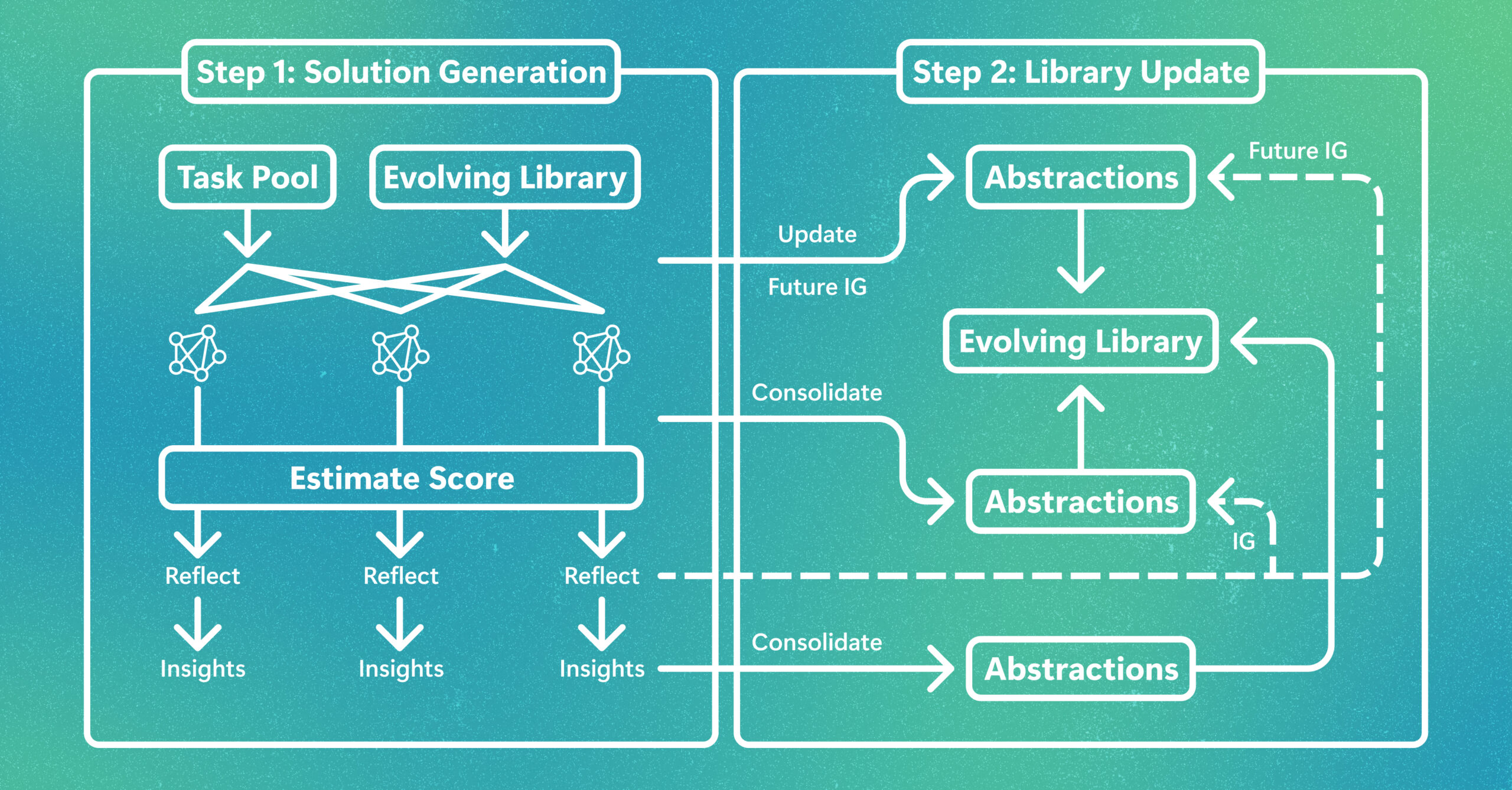
LLMs do not get smarter just by remembering more. EvoLib turns experience into evolving knowledge, taking reusable skills and insights that help models learn and adapt across tasks long after deployment. The post EvoLib: Turning experience into evolving knowledge appeared first on Microsoft Research.

We use cookies to run the site and, with your consent, for analytics and to show ads. See our Cookie Policy.