Sep 2026· International Journal of e-collaboration· 0 citations· 23 references
Stock Market Forecasting Methods
TL;DR
Results from experiments show that RL-DynTrade outperforms both traditional approaches and RL models that use PPO or DQN alone in terms of stability, flexibility, and profitability.

Abstract
This paper presents the RL-DynTrade framework by using a cutting-edge deep reinforcement learning method, Proximal Policy Optimization (PPO), with a Deep Q Network (DQN) agent to dynamically adapt to changing risk-reward dynamics. PPO enables real-time, fine-grained, risk-reward adaptation via an actor-critic design with clipped surrogate objectives, enabling stable, efficient continuous portfolio allocation. DQN offers a more interpretable, computationally lightweight trading policy by using a discrete action space, Q-learning, and deep neural networks to learn optimal buy/sell decisions from historical price and volume trends. RL-DynTrade can be used for dynamic algorithmic trading, as it leverages a simple yet well-known method (DQN) with cutting-edge technology (PPO). Results from experiments using stock and index data show that RL-DynTrade outperforms both traditional approaches and RL models that use PPO or DQN alone in terms of stability, flexibility, and profitability.

Consistently profitable trading is difficult because equity markets are noisy, non-stationary, and only partially predictable from historical data. We benchmark five deep reinforcement learning (DRL) actor-critic methods: A2C, PPO, DDPG, TD3, and SAC, that learn trading actions end-to-end from market states, and compar...
The complexity and dynamics of the stock market make traditional absolute price prediction models based on supervised learning face great risks and limitations in practical business applications. This report proposes an innovative Hybrid Deep Reinforcement Learning trading framework to shift the forecast target from st...
Yuan Zhuang· Advances in Economics, Manag...· 0 citations
A hybrid trading framework that combines a Rule-Based Trading Strategy with a Deep Reinforcement Learning (DRL) agent for intraday gold trading on a 15-minute timeframe and compares the three fixed-RR models to determine which risk–reward configuration provides the most favorable balance between profitability, risk, an...
Ravi Prajapati, Kobid Karkee· Proceedings of International...· 0 citations
This study proposes a hybrid artificial intelligence-based trading framework that integrates deep learning and reinforcement learning to develop an adaptive Bitcoin trading strategy. The proposed approach combines an Attention Long Short-Term Memory model to estimate the probability of future price movements with a Sof...
Fairouz Zendaoui· Journal of Digital Market an...· 0 citations
Related blog posts
Microsoft Research Blog· microsoft.comNov 16, 2026
AI coding agents are increasingly help developers fix bugs and build features largely on their own, but every interaction with their models consumes tokens. In each session, an agent sends instructions, tool descriptions, and session history to its model. Most efforts to reduce this cost focus on individual tasks. Yet developers return to the same […] The post TokenEconomizer: Learning from Experience to Make AI Coding Agents More Efficient appeared first on Microsoft Research.
MIT News · Artificial Intelligence· news.mit.eduNov 9, 2026
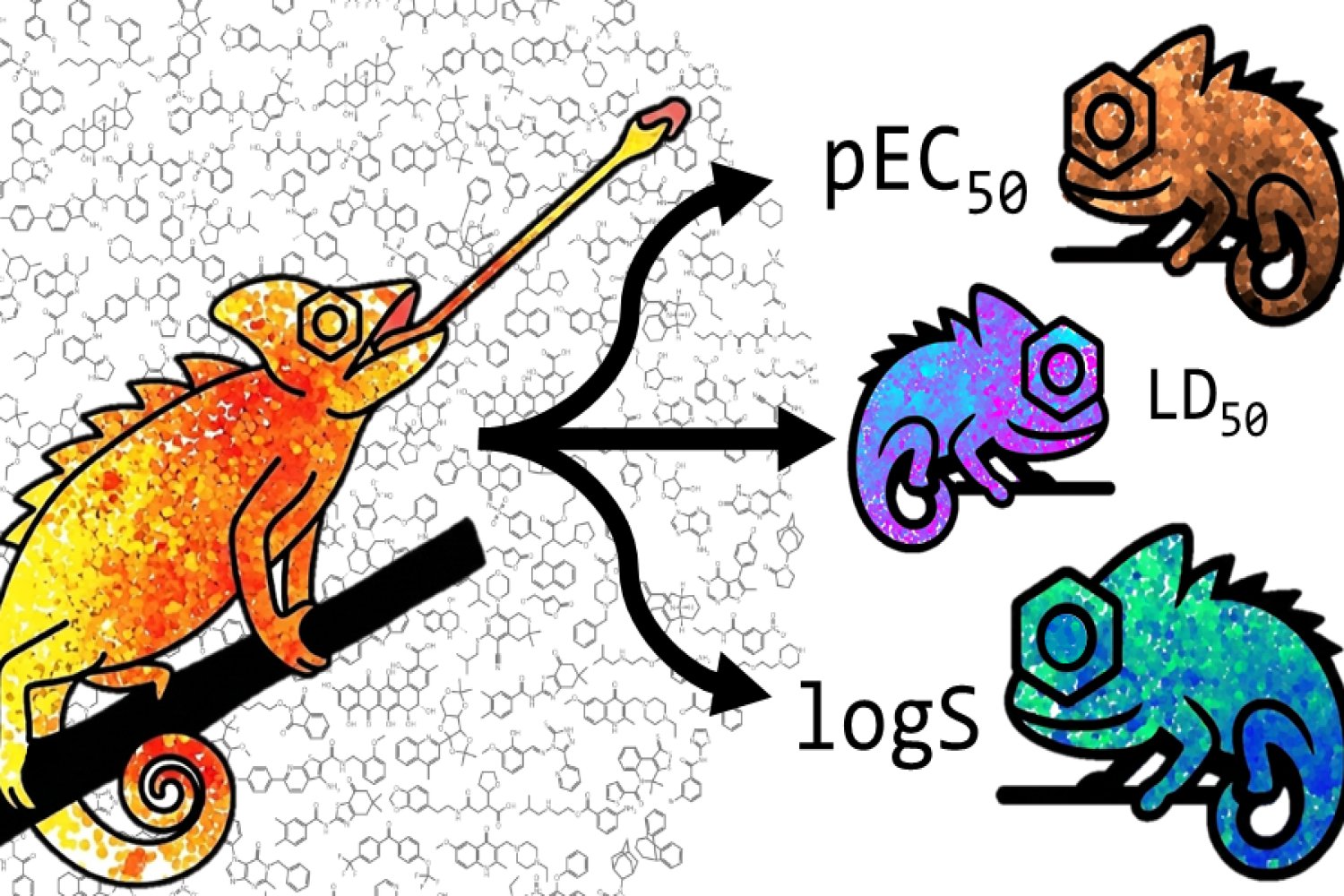
A machine-learning approach called CheMeleon provides a practical way to develop new drugs or other molecules with much less detailed, expensive experimentation.
We use cookies to run the site and, with your consent, for analytics and to show ads.
See our Cookie Policy.