Comparison of SHAP and Grad-CAM attribution maps confirms clinically coherent disease-specific localisation, and reveals monotonic performance degradation, identifying minimal regularisation as optimal for multi-label medical imaging.
The proposed DP framework integrates automated mitigation unified risk fusion, guideline-based control verification, and recommendation reporting to offer proactive fraud prevention and comprehensive risk assessment and achieves superior accuracy, precision, recall, and F1-score.
The Federated Asymmetric Adaptive LoRA method reduces trainable parameters by nearly half compared with standard AdaLoRA, while incurring only a marginal performance degradation, and introduces the Federated Adaptive Budget Strategy to enhance the effectiveness of federated learning.
Shang-Hao Wu, Yong-Kang Wang, Hai Zhang· International Journal of Mac...· 0 citations
We developed a workflow based on a human-derived dataset, aiming to predict the human heart-to-plasma partition coefficient, \documentclass[12pt]{minimal} \usepackage{amsmath} \usepackage{wasysym} \usepackage{amsfonts} \usepackage{amssymb} \usepackage{amsbsy} \usepackage{mathrsfs} \usepackage{upgreek} \setlength{\oddsi...
Seweryn Ulaszek, Bartek Lisowski, Monika Jesionek et al.· Journal of Pharmacokinetics...· 0 citations
Accuracy on IoTMal-2026, matching or exceeding Deep SVDD, Deep SAD, and Kitsune under an identical protocol is evaluated, finding the model’s bidirectional recurrent component does not reliably improve mean accuracy over a simpler, convolution-only alternative.
Assistant Professor Benjamin Lindquist studies how engineers deliberately injected randomness into early AI, giving rise to deep-learning models that sometimes hallucinate.
Learn how Google DeepMind and GovTech Singapore uses lightweight on-device Gemma models to intercept conversational scams in private chats with zero cloud data egress.
Microsoft Research Blog· microsoft.comOct 12, 2026
StudentSim is a research system for evaluating and improving AI tutoring tools before they are tested with learners. It models how individuals may engage with tutors, giving feedback to improve tutor performance across subjects like chess, writing, and mathematics. The post Simulating student learning for better AI tutoring appeared first on Microsoft Research.
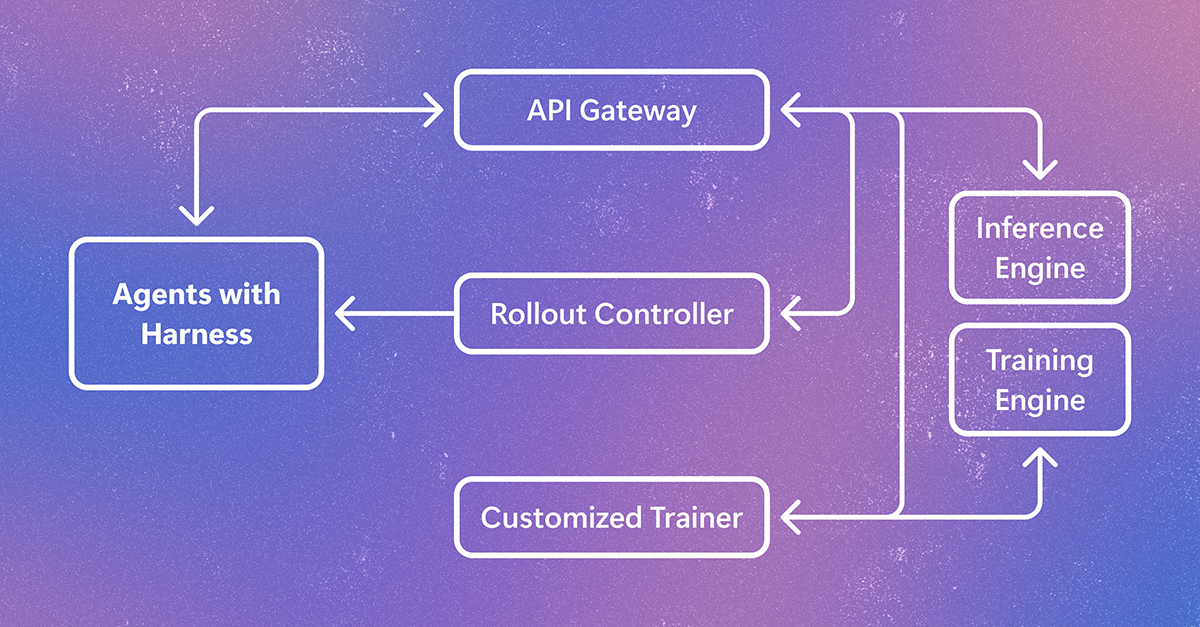
Training AI agents with reinforcement learning can be challenging because their tools, context, and decision-making are managed by complex frameworks. Agent Lightning connects existing agents to RL training, making it easier to improve them without rebuilding them. The post Agent Lightning v1.0: A 3,500-Line Lightweight Agentic RL Framework for Training Agents with Real Harnesses appeared first on Microsoft Research.
We use cookies to run the site and, with your consent, for analytics and to show ads.
See our Cookie Policy.