Automotive spinning FMCW radar provides dense, $360^\circ$ sensing and remains reliable under poor illumination and adverse weather, making it well-suited to autonomous navigation. Place recognition uses these observations to identify previously visited locations for re-localization and long-term navigation. However, heading changes appear as circular shifts in the polar radar representation, and conventional global aggregation can lose relationships among radar responses that are important for distinguishing similar places. We propose SGCA-Net, a spinning radar place recognition framework that combines rotation-robust feature extraction with Spatially Gated Correlation Aggregation (SGCA). SGCA learns spatial weights to reduce the influence of unstable and ambiguous radar regions, while aggregating pairwise correlations among local responses to preserve informative feature relationships. Experiments on the MulRan dataset show that SGCA-Net consistently outperforms SOTA methods across urban, campus, and open-road environments, while remaining robust to substantial heading variation. Evaluation on the HeRCULES dataset further demonstrates that SGCA-Net generalizes to unseen environments and radar sensors without fine-tuning.

This publication proposes a definition and a classification of agile software development approaches and analyses ten software development methods that can be characterized as being "agile" against the defined criterion.
P. Abrahamsson, O. Salo, Jussi Ronkainen et al.· arXiv.org· 727 citations· ⚡54
The study shows that agile practices improve both informal and formal communication, but indicates that, in larger development situations involving multiple external stakeholders, a mismatch of adequate communication mechanisms can sometimes even hinder the communication.
M. Pikkarainen, Jukka Haikara, O. Salo et al.· Empirical Software Engineeri...· 401 citations· ⚡48
The results indicate that software engineering work practices are chosen opportunistically, adapted and configured to provide value under the constrains imposed by the startup context.
Nicolò Paternoster, Carmine Giardino, M. Unterkalmsteiner et al.· Information and Software Tec...· 394 citations· ⚡54
The possibility of inferring high-dimensional data inference in a model that consists of a prior and an auxiliary differentiable constraint given some additional information is considered, thereby allowing a range of potential applications in adapting models to new domains and tasks.
Alexandros Graikos, Esmeralda S. Whitammer, N. Jojic et al.· Neural Information Processin...· 316 citations· ⚡15
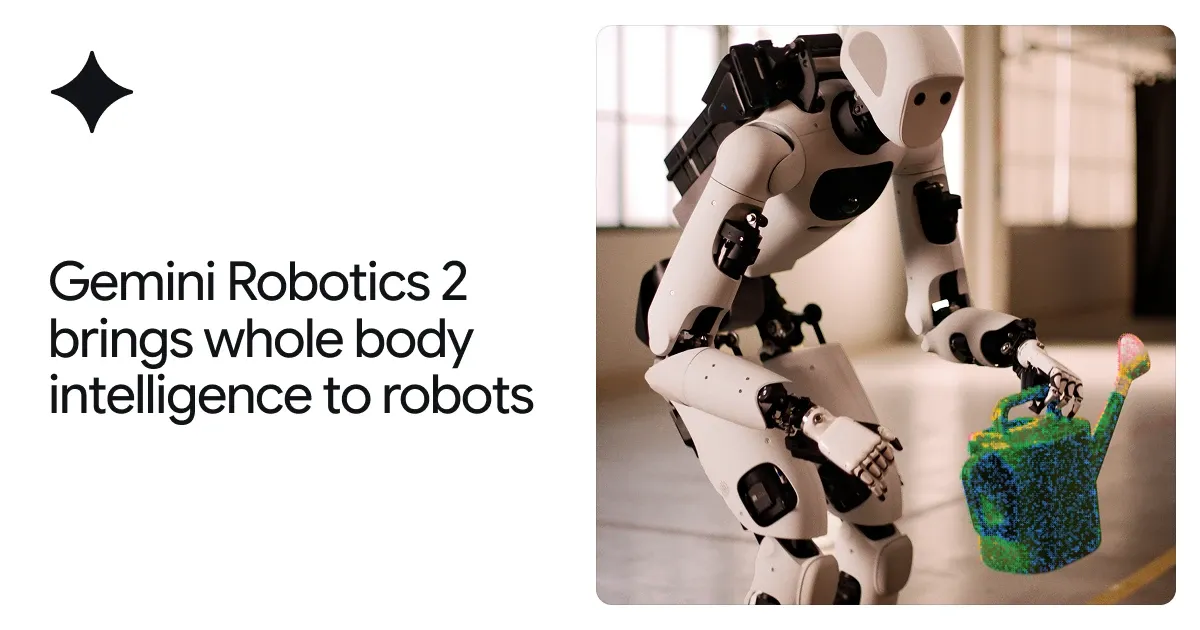
From feet to fingertips — we are teaching robots intelligent whole-body control, fine dexterity, and teamwork to complete a broad range of complex tasks.
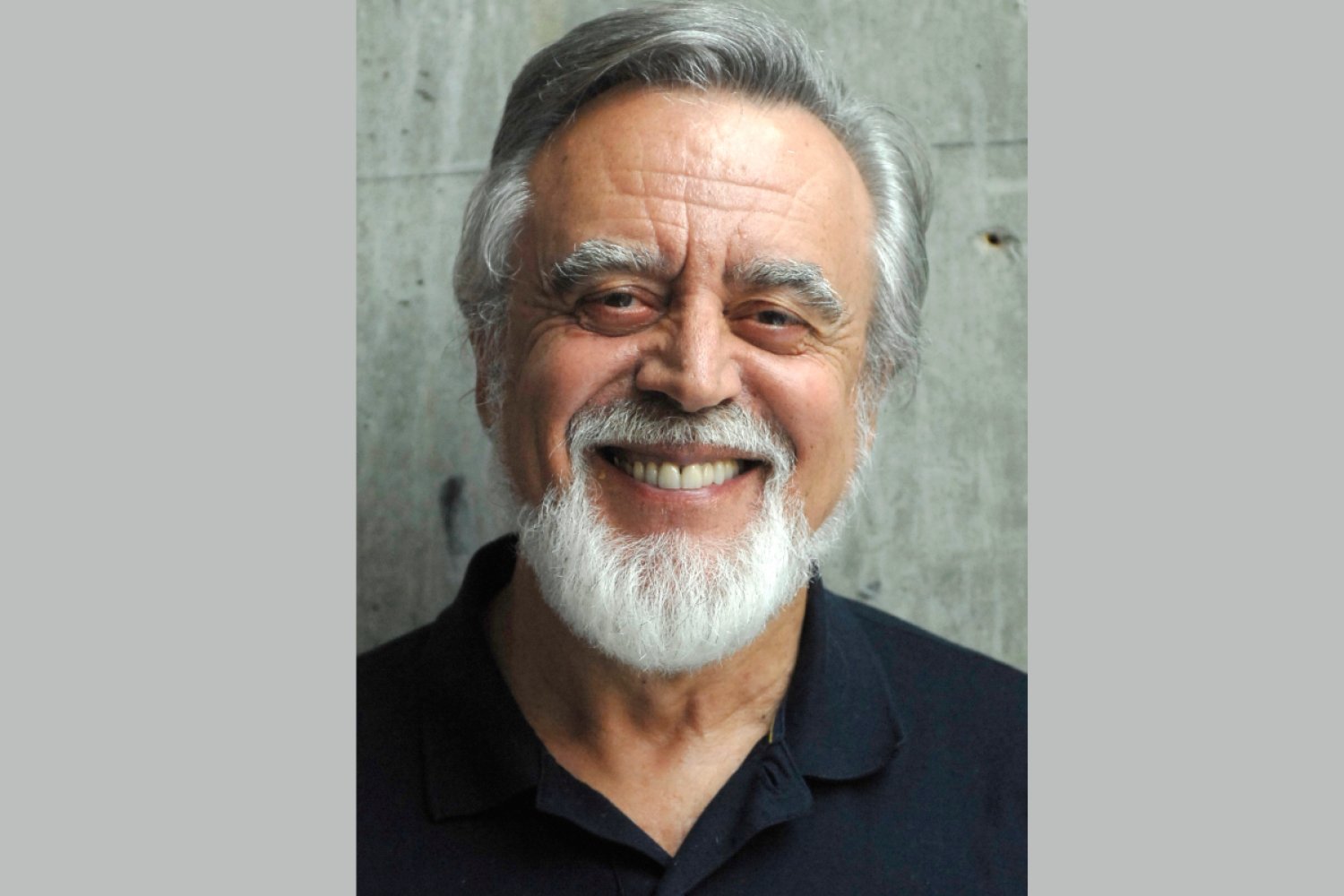
Known for his clear and elegant writing style, Bertsekas shaped fields from control and optimization to large-scale computation and artificial intelligence.
We use cookies to run the site and, with your consent, for analytics and to show ads.
See our Cookie Policy.