This work introduces Robot Agentic Programming from Demonstrations (RAPID), which automatically generates, verifies, and refines robot programs, given a single visual human demonstration, using an object-centric relational program representation.
Abstract
Coding agents have demonstrated enormous success in solving complex programming problems. To leverage their potential for robot systems, this work introduces Robot Agentic Programming from Demonstrations (RAPID), which automatically generates, verifies, and refines robot programs, given a single visual human demonstration. The iterative agentic loop of code refinement requires several key ingredients: (i) a testable task specification, (ii) action primitives for robot execution, and (iii) an interactive environment for program execution and verification. RAPID infers all three from the demonstration automatically. To make the resulting program reusable beyond the demonstration setting, RAPID uses an object-centric relational program representation that focuses on the underlying structure of the demonstrated strategy rather than the specific motion per se: it expresses the action primitives as trajectory-optimization programs that realize object-level motion effects, while composing them through relational constraints that capture scene-specific geometry at run time. We evaluated RAPID in simulation on eight challenging contact-rich nonprehensile manipulation tasks as well as general prehensile manipulation tasks in the LIBERO-Pro benchmark. We also successfully deployed it on a real Franka arm and evaluated on all eight nonprehensile tasks. In all experiments, RAPID demonstrated strong performance, with generalization over object pose, shape, material, and environment. Website: https://yuyaoliu.me/projects/rapid.
This work demonstrates that a general-purpose agent can directly drive a physical robot throughout task execution without any task-specific or environment-specific training and introduces Agent as Policy (AGP), which places task planning and execution under the agent's control.
Meng-Zhao Jia, Yang Lin, Xi-Xin Zhang et al.· 7 citations· ⚡1
The Embodied Task Agent is introduced, a new paradigm for extending digital agents into the physical world, and OpenETA is released as its open-source implementation, which provides replaceable Planners, composable Tools and Skills, auditable memory, replayable trajectories, and common interfaces for simulation and rea...
Yi-Tong Chen, Zezheng Huai, Si-Xian Li et al.· 5 citations· ⚡1
CodeActionBench is introduced, a benchmark of 25 manipulation tasks that evaluates this capability through agentic Code-as-Policy and provides a controlled testbed for measuring how general-purpose models translate their capabilities into manipulation behavior and for examining typical failure scenarios in that process...
Yiheng Lyu, Xueying Jiang, Wen-Hao Li et al.· 0 citations
GPT-Policy is introduced, a general-agent framework for in-context robot learning that integrates a context compiler that preserves task-relevant visual transitions, a VLM that proposes robot-tool actions, and a constrained controller that verifies and executes each action and reports its outcome.
Dong-Zhou Cheng, Taoran Yi, Ye Fang et al.· 3 citations· ⚡1
This short paper revisits the Push-T task in the context of emerging advances in Agentic Robotics where an LLM coding agent -- Claude Code with Fable 5 -- is prompted to create an algorithmic solution that does not require any demonstration data.
Shuang-Yu Xie, Kai-Peng Chen, Ken Goldberg· 0 citations
Adapting visuomotor policies to new manipulation tasks often requires substantial manual engineering or teleoperated data collection. Simulation can provide task-specific data at scale, but constructing the scene, designing expert behavior, and configuring data generation still require significant per-task effort. We p...
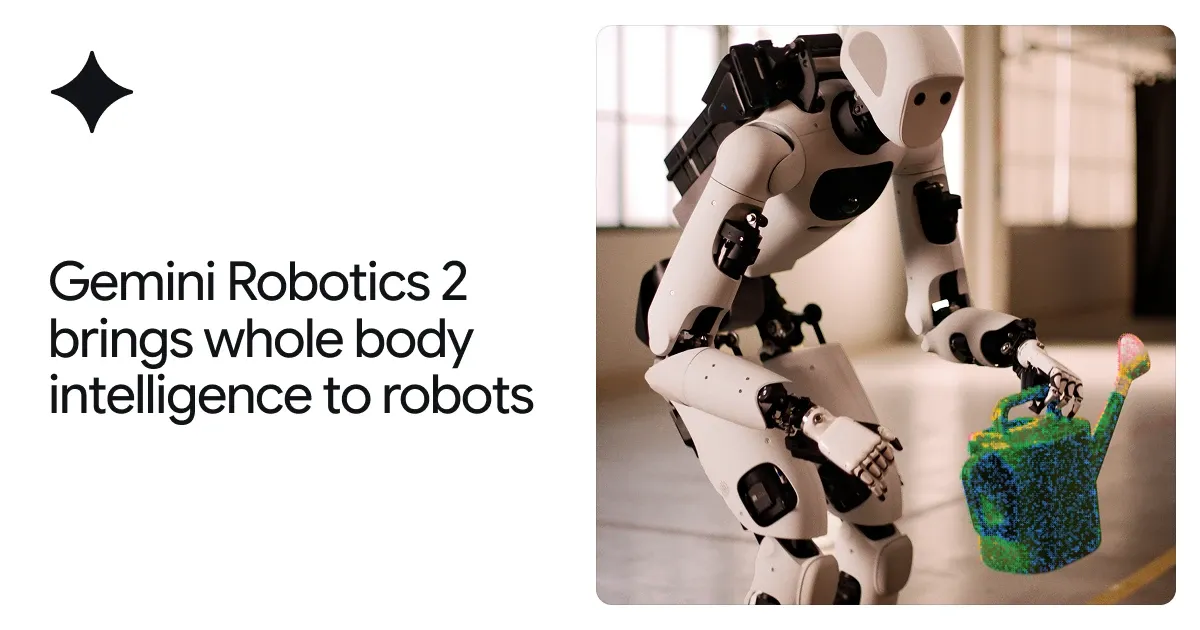
From feet to fingertips — we are teaching robots intelligent whole-body control, fine dexterity, and teamwork to complete a broad range of complex tasks.
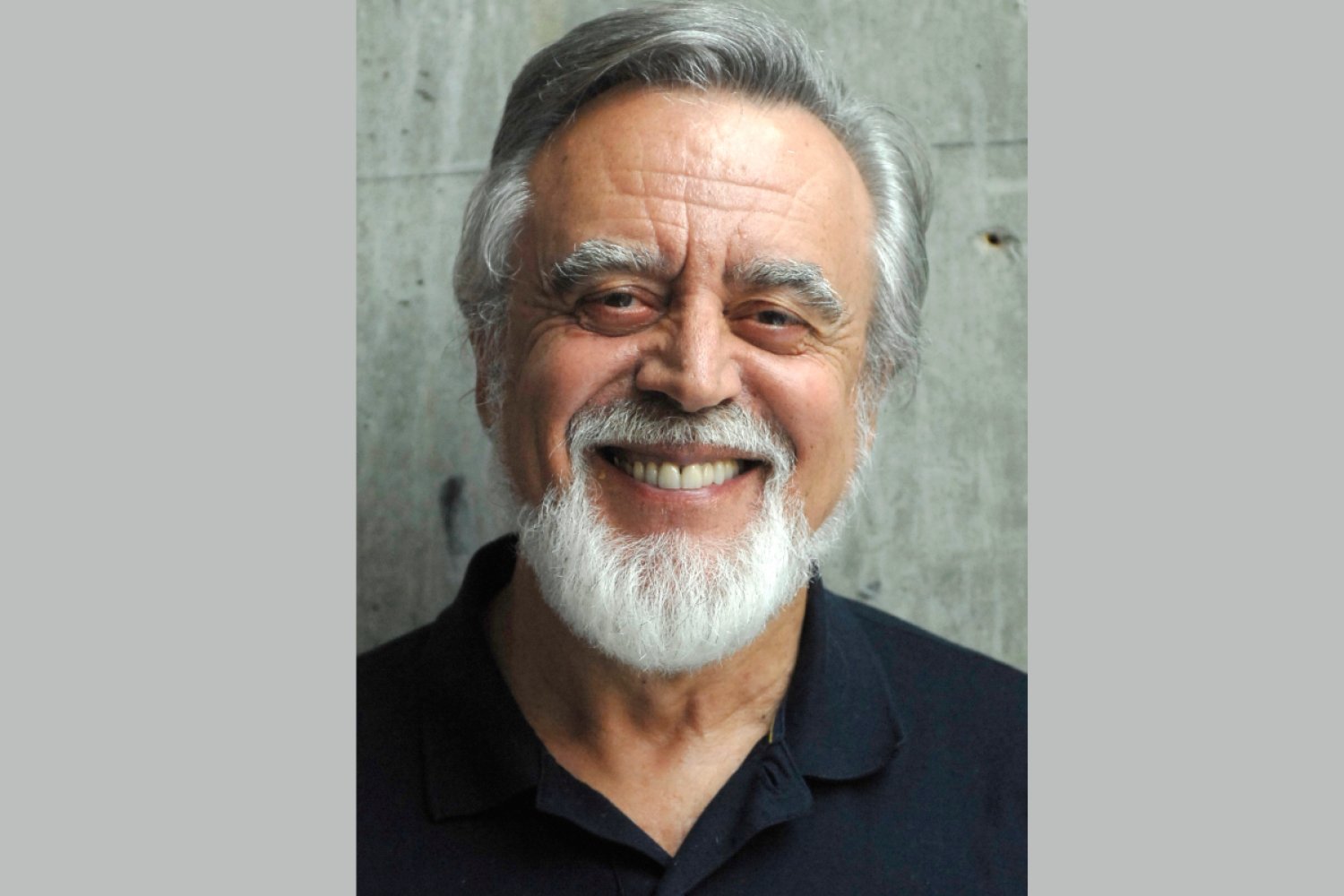
Known for his clear and elegant writing style, Bertsekas shaped fields from control and optimization to large-scale computation and artificial intelligence.
We use cookies to run the site and, with your consent, for analytics and to show ads.
See our Cookie Policy.