Skip to content
#edge computing Open access

SATLLM: A Sparsity-aware Accelerator for Ternary-Weight Large Language Models

Sep 2026 · ACM Transactions on Design Automation of Electronic Systems · 0 citations · 28 references

Abstract

Large language models (LLMs) exhibit strong performance across applications, but their inference is computationally intensive, posing significant challenges for edge deployment. Quantization is among the most effective and widely used optimizations. In particular, ternary-weight quantization further lowers compute cost by replacing many multiplications with lightweight additions, thereby reducing complexity and energy. However, existing GPU/ASIC solutions often exhibit low utilization for ternary-weight LLMs and fail to exploit their inherent sparsity, leading to inefficient execution. To address this, we propose SATLLM, a lightweight accelerator optimized for ternary weights and sparsity. At the algorithm level, we propose a co-optimization method based on unstructured pruning and ternary-weight clustering to effectively enhance the sparsity. To further exploit this sparsity, we design a hardware-friendly sparsity-aware merging scheme and develop a customized BitLinear engine to support efficient sparse computation. In addition, we optimize the dataflow between the BitLinear engine and the GEMM unit, effectively alleviating performance bottlenecks caused by workload imbalance. Together, these optimizations significantly improve the throughput and energy efficiency of ternary-weight LLM inference. The experiments show that our proposed accelerator achieves an energy efficiency of 9.42 TOPS/W, with improvements of up to 42.41 ×, 16.99 ×, 4.42 ×, 2.49 ×, and 1.90 × compared to NVIDIA V100, A100, ANT, MECLA, and RMFA, respectively.

Read PDF

Similar papers

#computer vision Review Sep 2017

Agile Software Development Methods: Review and Analysis

This publication proposes a definition and a classification of agile software development approaches and analyses ten software development methods that can be characterized as being "agile" against the defined criterion.

P. Abrahamsson, O. Salo, Jussi Ronkainen et al. · 727 citations · ⚡54
#computer vision Jun 2008

The impact of agile practices on communication in software development

The study shows that agile practices improve both informal and formal communication, but indicates that, in larger development situations involving multiple external stakeholders, a mismatch of adequate communication mechanisms can sometimes even hinder the communication.

M. Pikkarainen, Jukka Haikara, O. Salo et al. · 401 citations · ⚡48
#machine learning Review Open access Oct 2014

Software development in startup companies: A systematic mapping study

The results indicate that software engineering work practices are chosen opportunistically, adapted and configured to provide value under the constrains imposed by the startup context.

Nicolò Paternoster, Carmine Giardino, M. Unterkalmsteiner et al. · 394 citations · ⚡54

Related blog posts

Microsoft Research Blog Sep 29, 2026

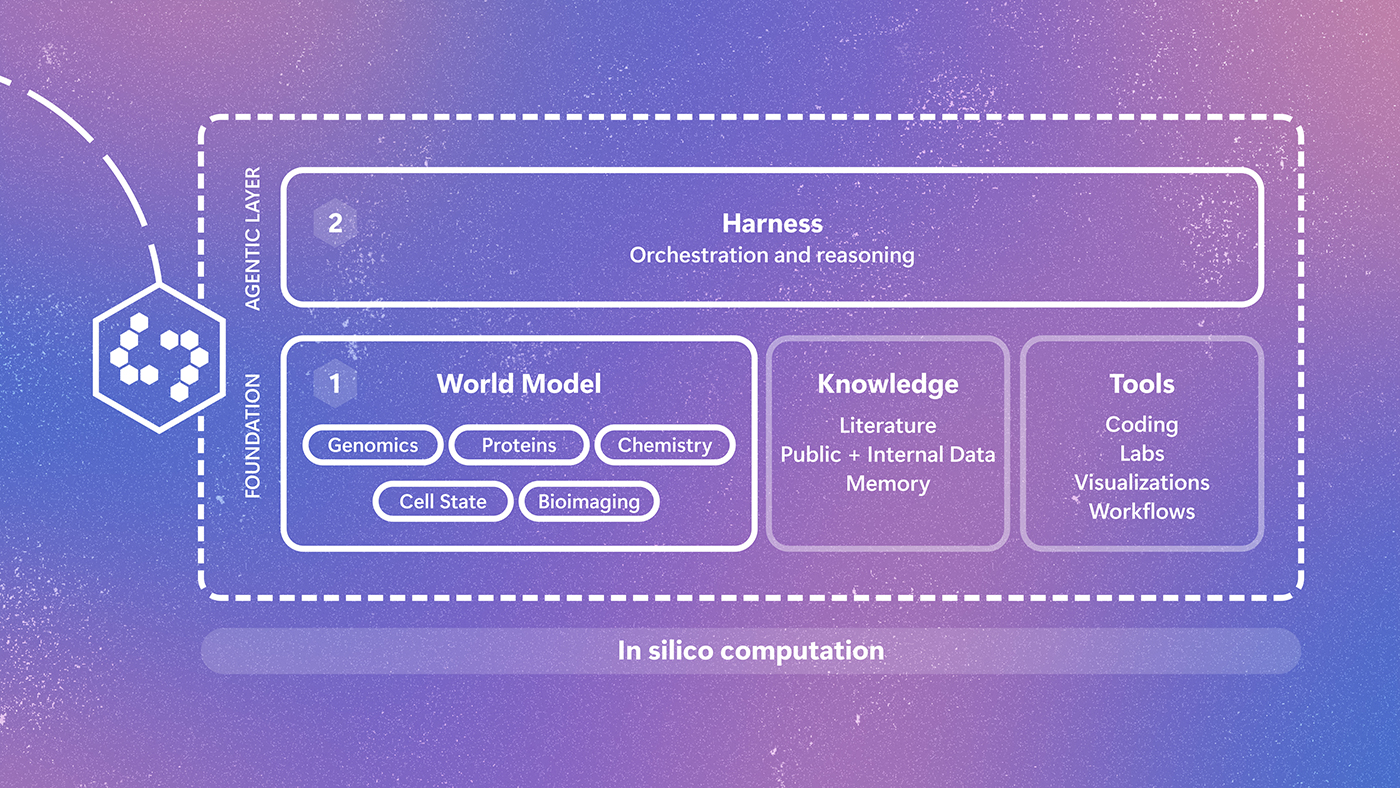
Introducing Quine: An AI research system designed for the complexity of biology

Biology doesn't operate in silos, and neither should the AI representation of it. Quine is an early-stage research effort to create a multimodal world model of biology. By connecting insights across biological scales and modalities, Quine helps scientists computationally search a space far larger than intuition allows and prioritize hypotheses before they reach the lab. Experimental results provide important feedback, helping researchers sharpen future research directions. The post Introducing Q…

We use cookies to run the site and, with your consent, for analytics and to show ads. See our Cookie Policy.