A graph neural network (GNN)‐based framework for scalable multiagent reinforcement learning (RL), where each manipulator is represented as a node in a GNN, and message‐passing edges provide a communication mechanism that enables agents to share information effectively.
Abstract
In tightly cooperative manipulation tasks, robotic manipulators must follow collision‐free and coordinated trajectories. Existing multiagent learning frameworks often rely on centralized planners that provide strong coordination but fail to scale with larger teams. Alternatively, decentralized approaches offer better scalability but typically lack communication, which limits their ability to achieve highly cooperative behaviors. To address this gap, this paper proposes a graph neural network (GNN)‐based framework for scalable multiagent reinforcement learning (RL). In our formulation, each manipulator is represented as a node in a GNN, and message‐passing edges provide a communication mechanism that enables agents to share information effectively. This design allows the team to achieve flexible decentralized planning while maintaining strong cooperation. Our results also demonstrate the scalability of the approach, showing that a single control policy can be trained once and successfully applied to tightly cooperative manipulation tasks across teams of varying sizes, without retraining.
A graph-based safe multi-agent reinforcement learning (MARL) framework for cooperative navigation with time-varying topology is presented, integrating a attention-based actor and a Graph Attention Network (GAT) centralized critic, enabling scale-insensitive policy learning under time-varying communication topologies.
Sizhe Xiao, Li-Jing Dong, Rui-Ting Bai et al.· 0 citations
Cooperative navigation of unmanned aerial vehicle (UAV) swarms in obstacle-rich environments requires simultaneous goal reaching, collision avoidance, and decentralized coordination. This paper presents a graph convolutional network-based multi-agent reinforcement learning (GCN-MARL) framework that explicitly represent...
Yu-Cheng Lin, Hua Zheng· 2026 International Conferenc...· 0 citations
RoboSwarmCoordAI is a promising simulation-validated framework for adaptive swarm coordination, and future work will further validate RoboSwarmCoordAI on larger swarms and physical robotic platforms.
S. Vinta, Rakesh Phanindra Akula, Surya Samantha Beri et al.· Discover Computing· 0 citations
This work proposes an asynchronous cooperative learning strategy that explicitly accounts for prediction accuracy, query point variations and delay effects, and a distributed control law based on an adjoint MAS is developed to ensure the desired control performance.
Xiao-Bing Dai, Ze-Wen Yang, Wei Ren et al.· 0 citations
This paper develops a safe and fully decentralized multi-agent reinforcement learning (MARL) algorithm to solve a class of discrete-time control problems on networks, including the persistent monitoring problem. Fully decentralized control of agents, while offering numerous benefits, faces issues such as exponentially...
A Planner-Conditioned Diffusion Policy (PCDP) is proposed, trained on demonstrations from multiple planner styles with planner identity as an explicit conditioning input, enabling a single shared model to learn a multimodal trajectory distribution and generate diverse, controllable trajectory candidates from the same o...
M. Teo, Jeric Lew, T. Duhan et al.· 0 citations
Related blog posts
MIT News · Artificial Intelligence· news.mit.eduJul 15, 2026
Assistant Professor Pat Pataranutaporn describes a new interface that lets everyday users glimpse inside an AI's neural network before their chatbot ever says a word.
Microsoft Research Blog· microsoft.comJul 13, 2026
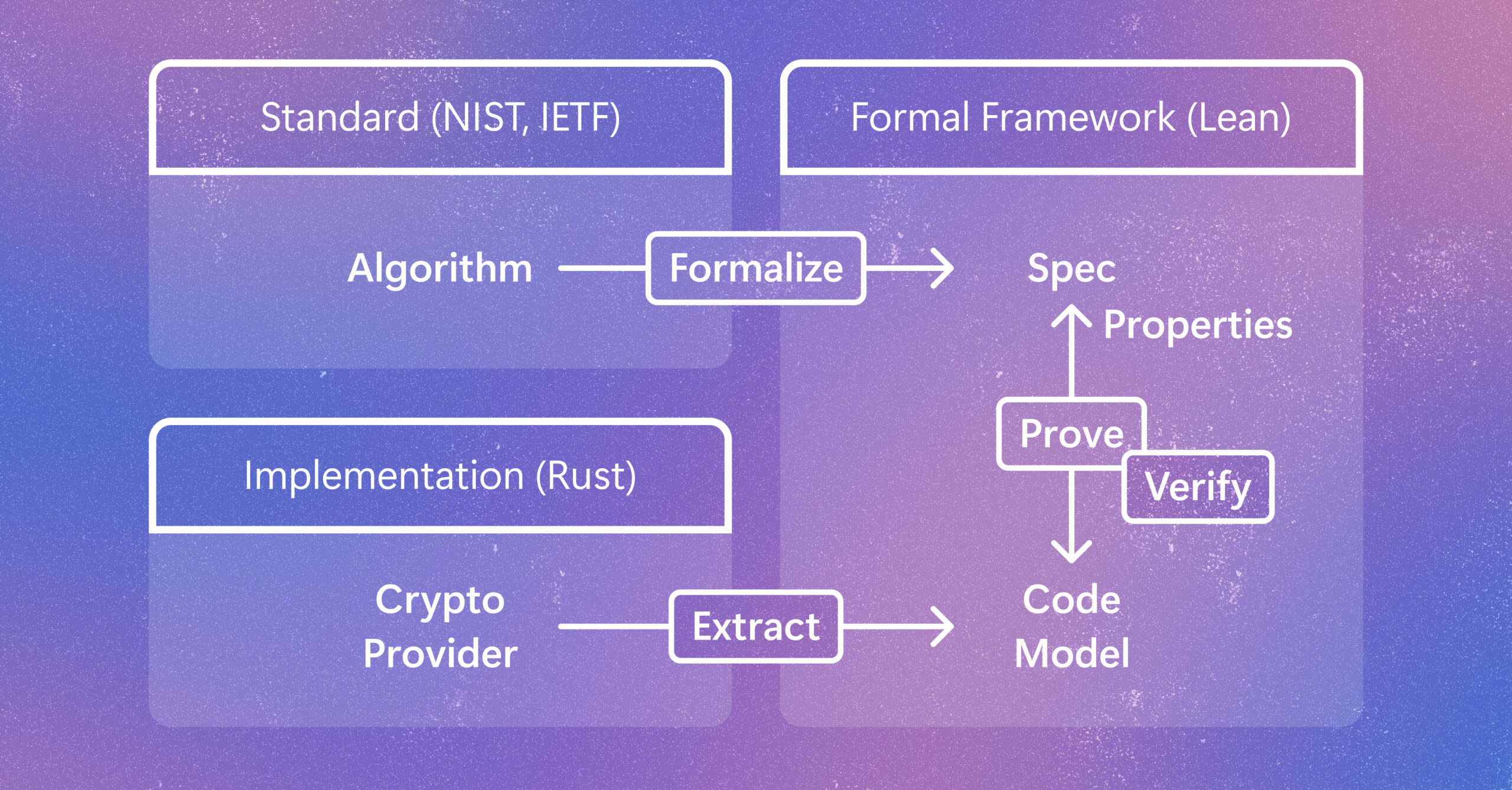
Cryptographic code supports vital protections in modern computing systems. Learn how a new method helps verify code as developers write it while preserving speed and adaptability as it gets implemented and evolves. The post Verifying Rust cryptography in SymCrypt, from standards to code appeared first on Microsoft Research.
MIT News · Artificial Intelligence· news.mit.eduJul 6, 2026
PhD student Rachel Sava, winner of the Envisioning the Future of Computing Prize, explores transformative improvements and dystopian risks of neural technology.