Skip to content

HyperLabel: Multi-Label Classification via Hypergraph-Based Label Correlation Modeling

Sep 2026 · 0 citations · 38 references
Computer Science

TL;DR

This work proposes HyperLabel, an encoder-decoder framework that explicitly models label dependencies through hypergraph neural networks, and proposes a unified cross-modal learning approach where HGNN+ performs bidirectional message passing to integrate feature information with label structure, and a shared cross-attention decoder processes both modalities through complementary learning objectives.

Abstract

Multi-label classification (MLC) requires predicting multiple relevant labels for each instance, where a central challenge is modeling complex label dependencies arising from co-occurrence patterns. Existing approaches are limited in capturing high-order label correlations, relying on implicit learning through contrastive objectives or pairwise attention mechanisms without structural guidance. We propose HyperLabel, an encoder-decoder framework that explicitly models label dependencies through hypergraph neural networks. Our contributions are twofold: (i) We construct a label hypergraph where sample-defined hyperedges naturally encode multi-way co-occurrence patterns, providing explicit structural prior knowledge that captures relationships beyond pairwise interactions. (ii) We propose a unified cross-modal learning approach where HGNN+ performs bidirectional message passing to integrate feature information with label structure, and a shared cross-attention decoder processes both modalities through complementary learning objectives. Extensive experiments on seven benchmark datasets demonstrate that HyperLabel achieves state-of-the-art performance, with particularly significant improvements on macro-F1 scores (+10.3% on Delicious, +8.2% on Bibtex), validating that explicit hypergraph structure effectively captures complex label relationships. The code is available at https://github.com/iZHpy/Multi-label_hypergraph .
View source

Similar papers

Conference Open access Sep 2026

Label Enhancement via Cross-View Fusion and Mixed Graph Propagation

Label Distribution Learning (LDL) effectively addresses label ambiguity by modeling the degree to which each label describes an instance. A key challenge in LDL is Label Enhancement (LE): recovering label distributions from logical labels. Existing LE methods typically treat logical labels as supervisory signals and le...

Meng-Jiao Kai, Chao Tan, Yandong Wang et al. · 0 citations
Open access Aug 2026

Weakly-Supervised Learning with Partial Multi-Labels by Leveraging Dual Label Correlation Perspectives

A novel PML method, namely Wasserstein Partial Multi-Label Learning with dual Label Correlation Perspectives (Wpml3cp), solved by the gradient descent with an augmented Lagrange multiplier technique, and empirical results demonstrate that Wpml3cp and Wpml3cp-D can outperform the PML baselines in various noisy levels.

Xi-Ming Li, Yuanchao Dai, Bing Wang et al. · 0 citations
Preprint Aug 2026

TAHB: A Comprehensive Benchmark for Text-Attributed Hypergraph Learning

TAHB (Text-Attributed Hypergraph Benchmark) is presented, the first public benchmark integrating hypergraph structures and raw textual attributes, and shows that LLM-enhanced textual semantics improve hypergraph learning performance, while structural and textual information jointly provide the best setting for LLM-base...

D. Y. Kang, Junghyun Kim, Ju-hyun Jeon et al. · 0 citations

Related blog posts

Microsoft Research Blog Sep 30, 2026

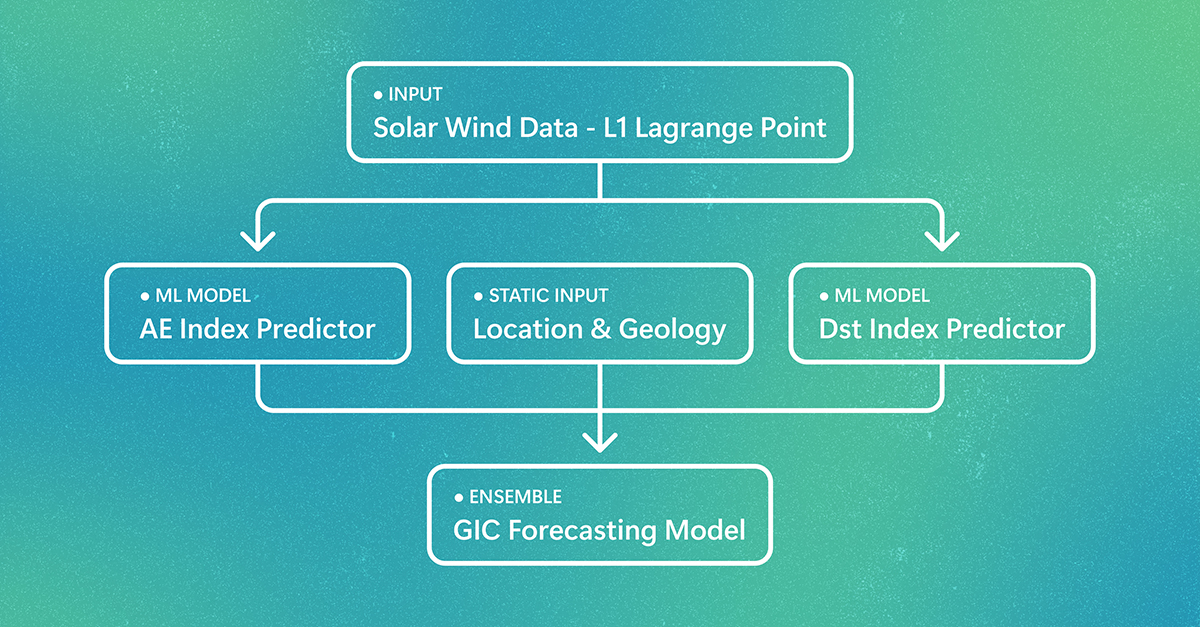
Forecasting space weather risks on power grids

Extreme space-weather events can damage power systems on Earth and degrade GPS accuracy and satellite operations. A new machine learning system can predict where damage is likely to occur 30-60 minutes before a storm arrives. The post Forecasting space weather risks on power grids appeared first on Microsoft Research.

We use cookies to run the site and, with your consent, for analytics and to show ads. See our Cookie Policy.