Skip to content

Perturb-and-Solve: Efficient Learned-Operator Conditioning for Latent Diffusion Inverse Problems

Sep 2026 · 0 citations
Computer Science

TL;DR

PASEO (Perturb-And-Solve for Efficient Operator conditioning), a method that uses a small (1M parameters) learned network to degrade diffusion model predictions in latent space, achieves strong perceptual quality while running up to 9x faster and using up to 34% less peak memory than the tested baselines.

Abstract

Latent diffusion models serve as powerful priors for solving inverse problems in image restoration, such as deblurring, inpainting, and super-resolution. Current methods have a trade-off between generality and efficiency. Solvers that are restricted to a fixed set of degradation operators are fast and efficient. Methods that support arbitrary degradation operators are slow and require gradients through the diffusion network. To break this bottleneck, we introduce PASEO (Perturb-And-Solve for Efficient Operator conditioning), a method that uses a small (1M parameters) learned network to degrade diffusion model predictions in latent space. PASEO supports learned degradation operators without back-propagating through the diffusion network. We efficiently sample reconstructions from an approximate posterior by combining the diffusion model's prediction with the observed image. We do this by adding noise and solving linear equations based on a local linear approximation of the learned network, without building or inverting large covariance matrices. Across super-resolution, deblurring, and inpainting on FFHQ and COCO, PASEO achieves strong perceptual quality while running up to 9x faster and using up to 34% less peak memory than the tested baselines, with the same or fewer model evaluations.

View source

Similar papers

CLIMB-flow: Coupled Linear Inverse posterior sampling via Multiscale-Based flow

This paper introduces a posterior sampling algorithm customized for the pyramidal/cascaded architecture, which relies on a coarse to fine hierarchical strategy to generate images in the pixel domain and presents CLIMB-Flow which alternates between three steps: an end-point estimation from the current coarse and noisy i...

Ze-Qiu Yu, Rui Yuan, Mathews Jacob · 0 citations
#machine learning Preprint Oct 2026

Backward-Consistent Diffusion Sampling for Sparsely Observed PDE Inverse Problems

Recovering Partial Differential Equation (PDE) coefficient fields from extremely sparse observations is a severely ill-posed inverse problem for which generative machine learning methods (e.g., diffusion models) have become a leading way to encode the prior. Recent state-of-the-art diffusion solvers lift these priors t...

Yi Pan, Muhammad H. Ashiq, Chan-Yong Jung et al. · 0 citations
Preprint Sep 2026

ANaLOG: Anisotropic Native-Latent Operator Guidance for Solving Inverse Problems

Native-latent guidance is a recent paradigm for solving inverse problems with latent diffusion models. It replaces repeated evaluations of the image-space forward model, each requiring a decoder pass, with efficient guidance computed using a learned latent-space surrogate. However, existing methods apply guidance unifo...

D. Thaker, L. E. MacDonald, René Vidal · 0 citations
Preprint Aug 2026

Pixel-Space Diffusion via Observation Operators

Observation Operator Diffusion is proposed, a unified framework that aligns both the supervision trajectory and feature refinement with the intrinsic recovery order of image structures and introduces GL-CoDA, a decoder that injects scale-specific Gaussian-Lanczos observations across decoding stages for coarse-to-fine f...

Shaojie Guo, Li-Chen Ma, Haoyang Tong et al. · 1 citation
Preprint Aug 2026

A Posterior-Dynamics Framework for Imaging Inverse Problems with Pretrained Diffusion Priors

This work defines an explicit surrogate posterior path and derives the Posterior-Dynamics Implicit--Explicit sampler (PD-IMEX), a stable method using one score evaluation per diffusion scale and an implicit data-consistency update, and derives continuous posterior dynamics.

Zhao-Qiang Liu, T. Pang, Ruibing Wang et al. · 1 citation

Principled MAP estimation for inverse problems: bridging the gap between convergence and performance

This paper designs an algorithm that combines denoisers at decreasing noise levels with a schedule tailored to ensure convergence, and proves that it surpasses convergent methods while competing with state-of-the-art empirical ones.

Alexandre Lagier, Valentine Tosel, Anne Gagneux et al. · 0 citations

Related blog posts

MIT News · Artificial Intelligence Oct 28, 2026

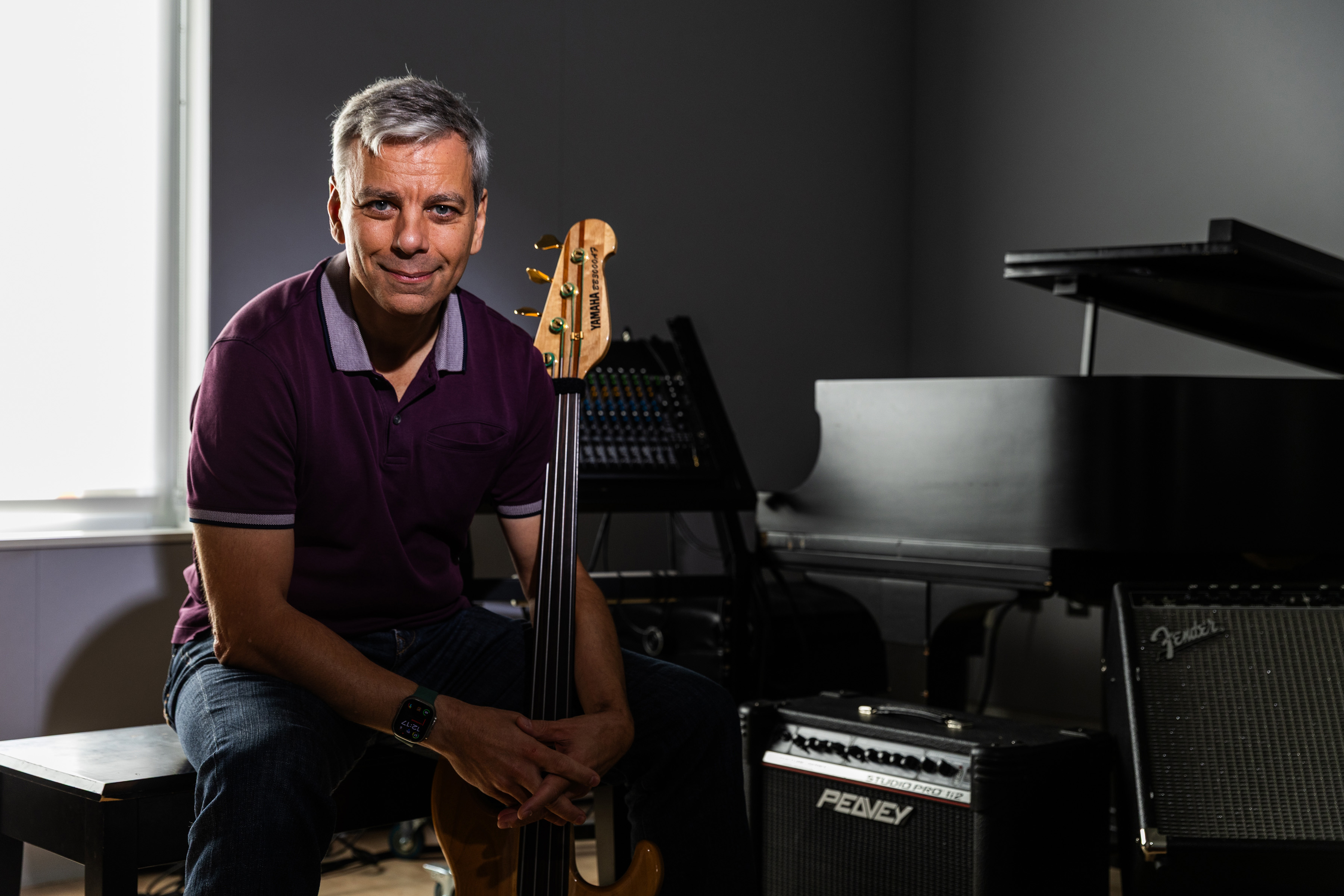
Making machines that can listen

Professor Paris Smaragdis develops computers with superhuman hearing for applications like speech recognition, music understanding, and environmental monitoring.

Microsoft Research Blog Aug 11, 2026

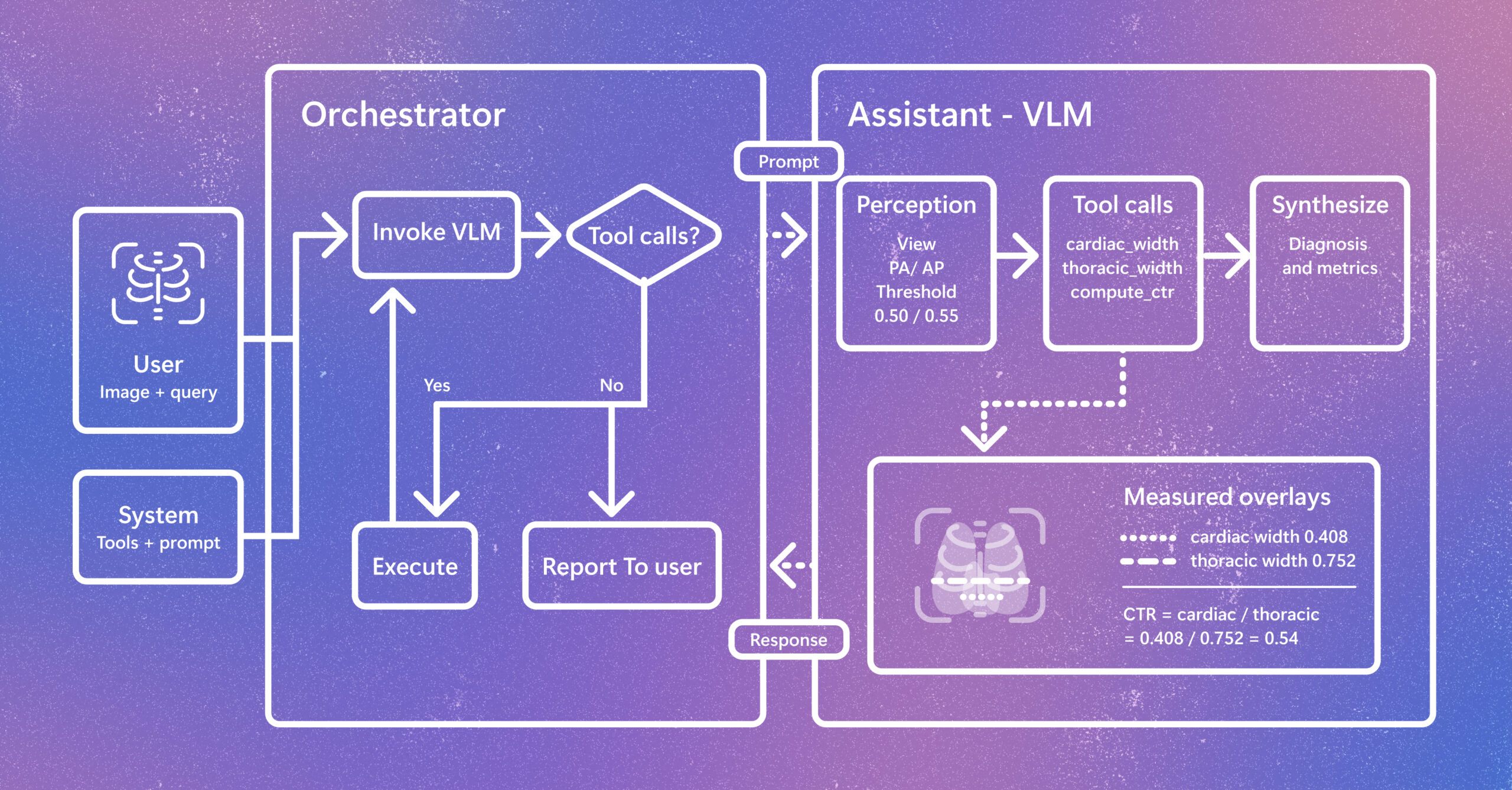
Introducing CARE-X: Towards Clinically Useful Radiology VLMs with Auxiliary Supervision, Reward-Aligned Learning, and Tool-Augmented Measurement

Radiology AI is evolving beyond report generation. CARE-X explores a unified approach that combines flexible reasoning, calibrated predictions, and measurement-based tools for chest X-ray interpretation. The post Introducing CARE-X: Towards Clinically Useful Radiology VLMs with Auxiliary Supervision, Reward-Aligned Learning, and Tool-Augmented Measurement appeared first on Microsoft Research.

We use cookies to run the site and, with your consent, for analytics and to show ads. See our Cookie Policy.